
Front Elevation Lighting for House & Villa
Plan warm white wall washers, column lights, burial uplights, wall lights and garden focus lights for a premium house front.
Light the surface, not the whole house
A premium elevation uses many small warm-white fixtures, each doing one clear job.
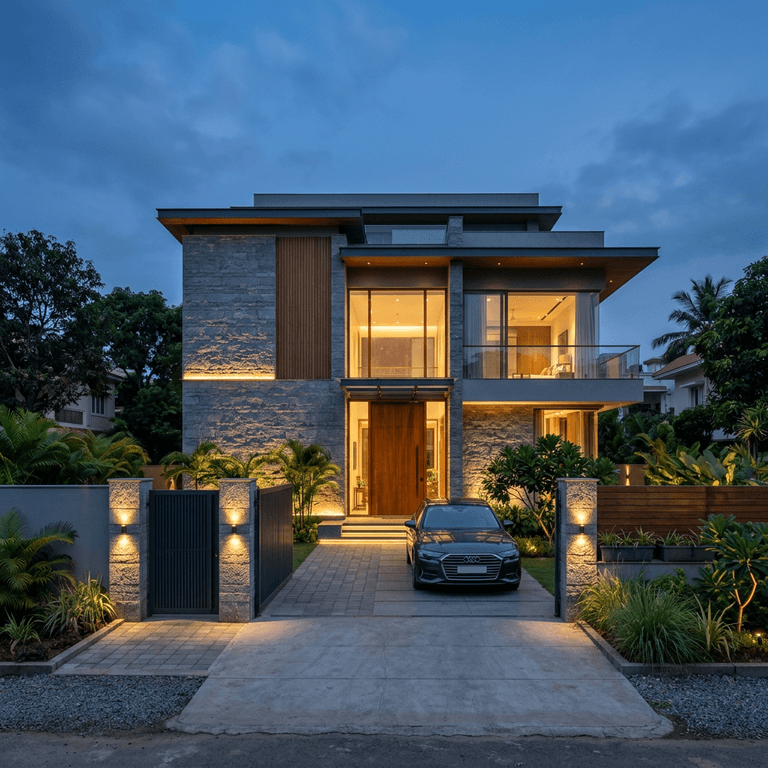
Five fixture roles for one house front
Columns give height, wall washers reveal texture, burial lights ground the base, wall lights welcome visitors, and planting lights add foreground depth.
Uplight verticals
Columns, gate pillars and double-height entrance edges need tight vertical beams.
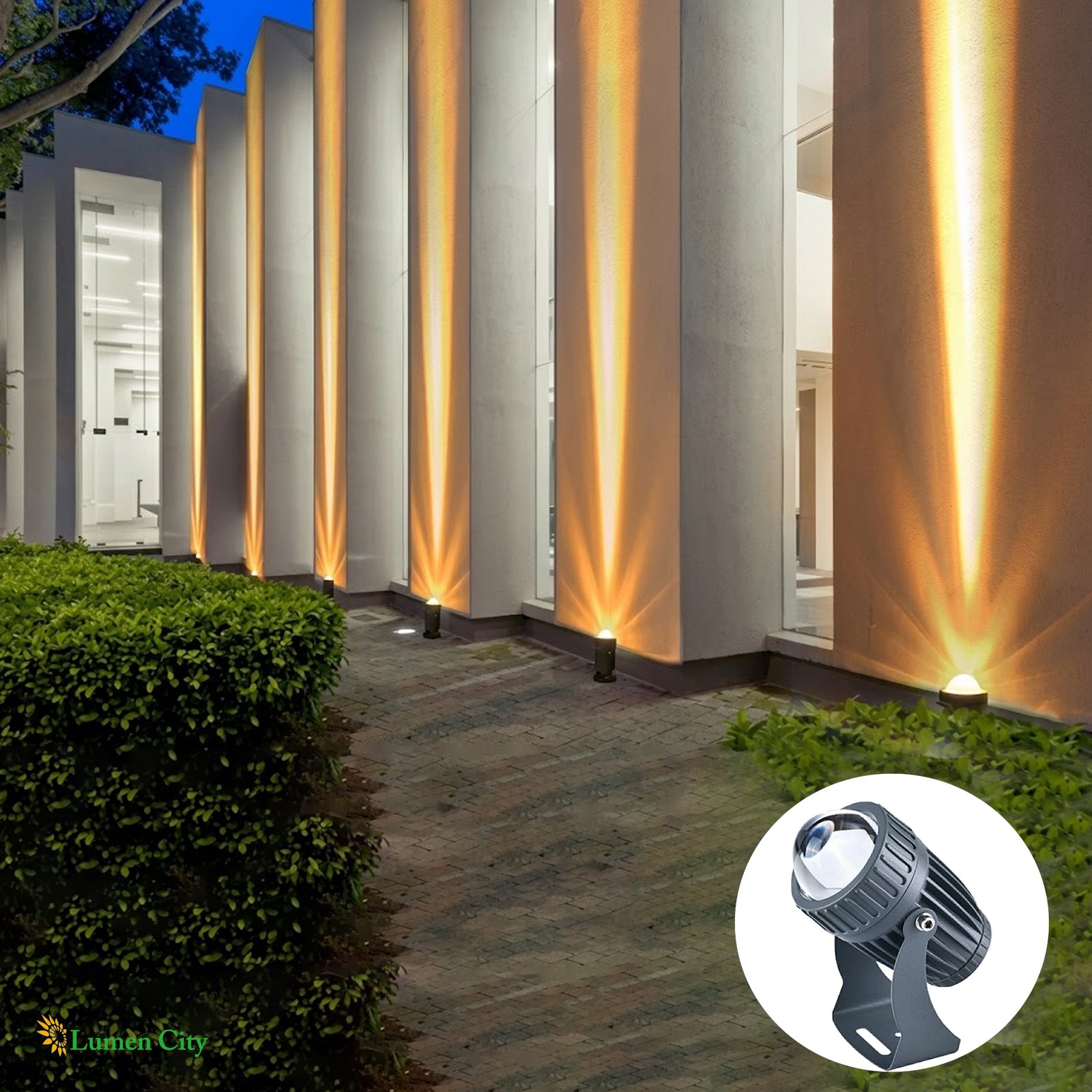
10W Facade Column Light - Warm White - 7° Narrow Beam - IP68
Use 10W narrow-beam column lights at the base of each face you want lit.
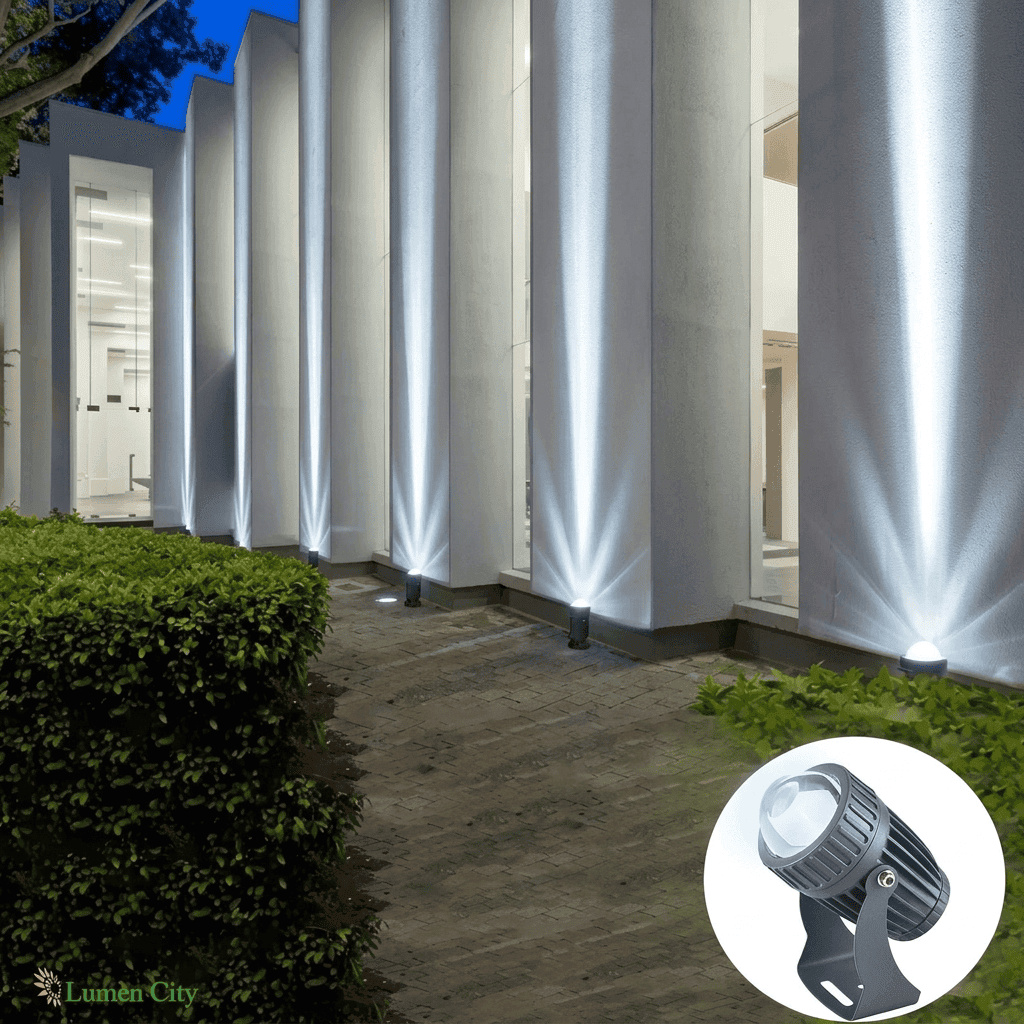
10W Facade Column Light - Cool White - 7° Narrow Beam - IP68
Use 10W narrow-beam column lights at the base of each face you want lit.
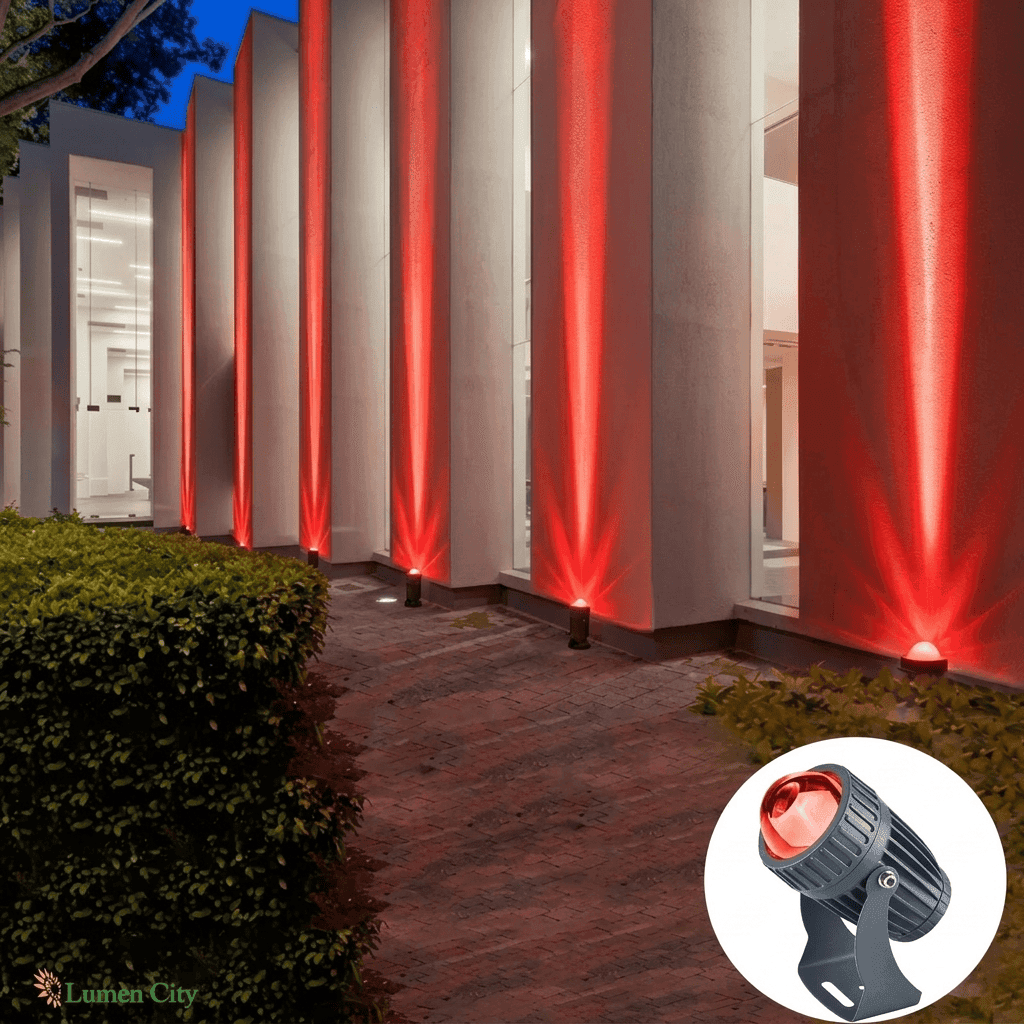
10W Facade Column Light - Red - 7° Narrow Beam - IP68
Use 10W narrow-beam column lights at the base of each face you want lit.
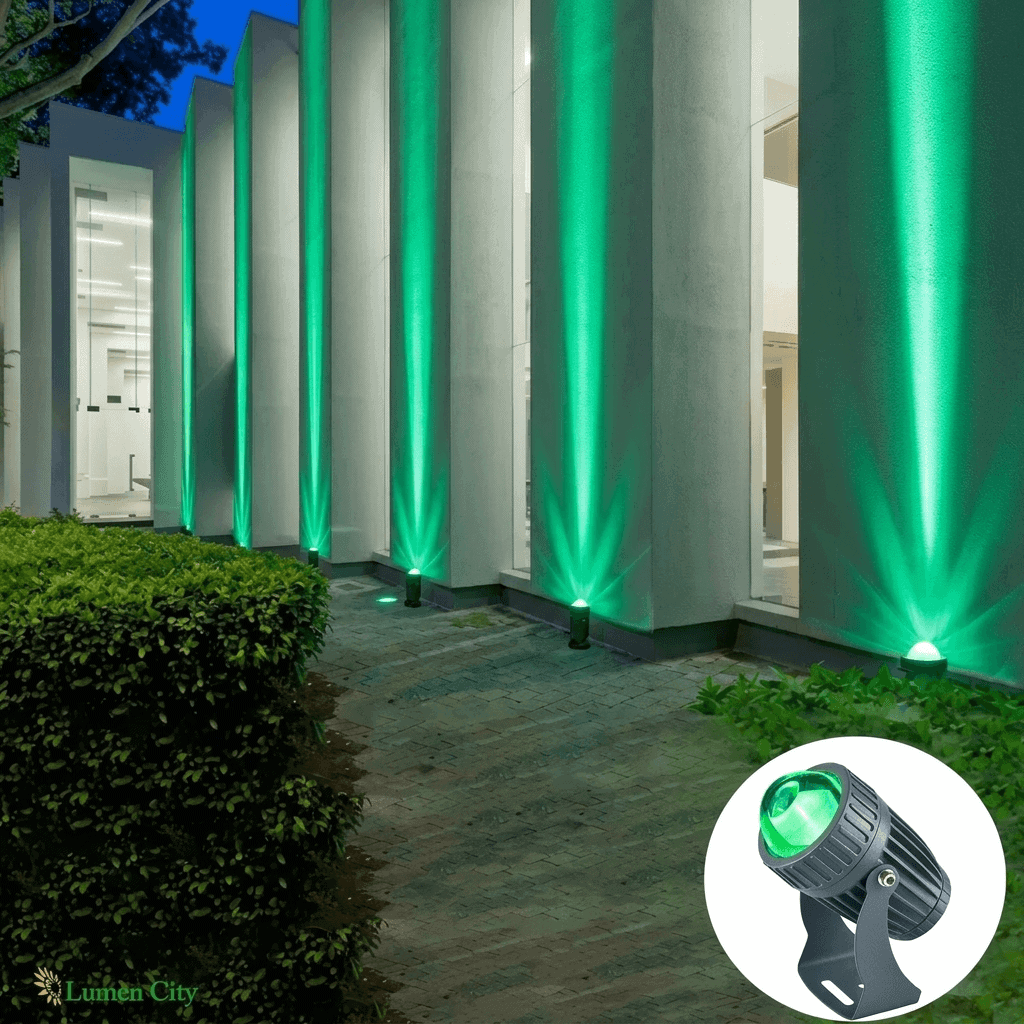
10W Facade Column Light - Green - 7° Narrow Beam - IP68
Use 10W narrow-beam column lights at the base of each face you want lit.
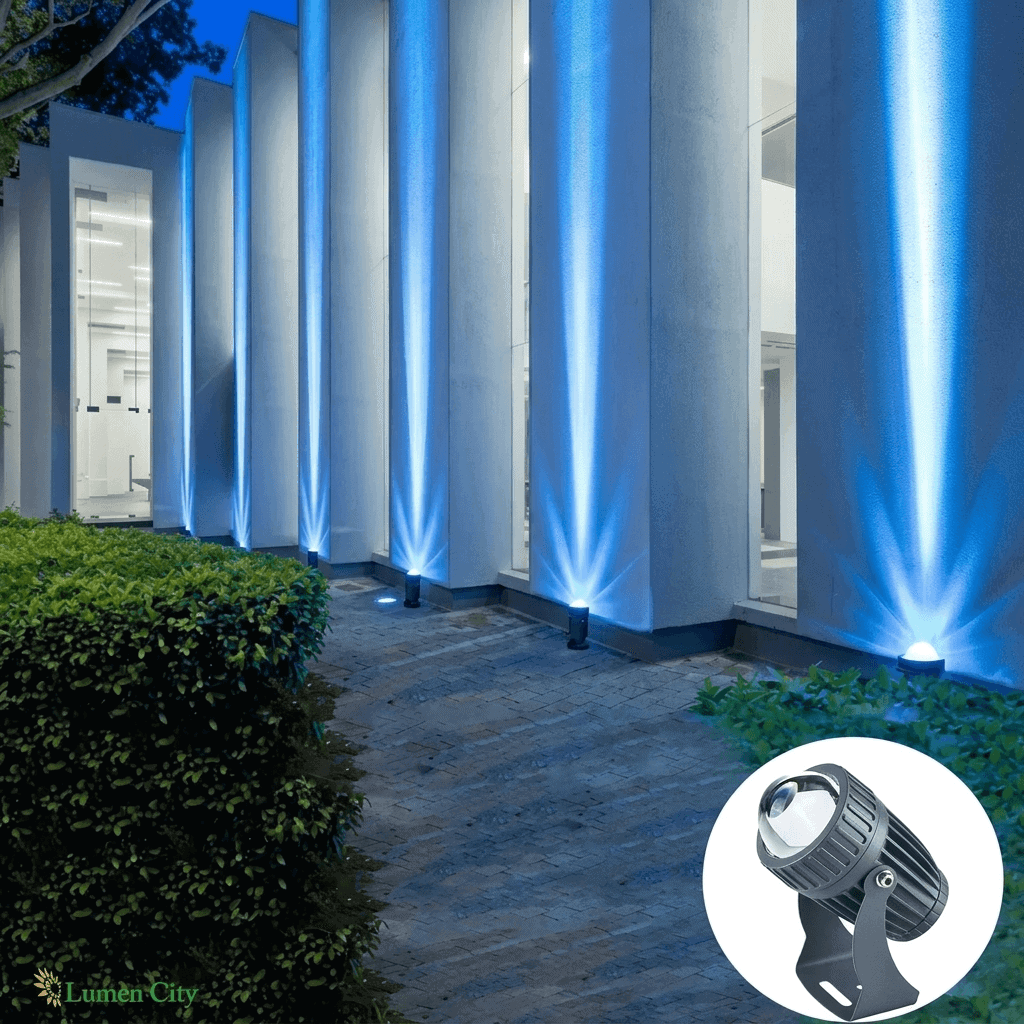
10W Facade Column Light - Blue - 7° Narrow Beam - IP68
Use 10W narrow-beam column lights at the base of each face you want lit.
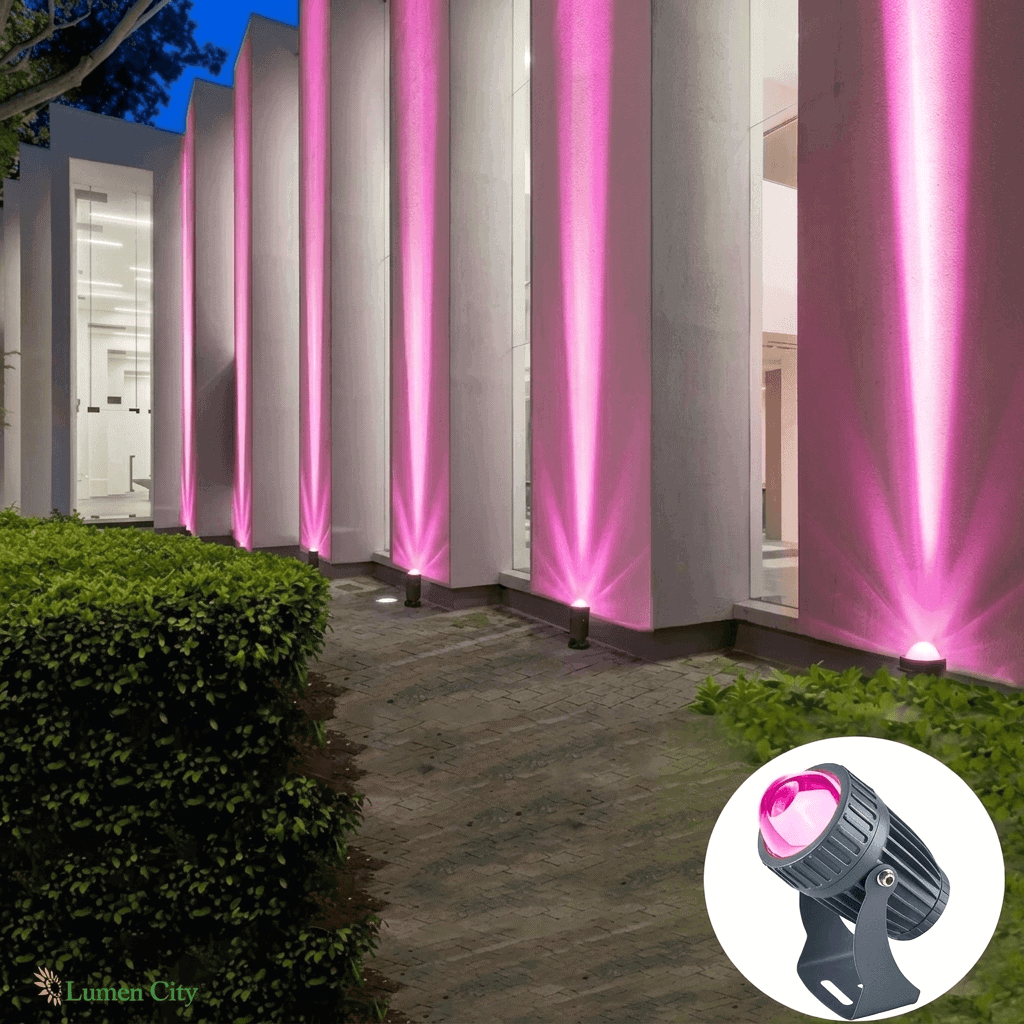
10W Facade Column Light - Pink - 7° Narrow Beam - IP68
Use 10W narrow-beam column lights at the base of each face you want lit.
Graze wall surfaces
Feature walls and stone cladding need close-up wall washing, not distant flood light.
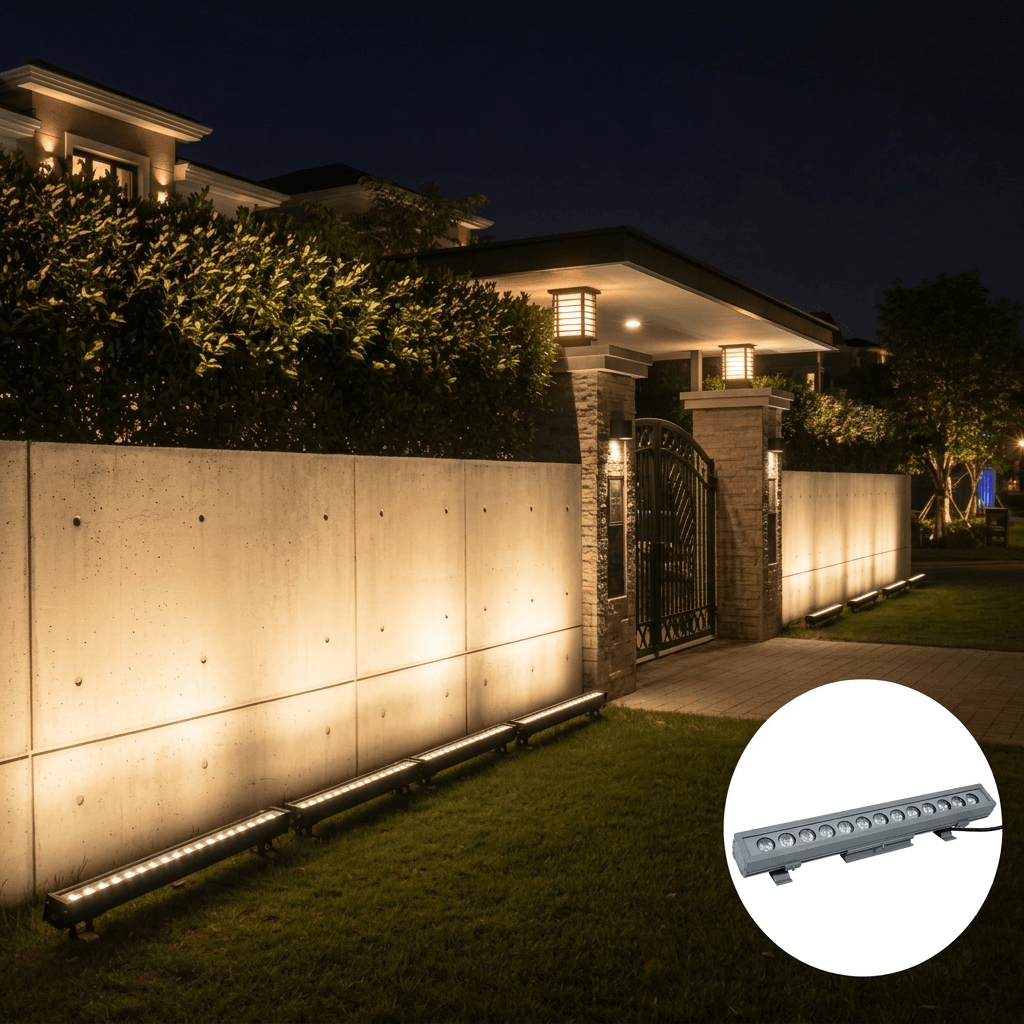
18W Wall Washer Light - Warm White - 0.5 Meter
Place wall washers 150-300 mm from the wall to reveal texture and depth.
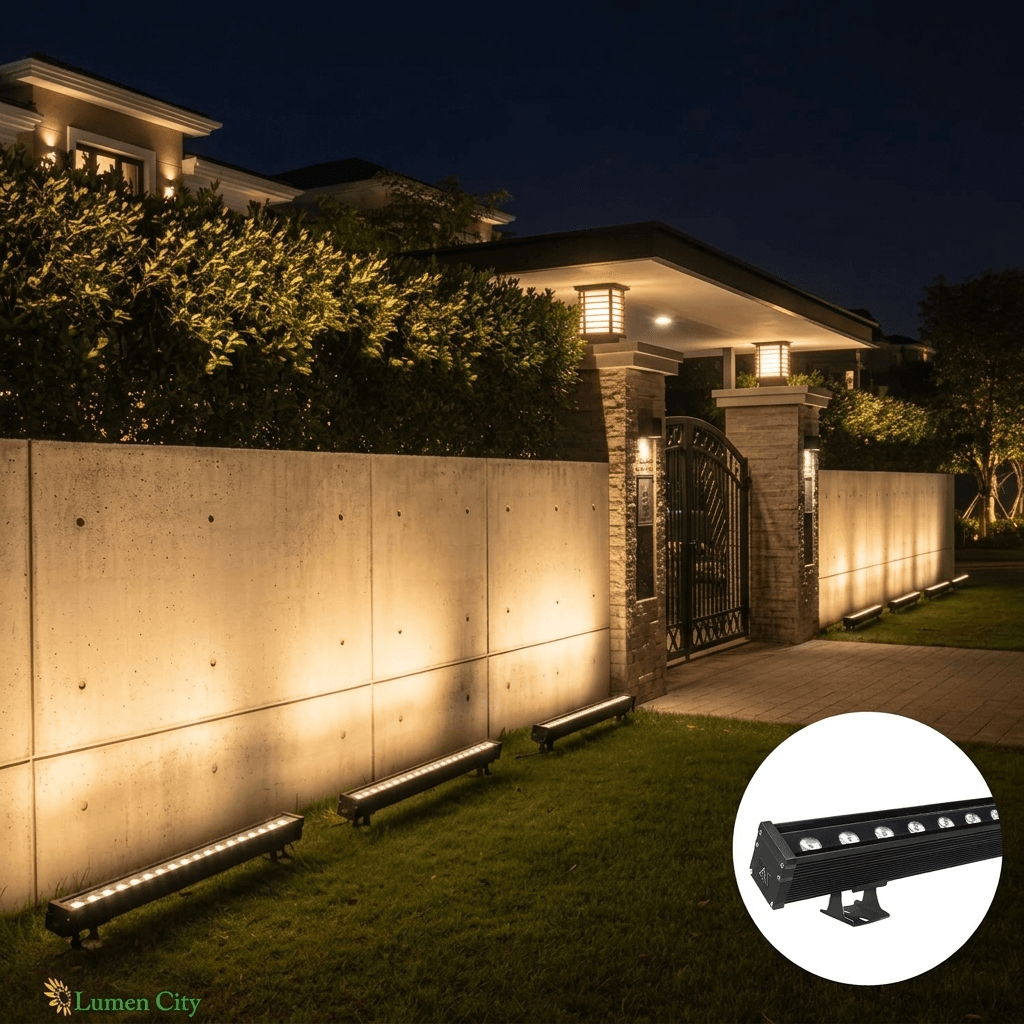
36W Wall Washer Light - Warm White - 1 Meter
Place wall washers 150-300 mm from the wall to reveal texture and depth.
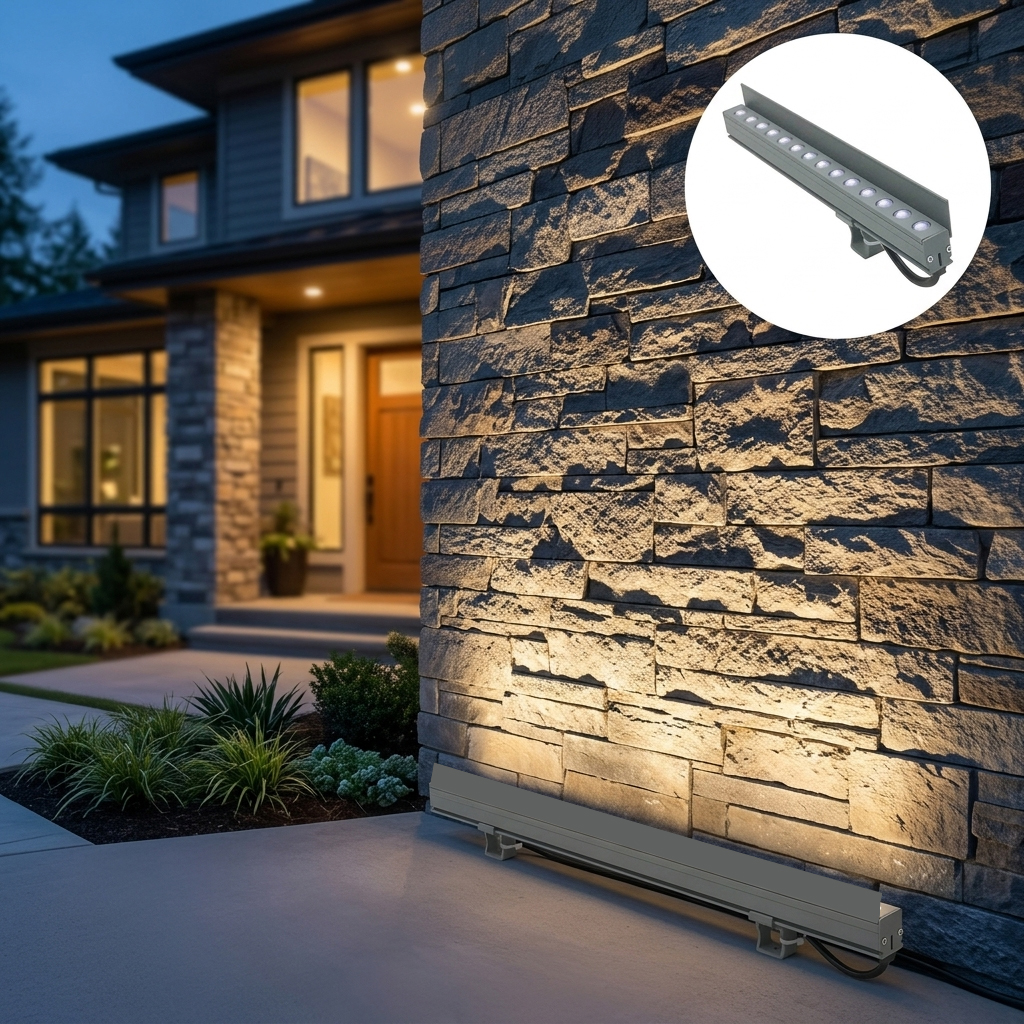
36W Wall Washer Light with Visor - Warm White - 1 Meter
Place wall washers 150-300 mm from the wall to reveal texture and depth.
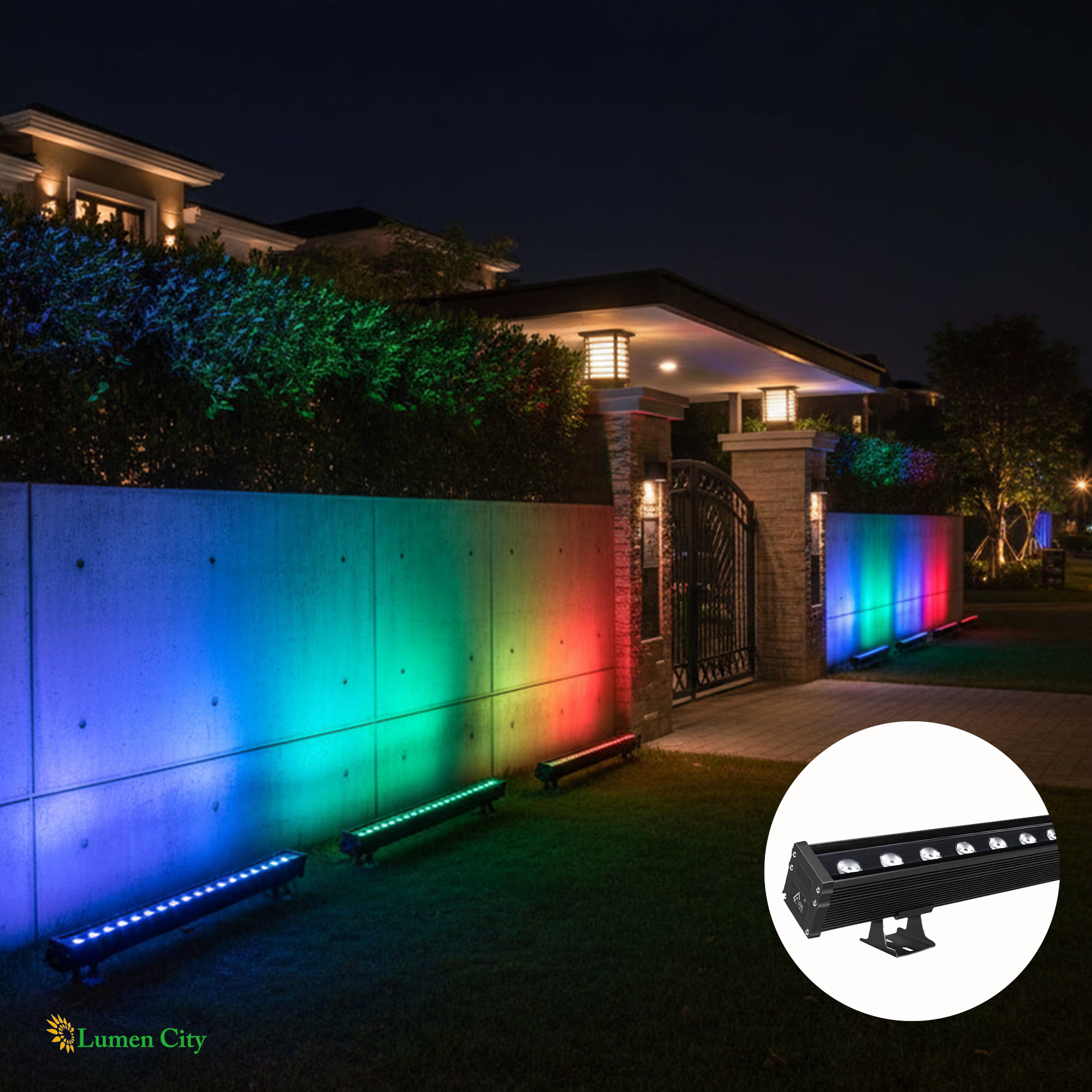
36W RGB Wall Washer Light - With Remote - 1 Meter
Place wall washers 150-300 mm from the wall to reveal texture and depth.

Power Supply 24 Volt 16 Amp (For Wall Washer Lights)
Place wall washers 150-300 mm from the wall to reveal texture and depth.
Ground the base
Plinth and driveway uplights stop the house from floating above darkness.
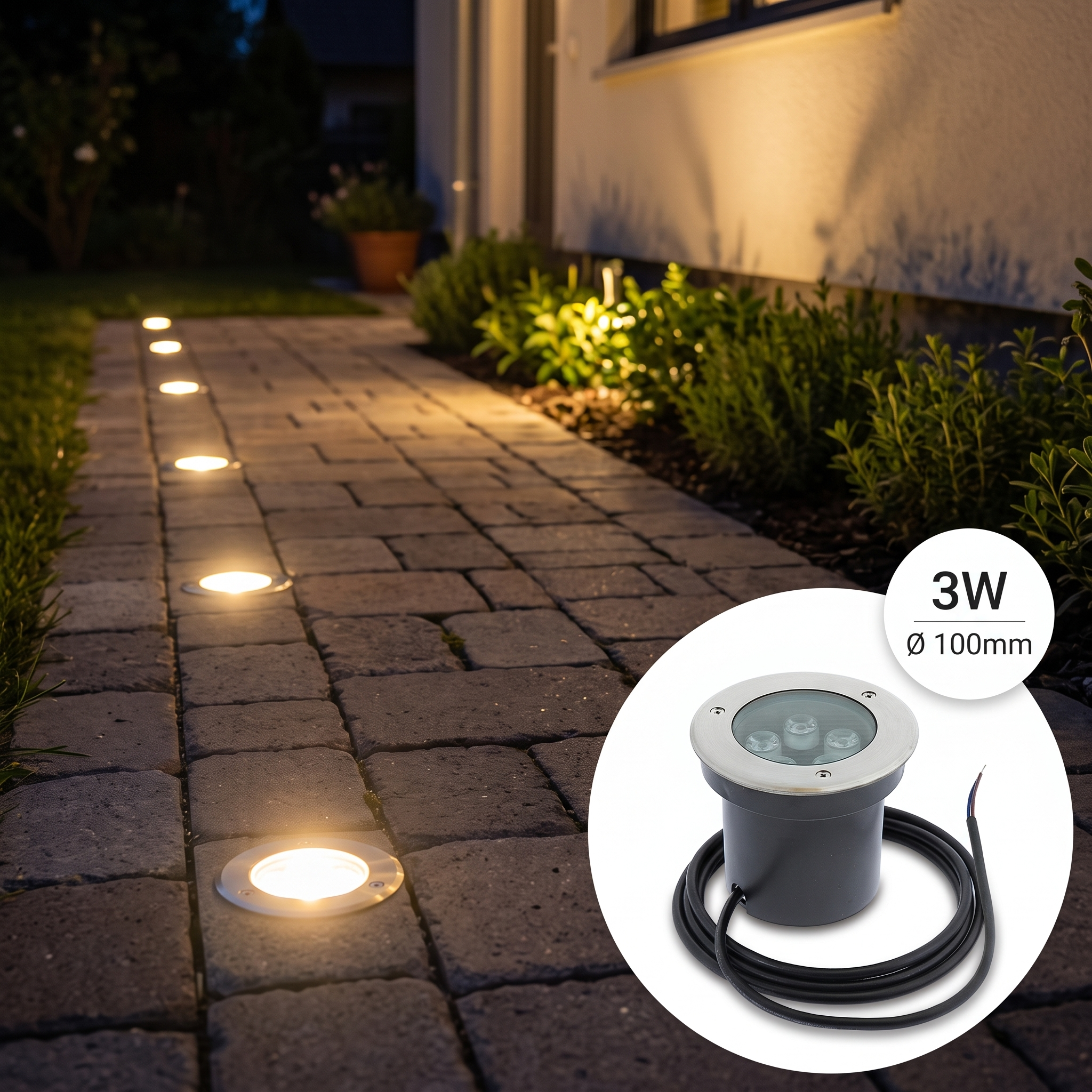
3W Burial Light - Warm White - Dia 100mm
Use IP68 burial lights flush in paving and along the lower wall line.
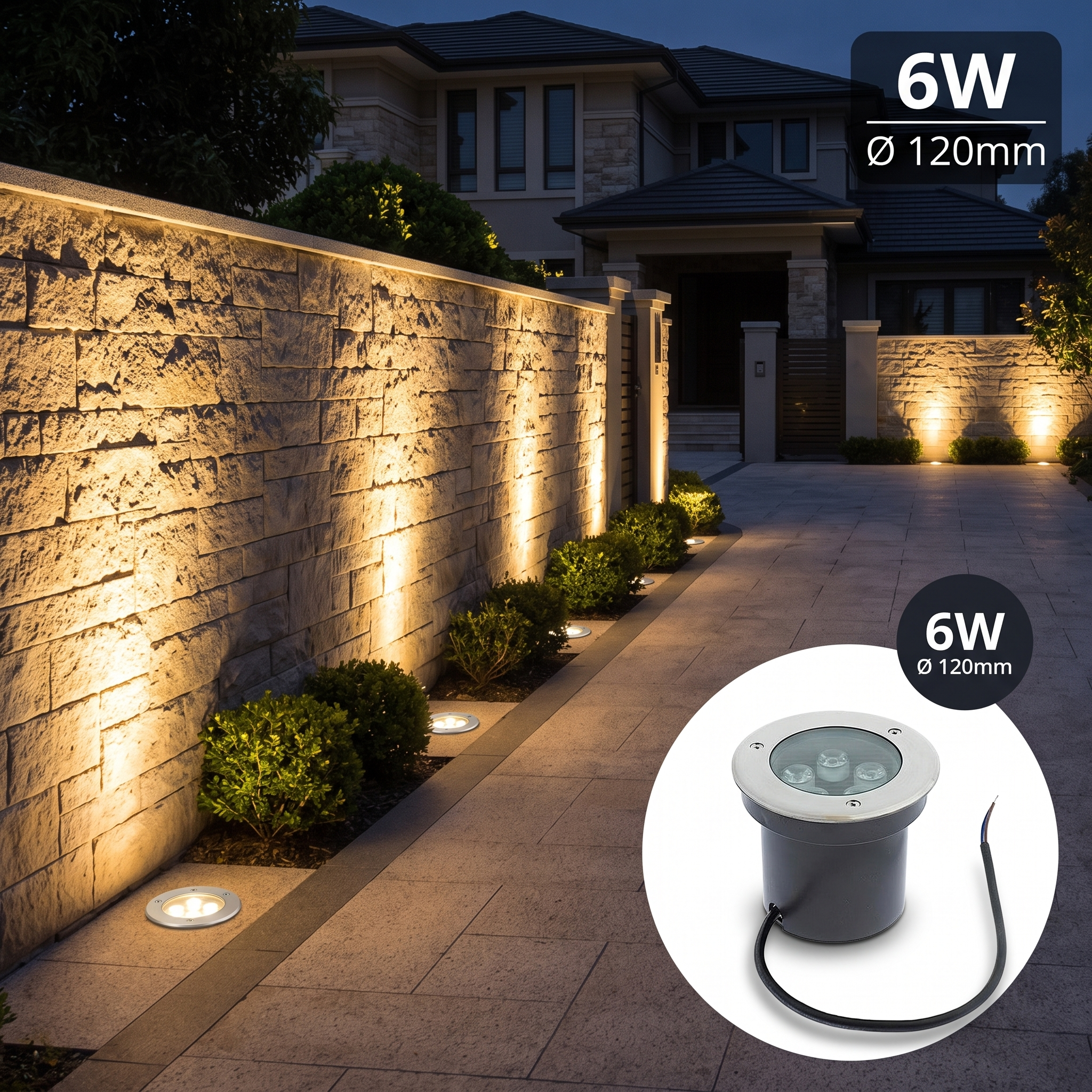
6W Burial Light - Warm White - Dia 120mm
Use IP68 burial lights flush in paving and along the lower wall line.
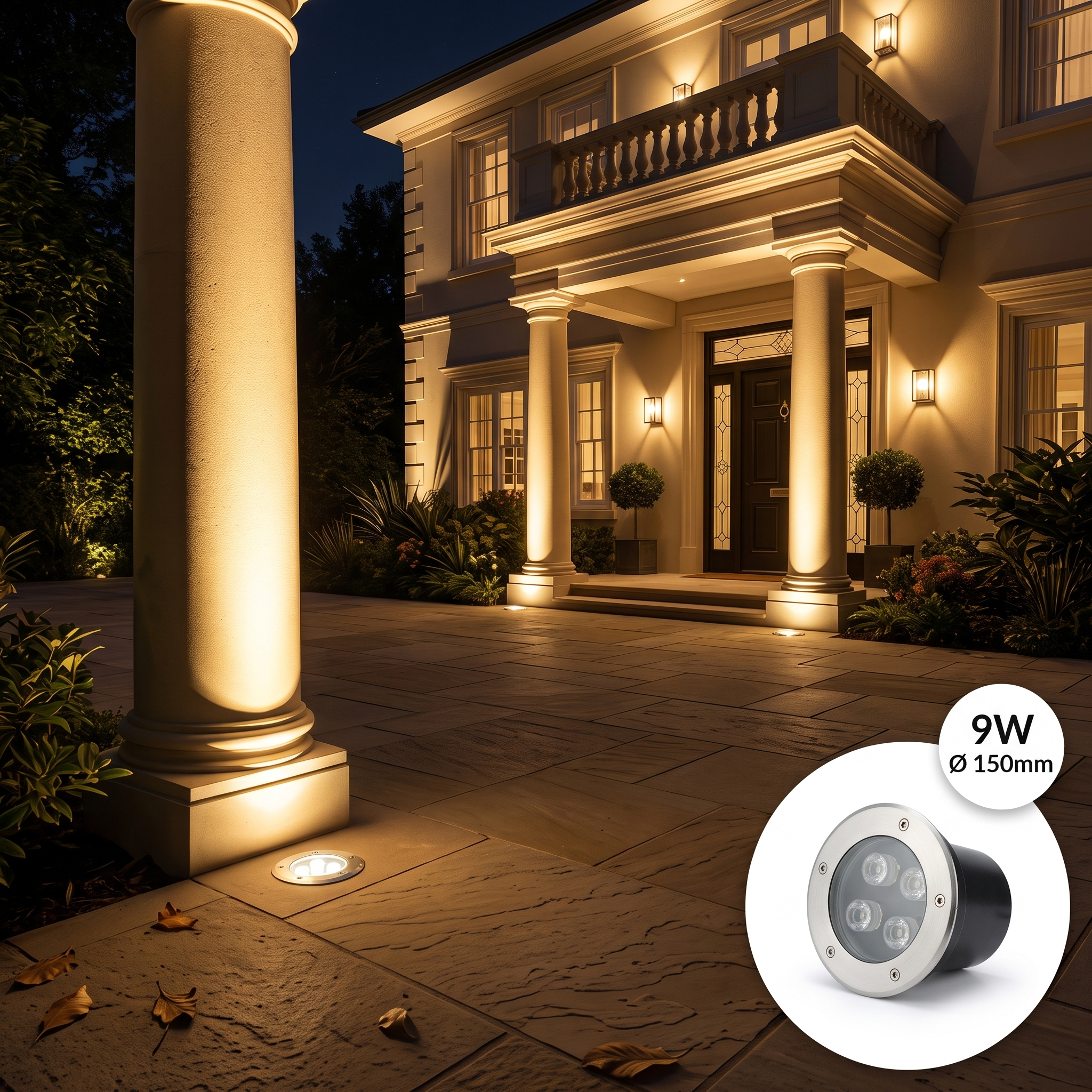
9W Burial Light - Warm White - Dia 150mm
Use IP68 burial lights flush in paving and along the lower wall line.
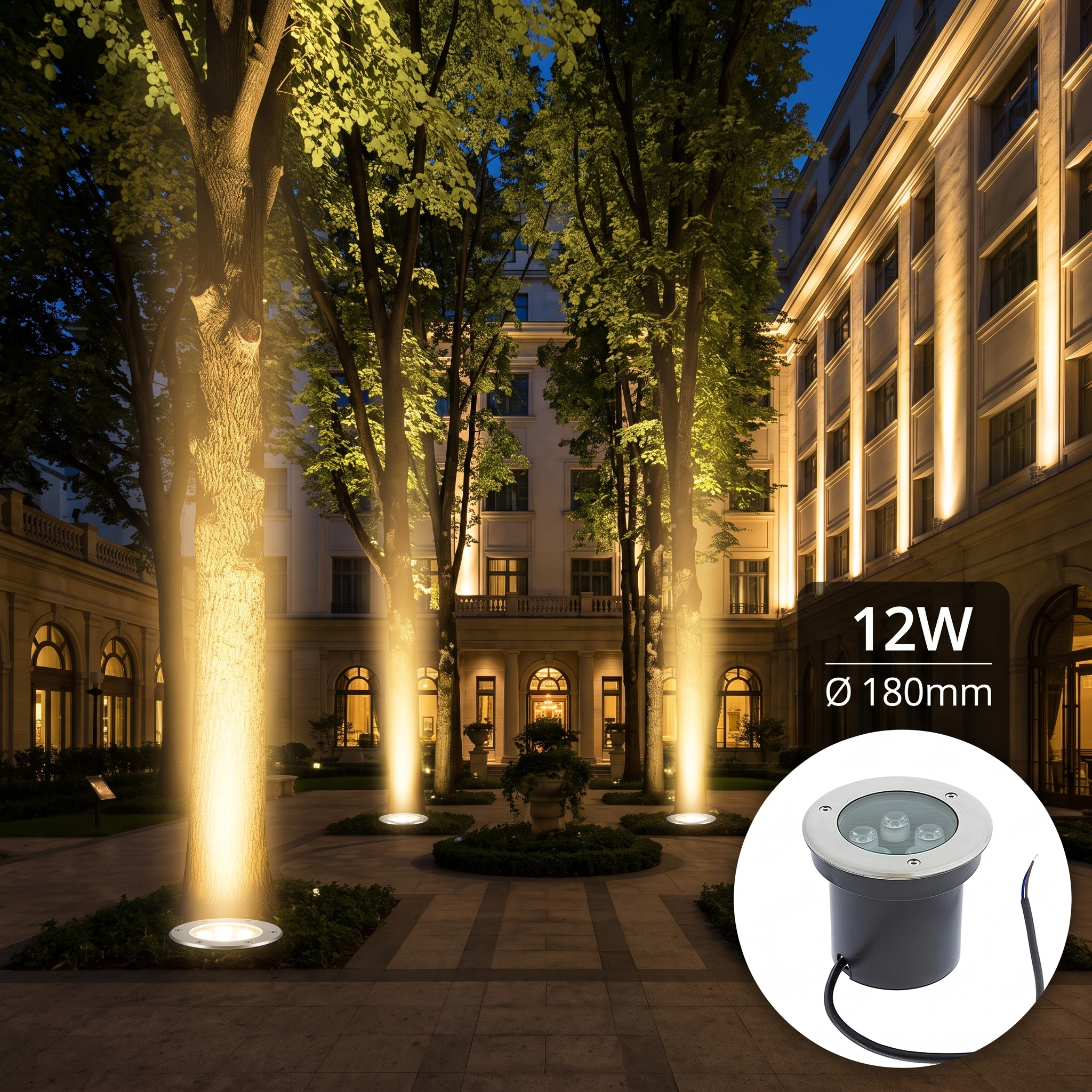
12W Burial Light - Warm White - Dia 180mm
Use IP68 burial lights flush in paving and along the lower wall line.
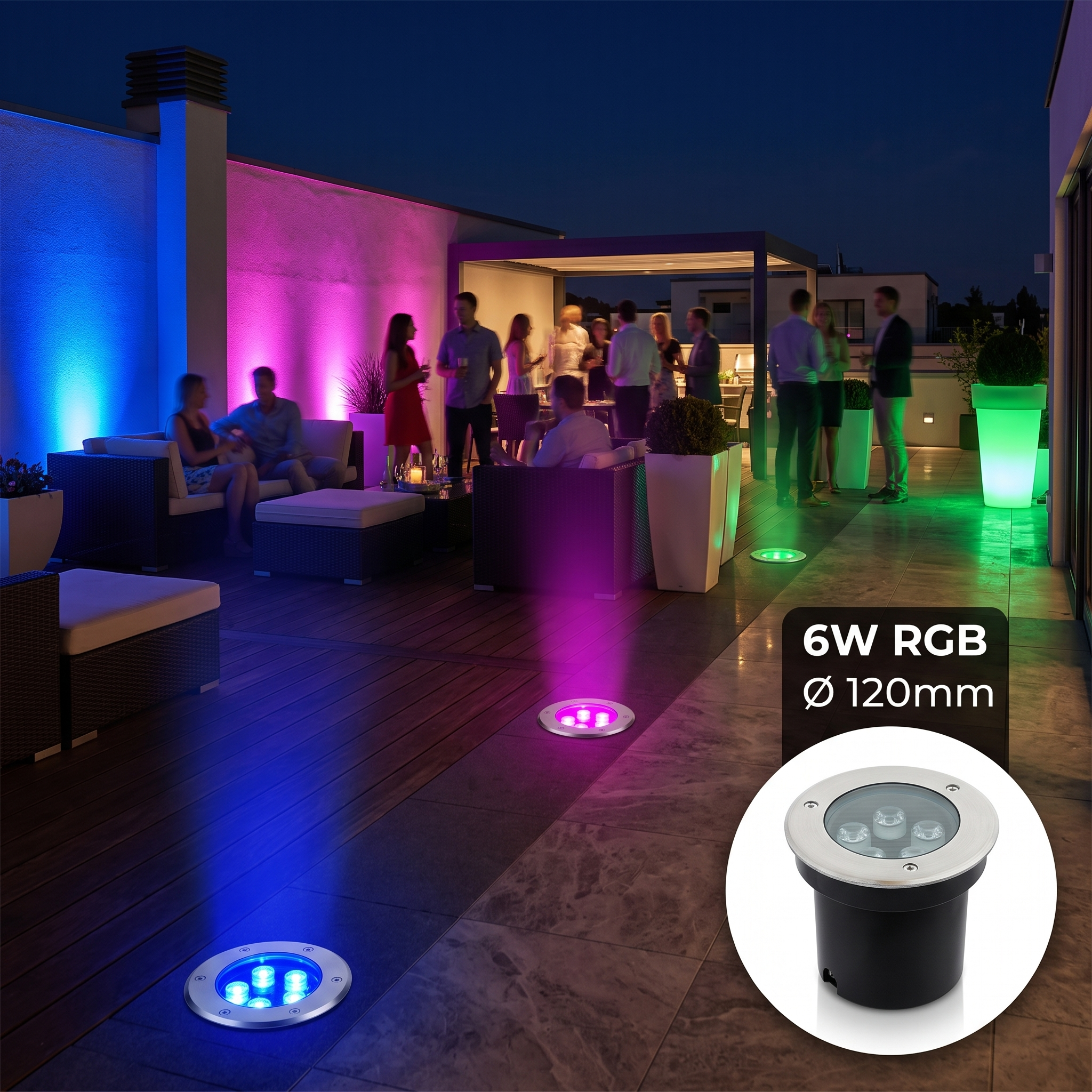
6W RGB Burial Light - With Remote - Dia 120mm
Use IP68 burial lights flush in paving and along the lower wall line.
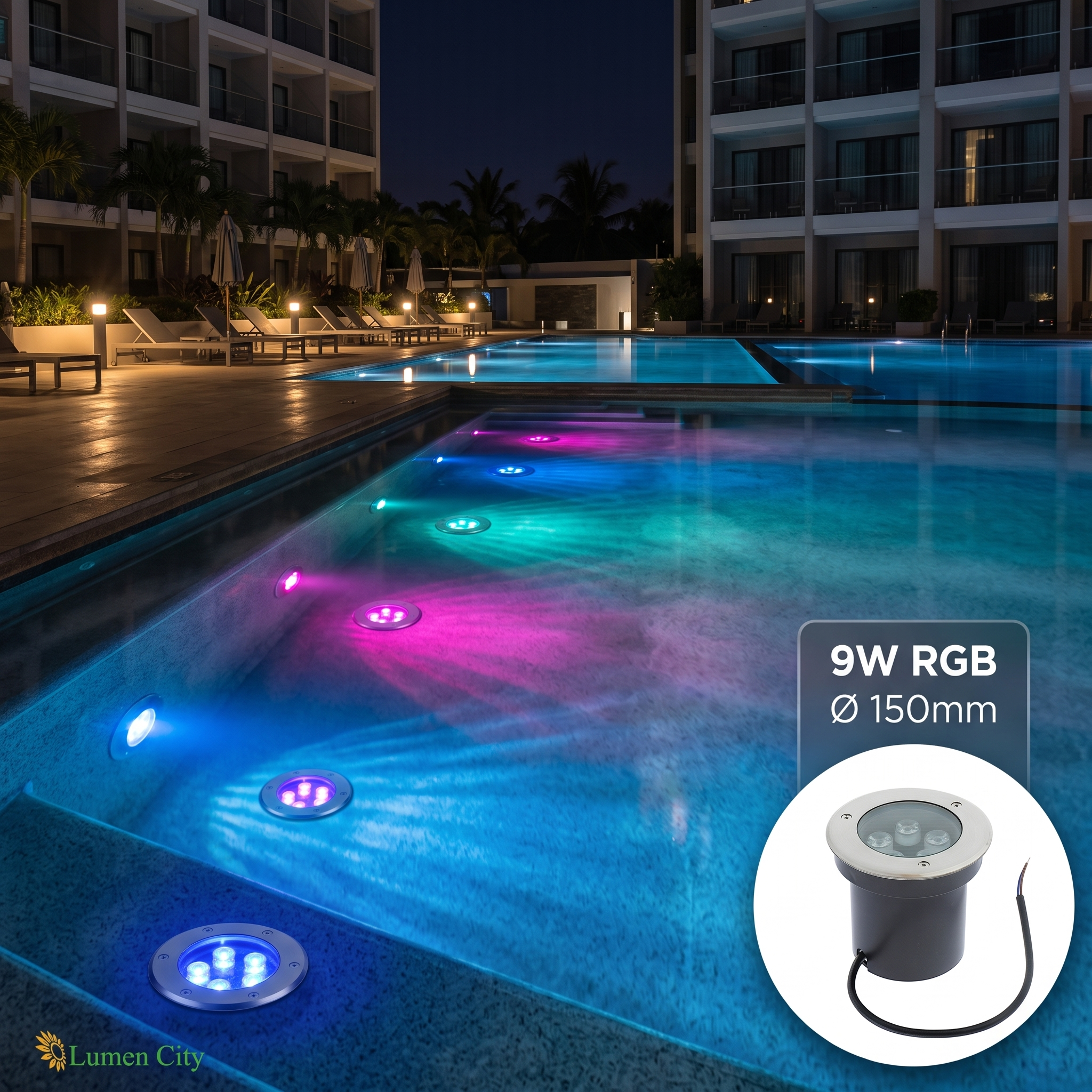
9W RGB Burial Light - With Remote - Dia 150mm
Use IP68 burial lights flush in paving and along the lower wall line.
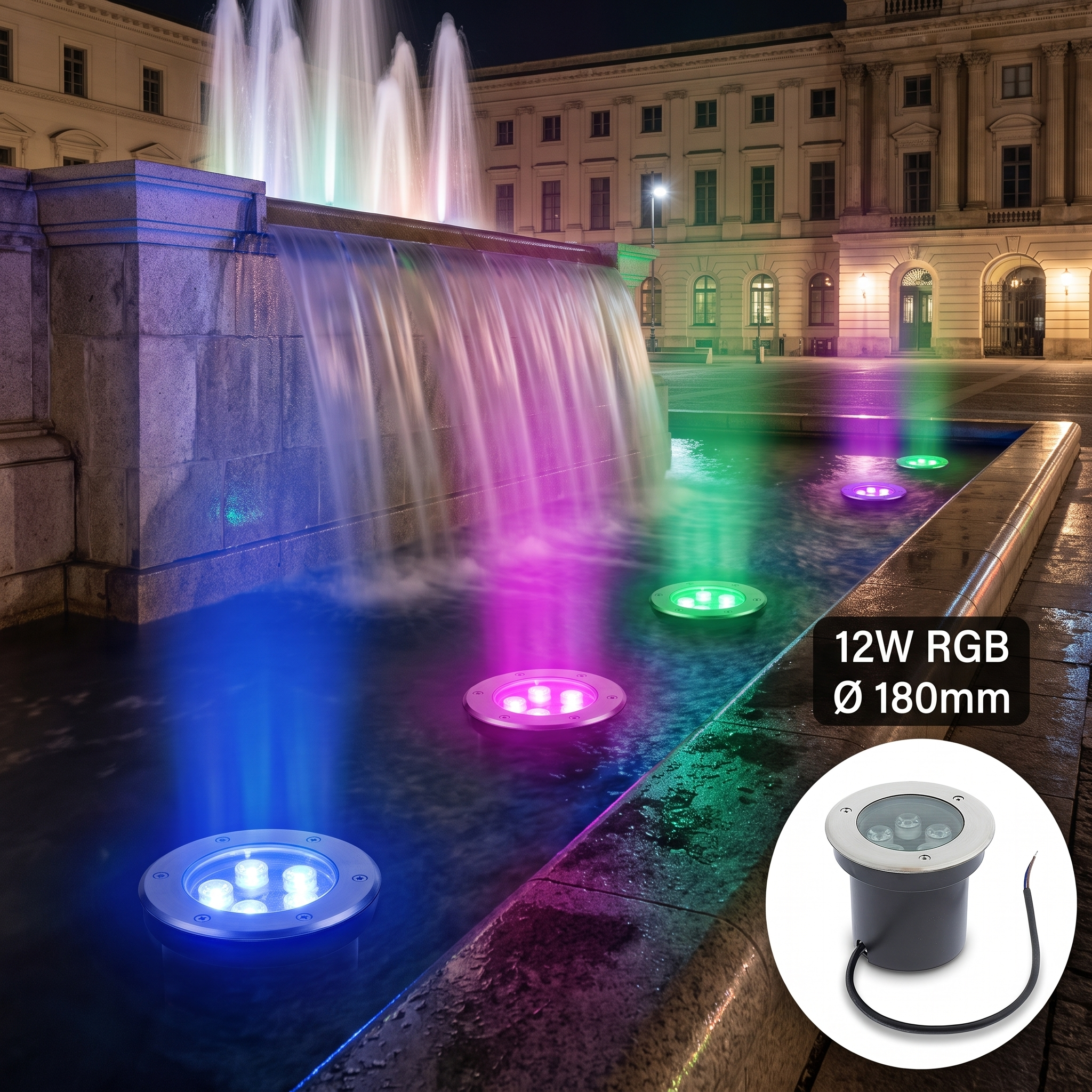
12W RGB Burial Light - With Remote - Dia 180mm
Use IP68 burial lights flush in paving and along the lower wall line.
Entrance & detail
Visitors see these fixtures up close around doors, steps and verandahs.
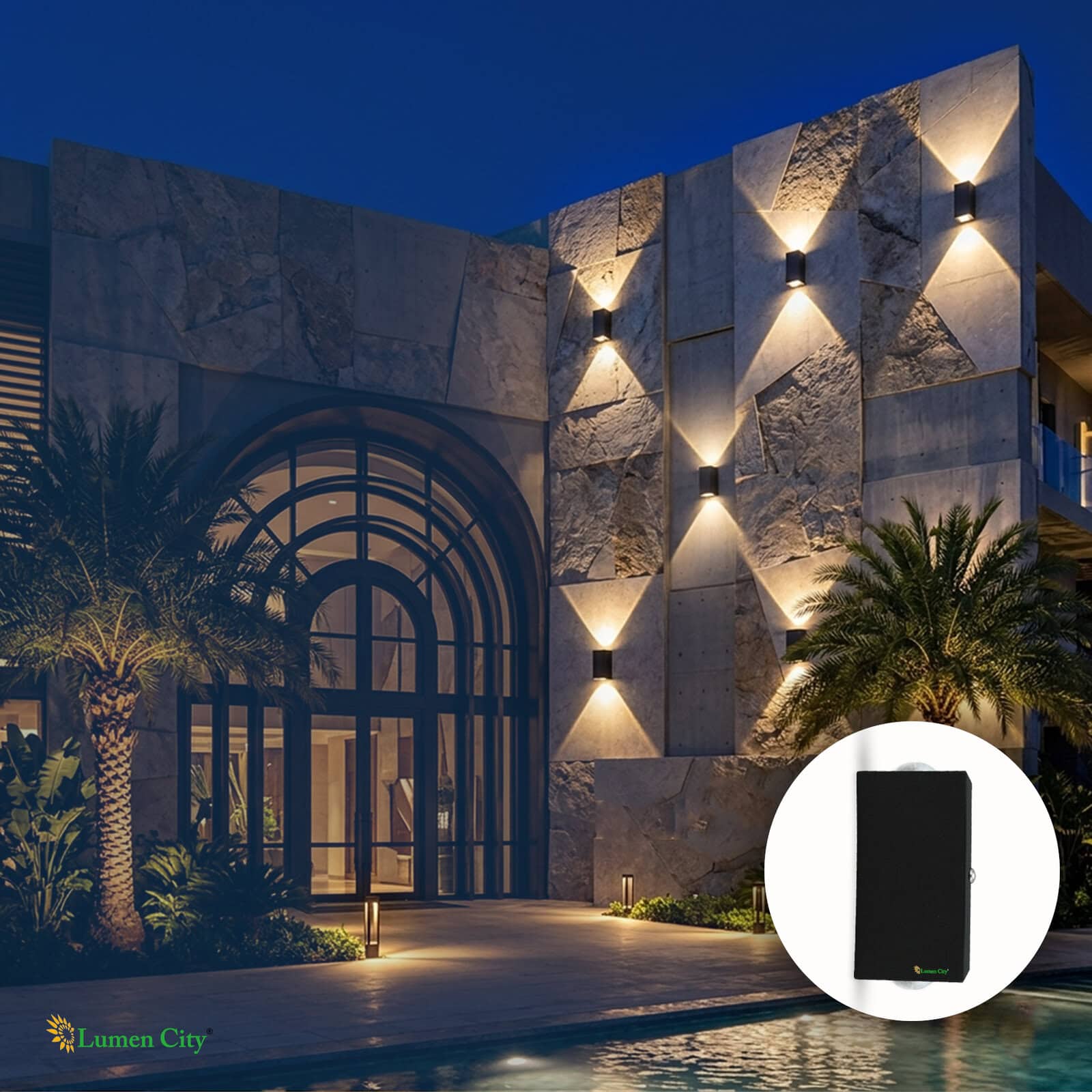
2 Way Up Down Wall Light - 75x75mm
Use up-down wall lights and recessed step lights for welcome and safe movement.
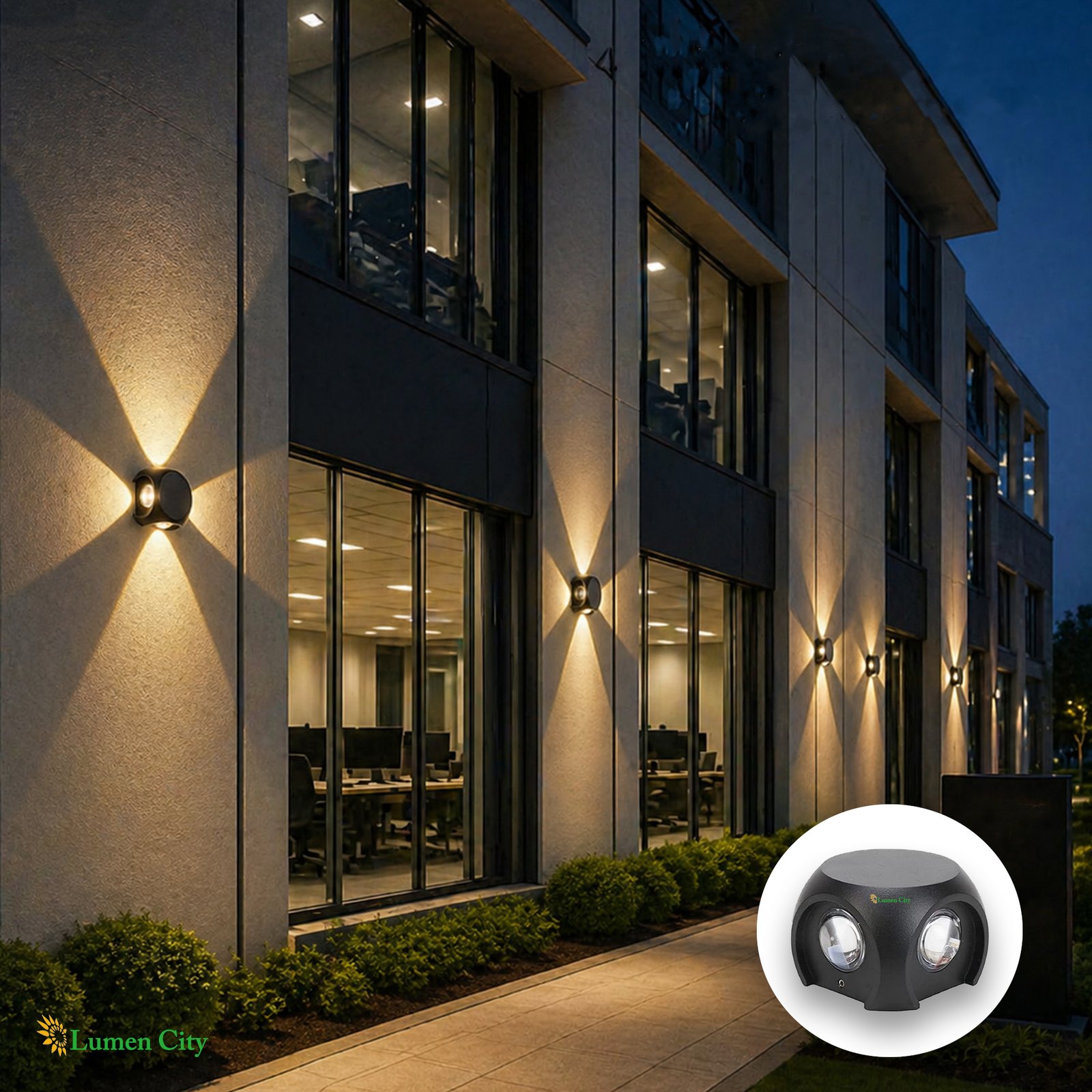
4 Way Wall Light - Cross Beam - 75x75mm
Use up-down wall lights and recessed step lights for welcome and safe movement.
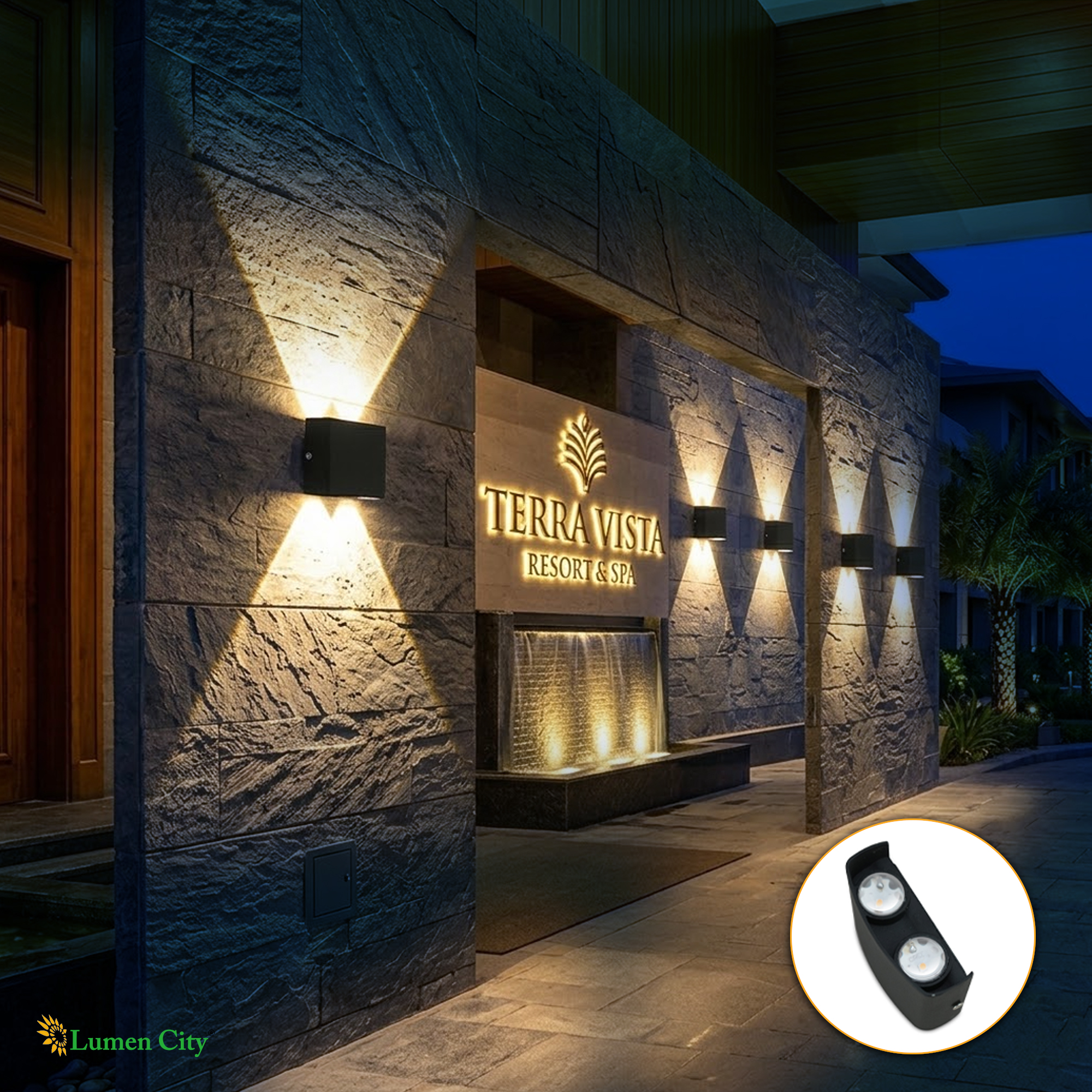
4 Lens Up Down Wall Light - 2+2 Beam - 140mm
Use up-down wall lights and recessed step lights for welcome and safe movement.
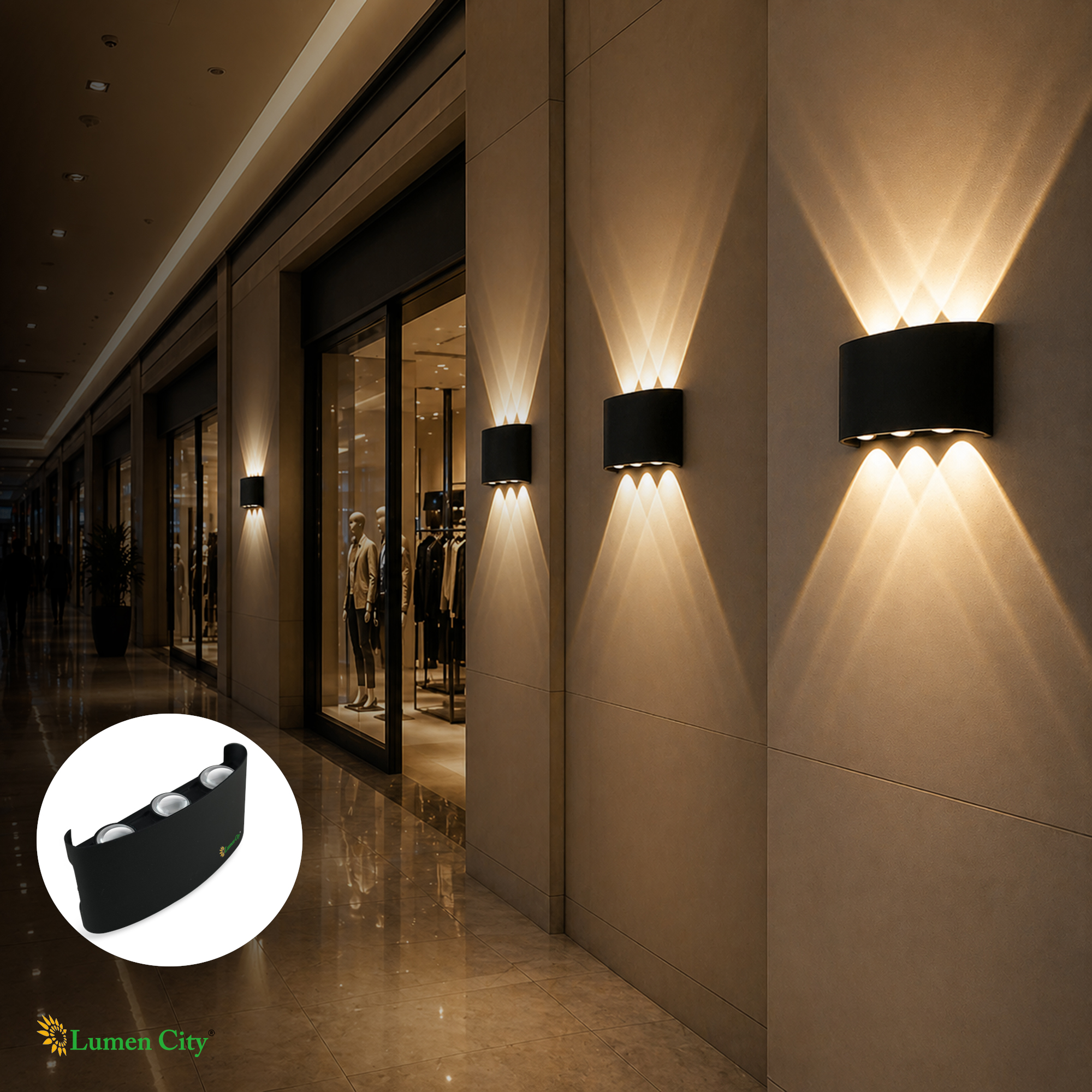
6 Lens Up Down Wall Light - 3+3 Beam - 180mm
Use up-down wall lights and recessed step lights for welcome and safe movement.
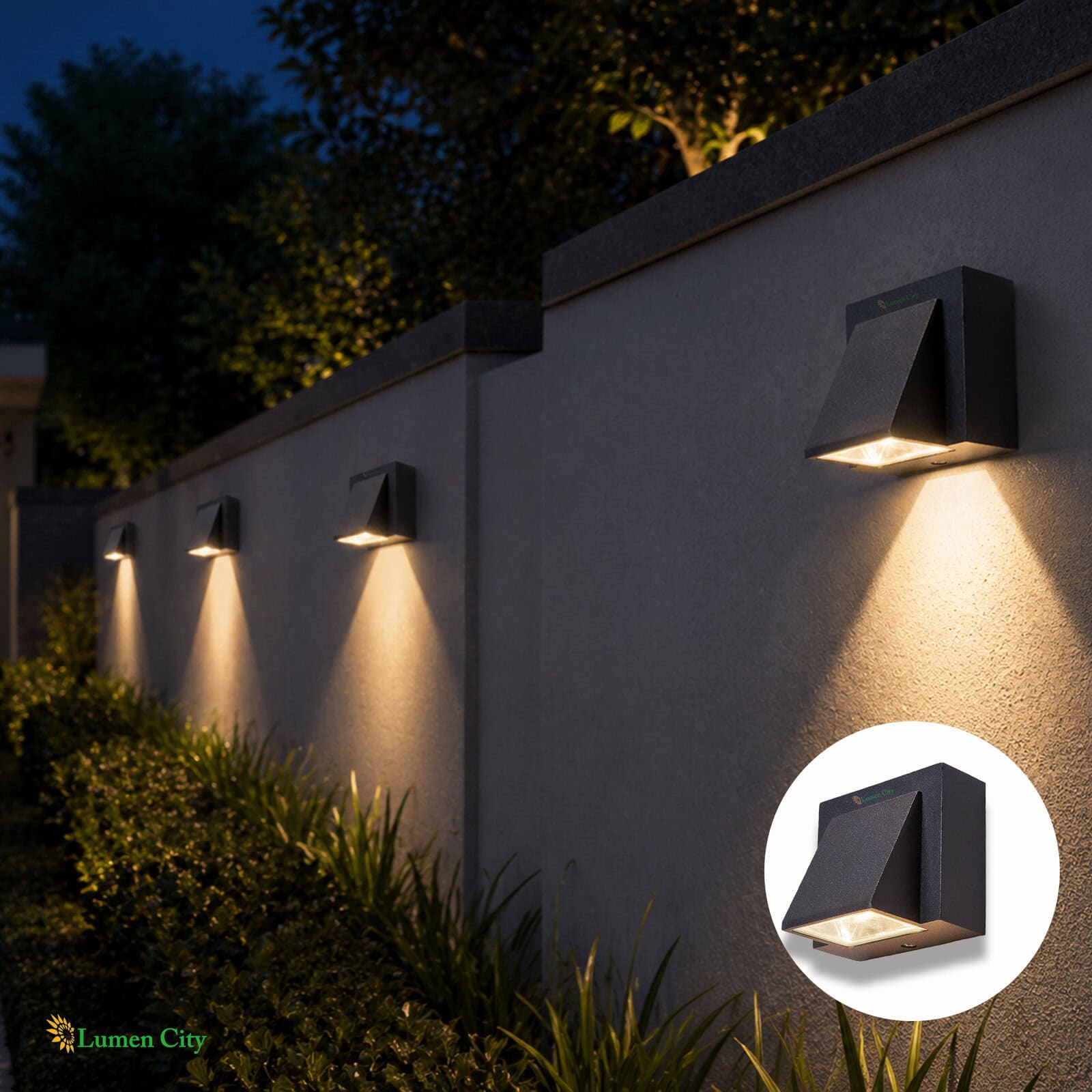
3W Outdoor Wall Down Light - 1 Way - 80x80mm
Use up-down wall lights and recessed step lights for welcome and safe movement.
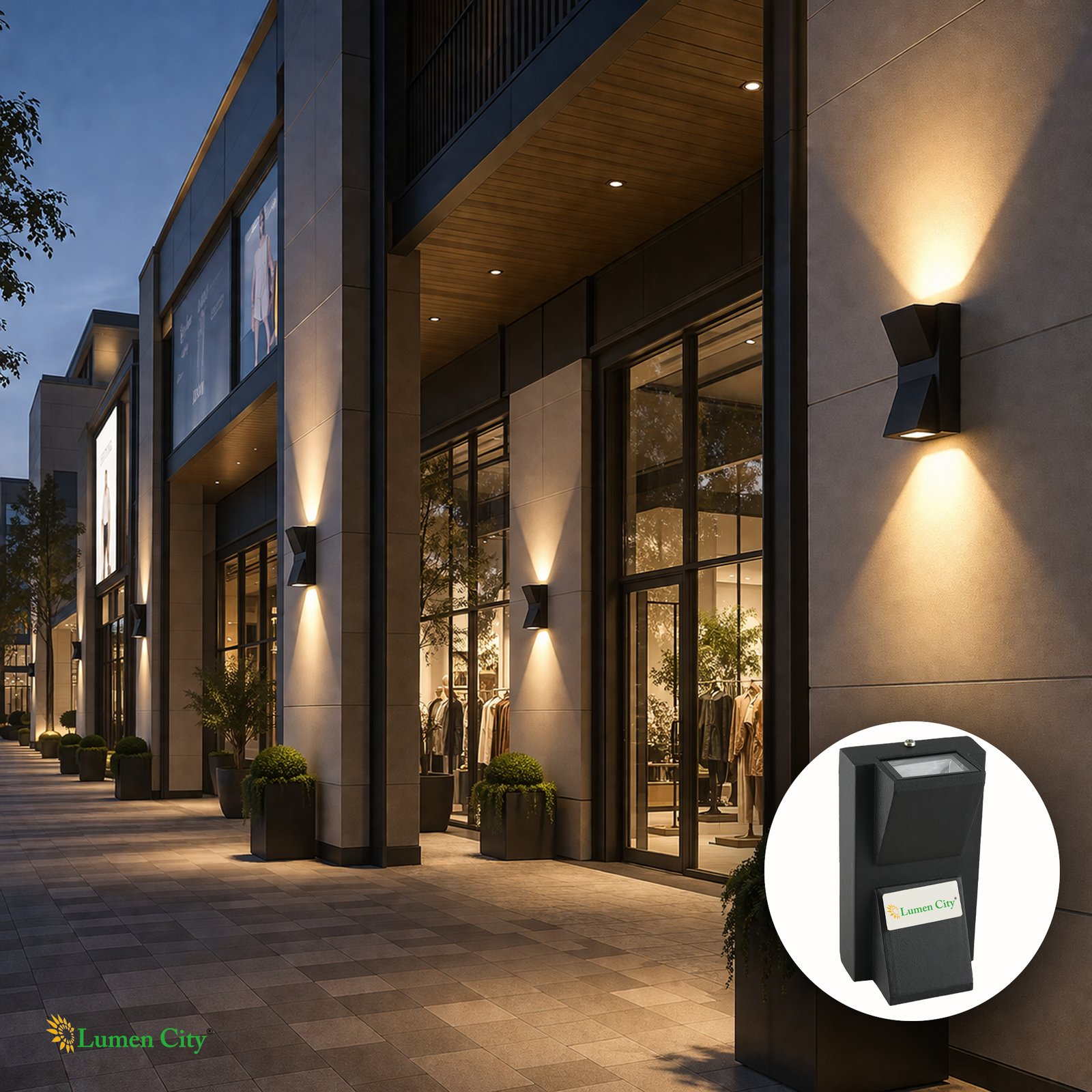
6W Outdoor Wall Light - 2 Way - 145x80mm
Use up-down wall lights and recessed step lights for welcome and safe movement.
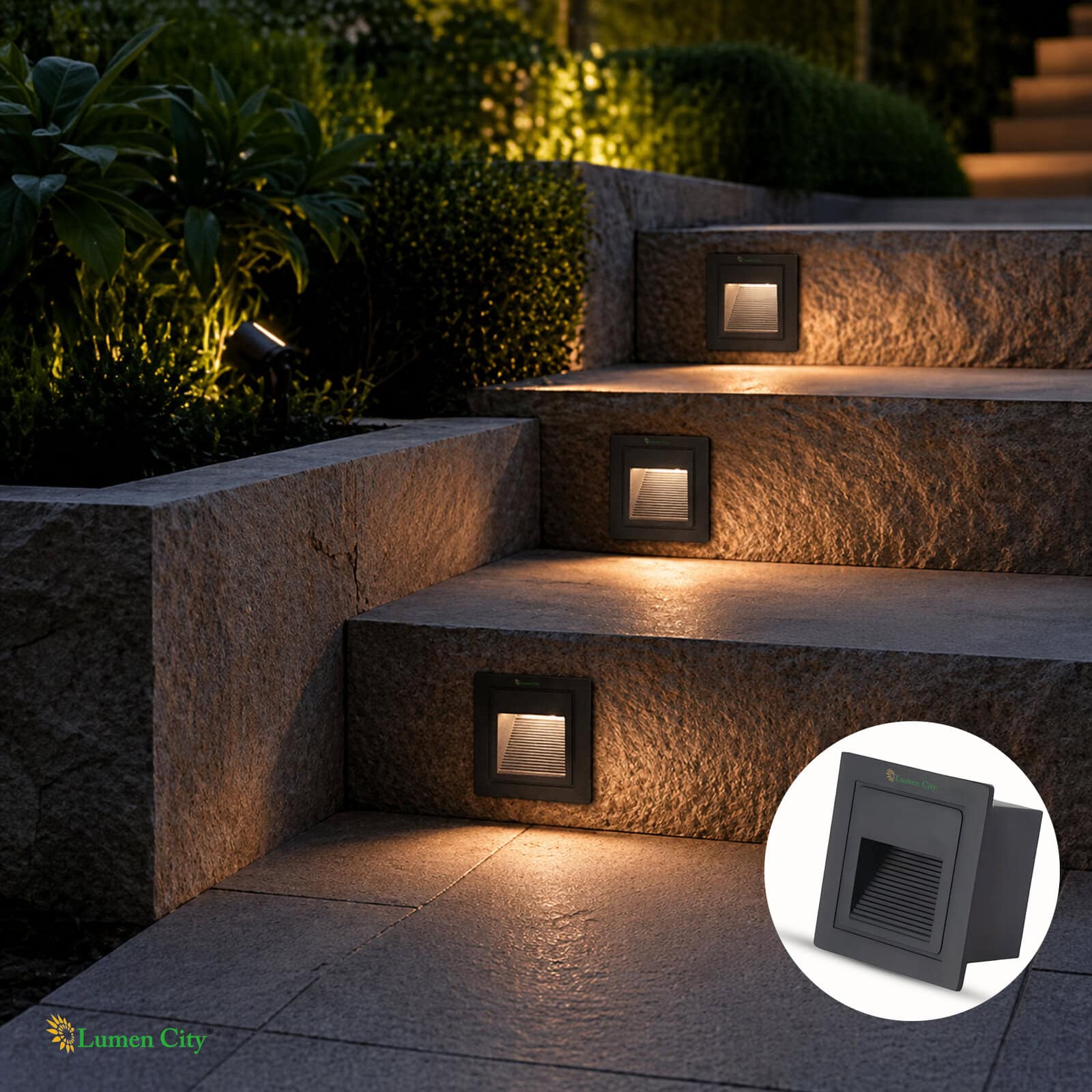
3W LED Step Light - Square Recessed - 85x85mm
Use up-down wall lights and recessed step lights for welcome and safe movement.
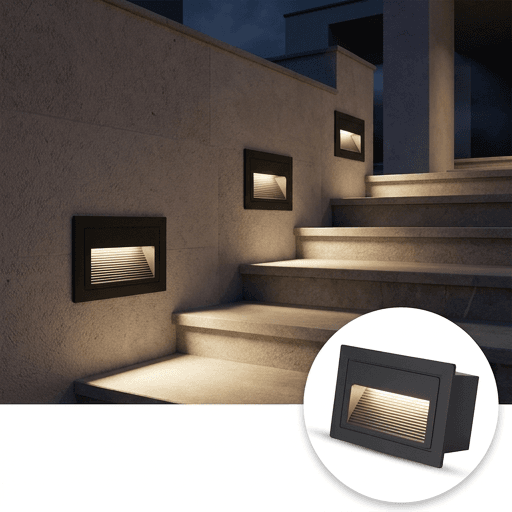
6W LED Step Light - Rectangular Recessed - 145x70mm
Use up-down wall lights and recessed step lights for welcome and safe movement.
Planting depth
Trees and shrubs in front of the elevation add foreground and resort-like depth.
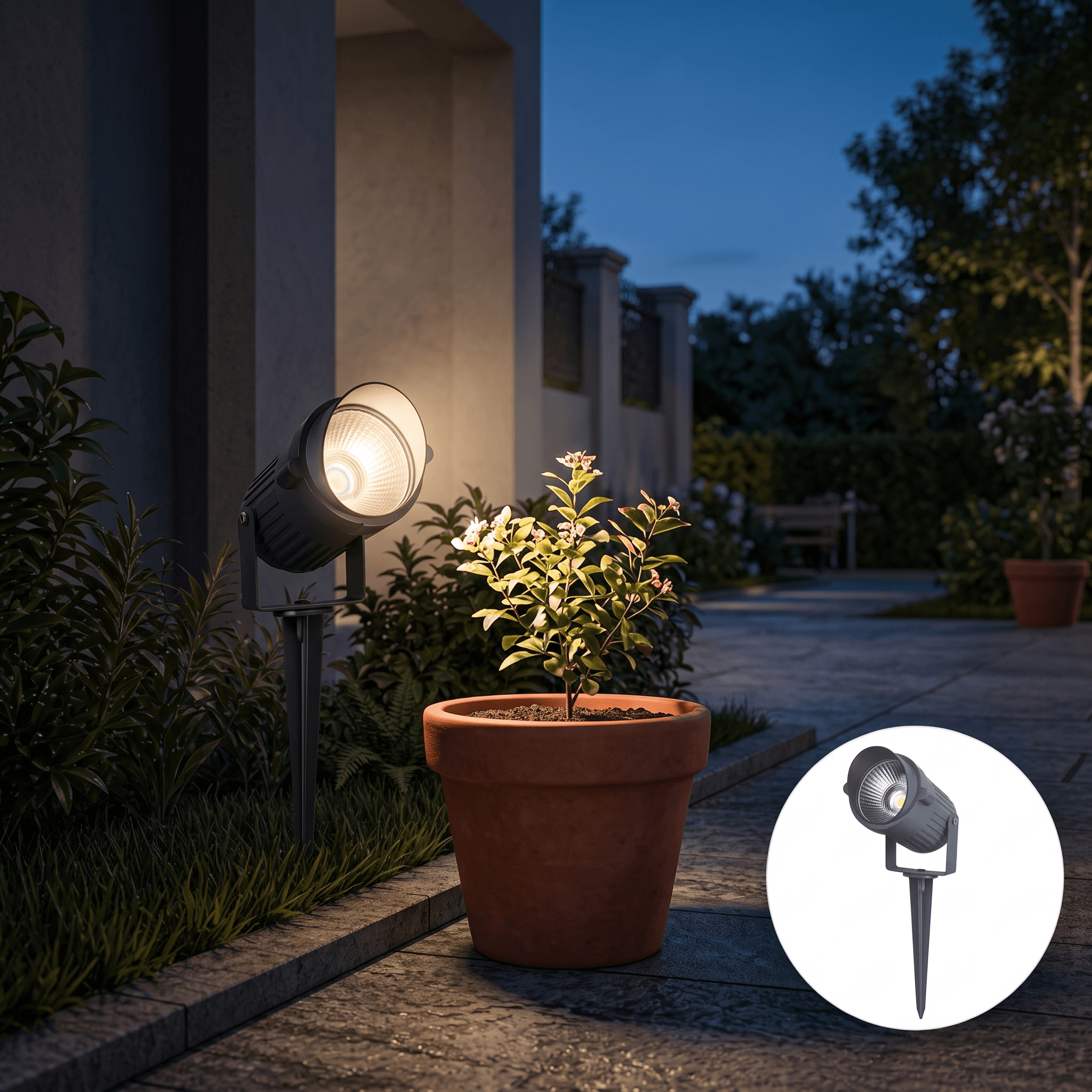
7W Garden Spike Light - Warm, Neutral & Cool White - 55x90mm
Aim spike lights into foliage; use a small porch flood only where security coverage is needed.
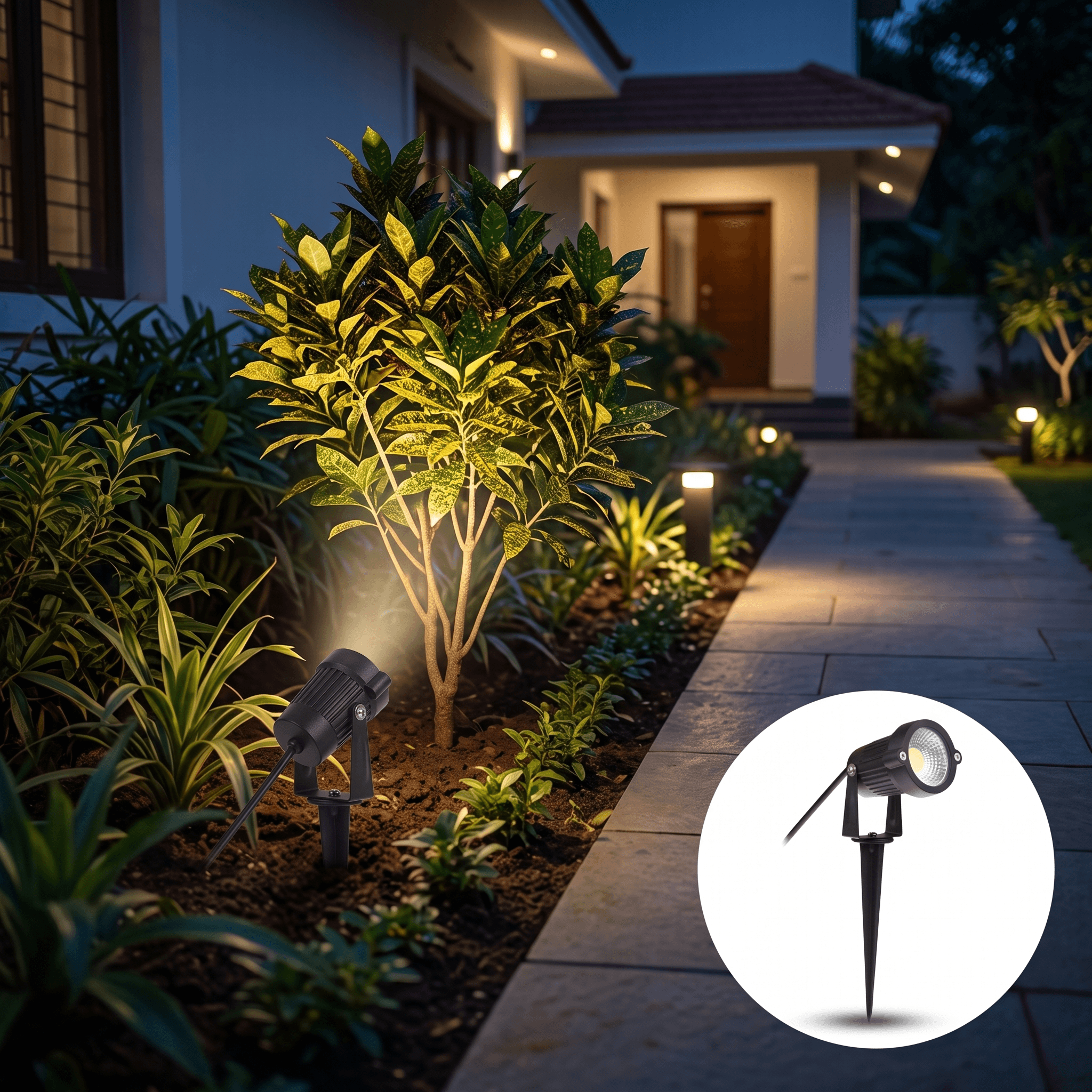
10W Garden Spike Light - Warm, Neutral & Cool White - 60x80mm
Aim spike lights into foliage; use a small porch flood only where security coverage is needed.
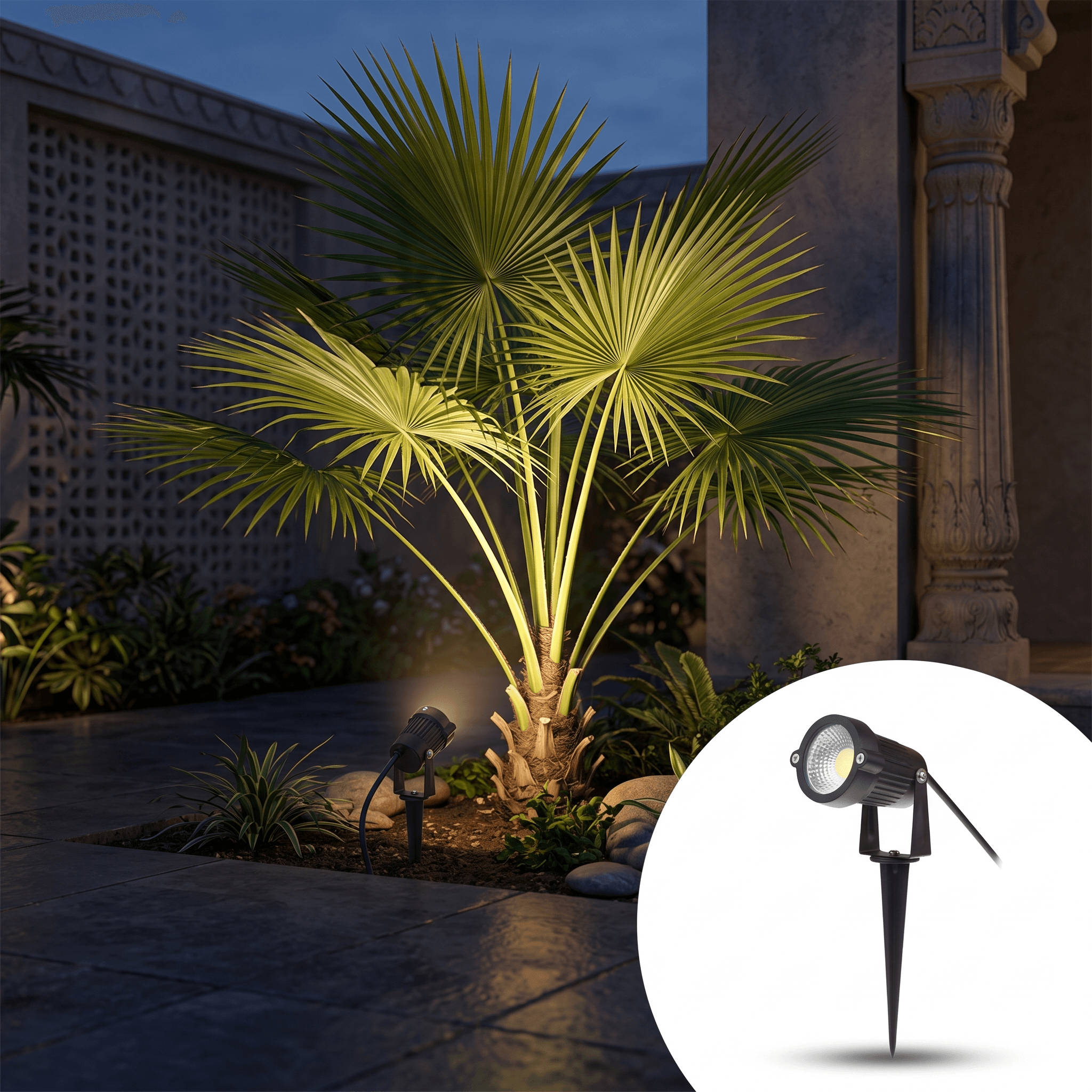
12W Garden Spike Light - Warm, Neutral & Cool White - 60x80mm
Aim spike lights into foliage; use a small porch flood only where security coverage is needed.
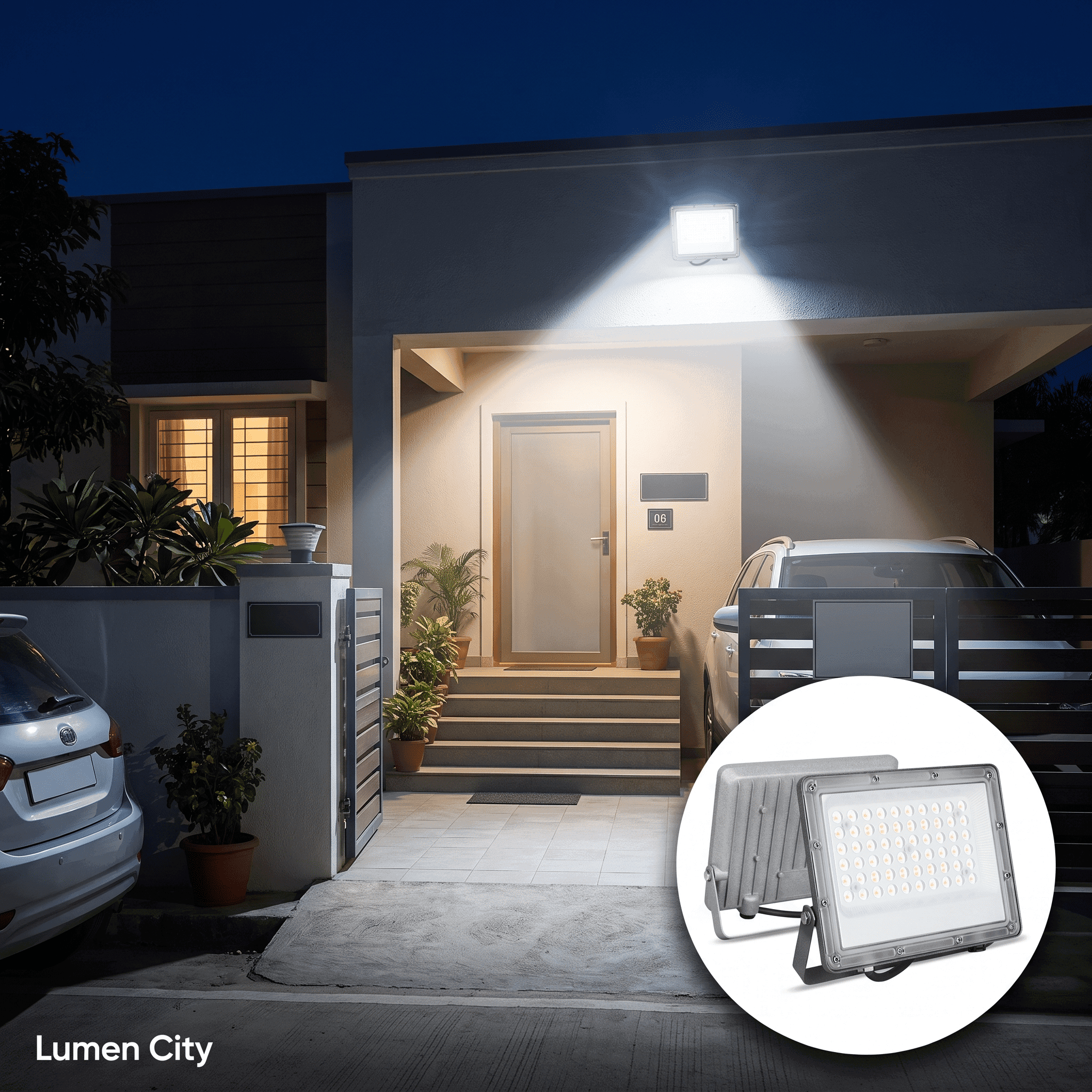
50W - IP65 Rating - 6000 Lumens - Wide Voltage - Slim Flood Light
Aim spike lights into foliage; use a small porch flood only where security coverage is needed.
Warm white elevation lighting in real homes
Small, correctly placed fixtures make the stone, pillars, plinth and planting visible after dark.
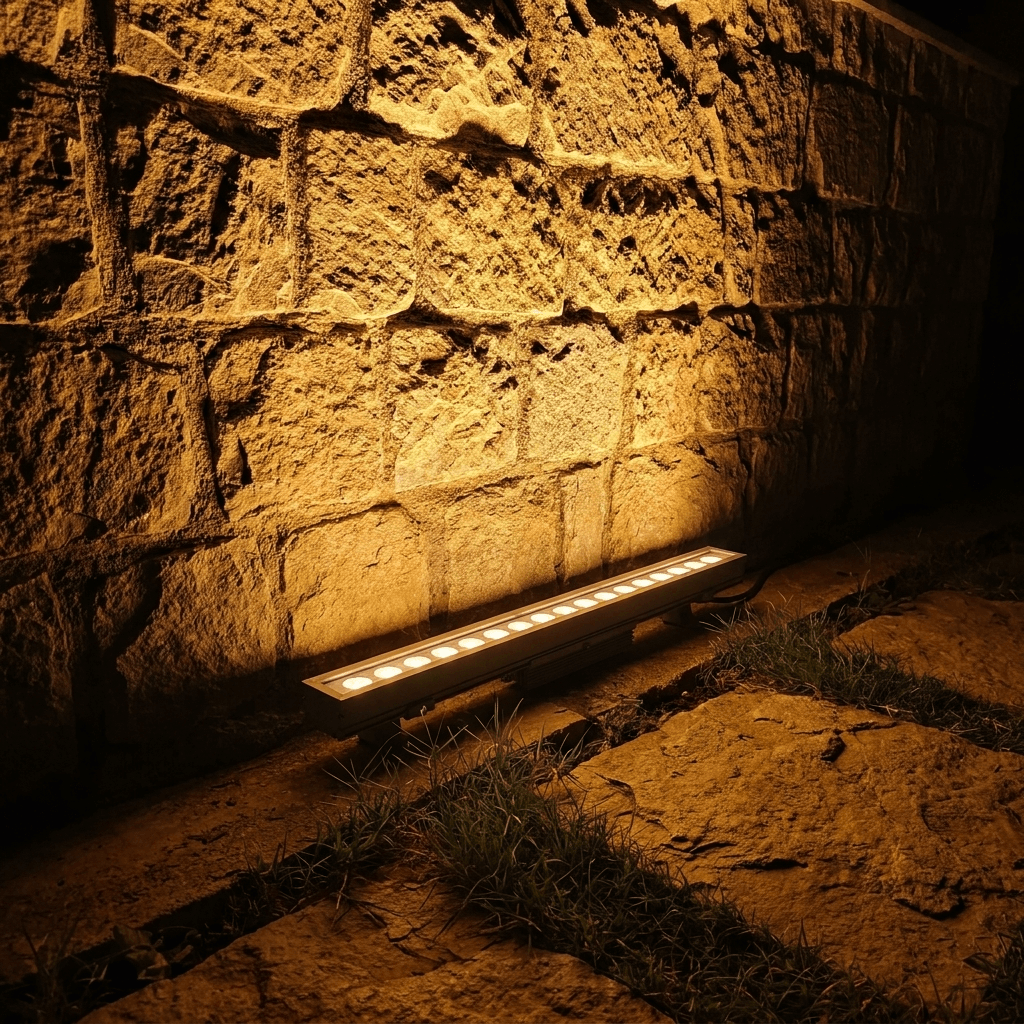
“The wall washers brought out the stone texture instead of flattening it.”
HomeownerVilla elevation, Ludhiana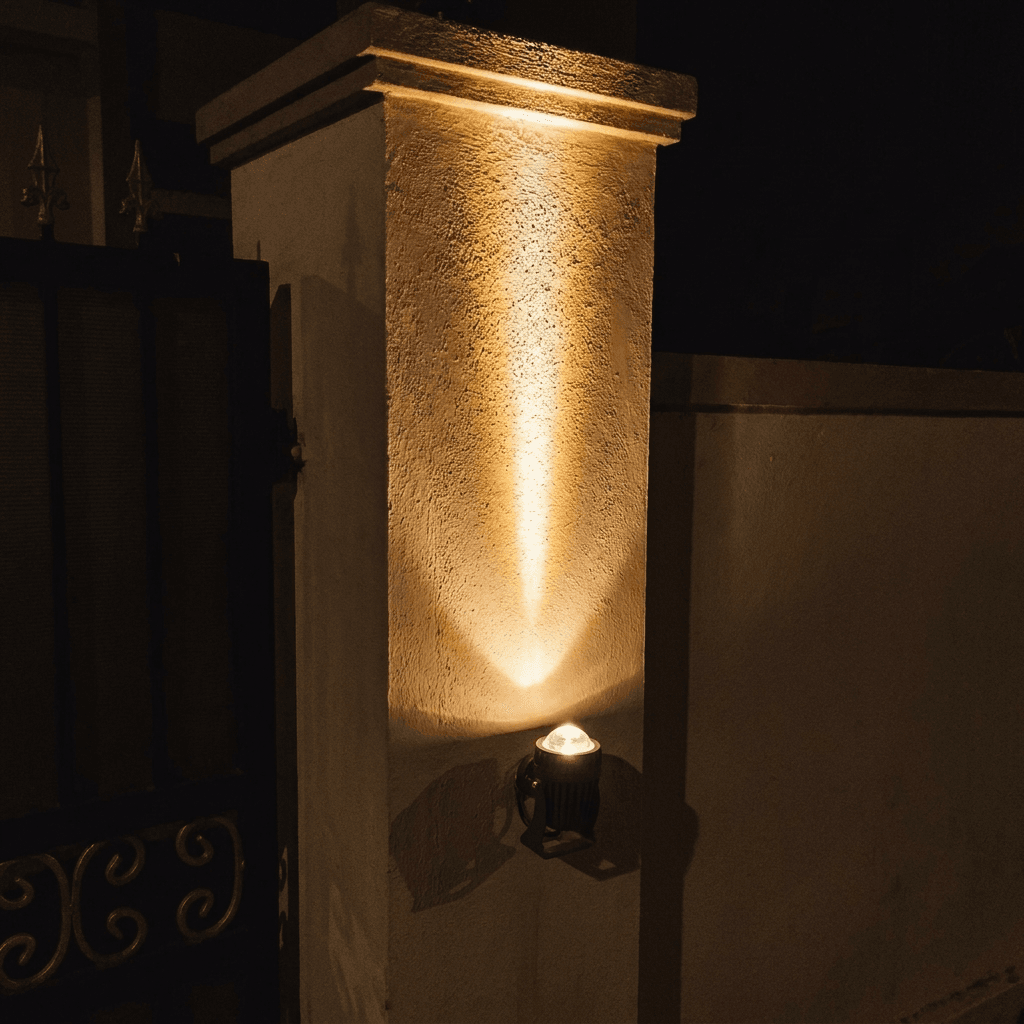
“Column lights made the pillars look taller and cleaner after dark.”
Architect teamNew house front, Jaipur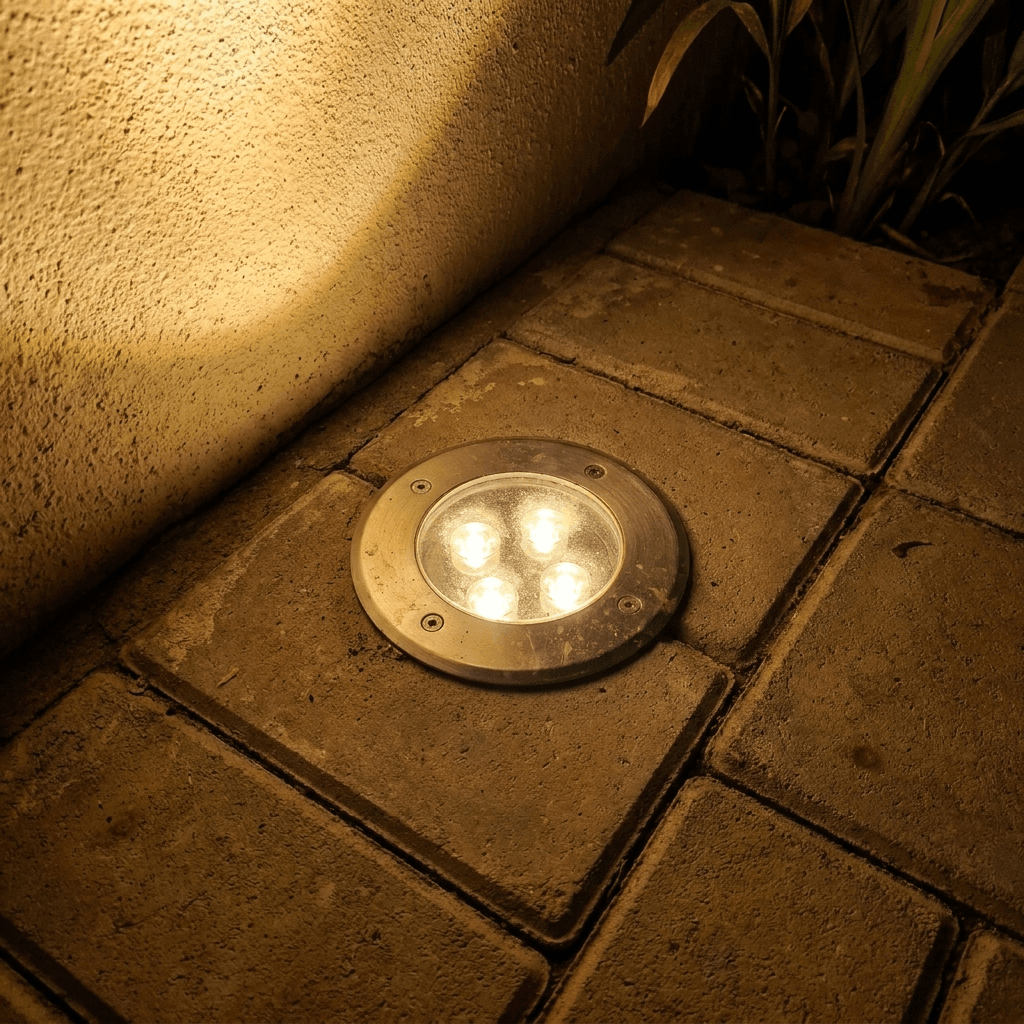
“Burial lights made the lower elevation feel finished, not floating.”
BuilderDriveway plinth, Noida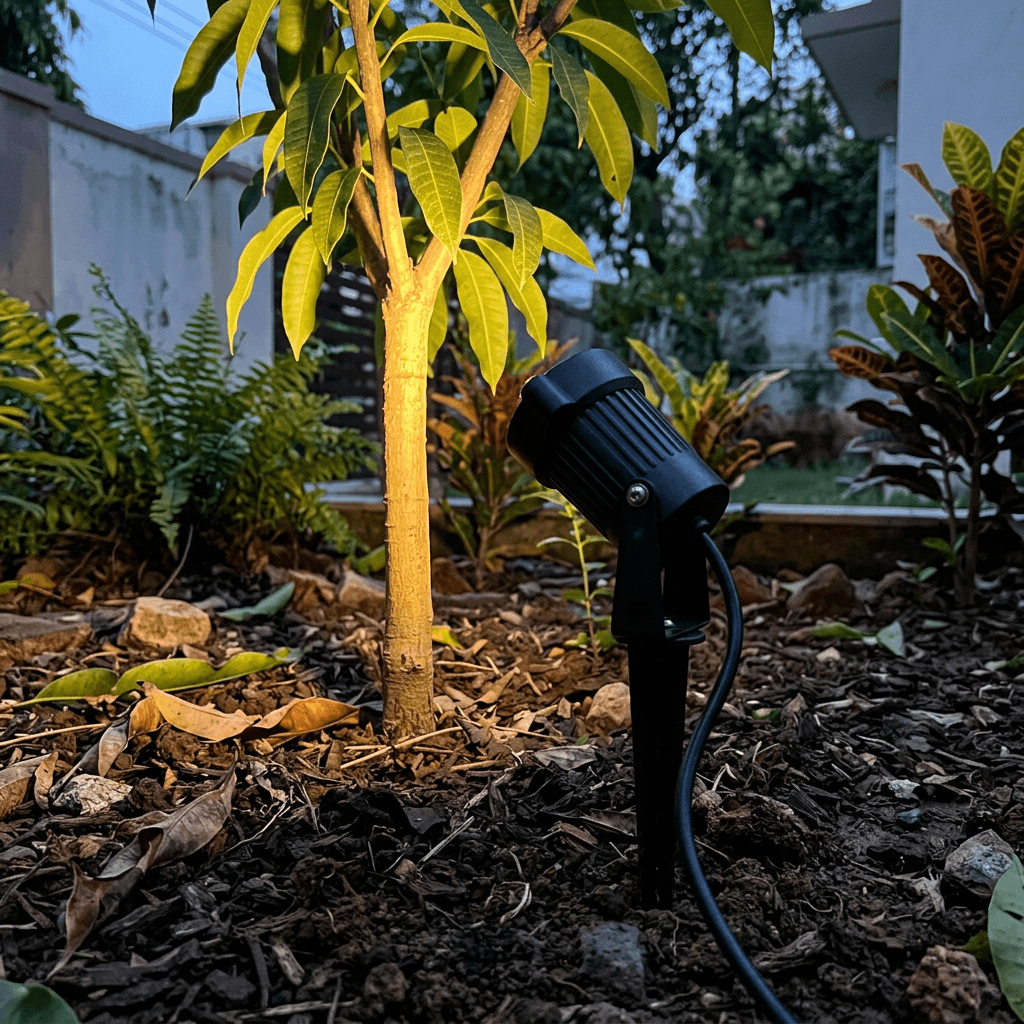
“Spike lights in the plants added depth in front of the elevation.”
Landscape contractorFront garden, BengaluruLumencity in the press
Coverage across energy, solar and national media for Lumencity's lighting work.
 Mercom India
 The Hindu
 Saur Energy
 EQ Magazine
 DD News
How to Light Your House Front Elevation
Use warm-white close-up lighting to reveal the materials and depth you already paid for.
1. Never flood your own elevation
If you take one thing from this page, take this. A flood light aimed at your house from the compound wall throws wide, even light straight at the surface. Every shadow disappears. The stone texture you paid for flattens into a photograph of stone.
2. Warm white - the most expensive mistake in Indian home exteriors
3000K warm white for the entire elevation. Every fixture, without exception. Warm light flatters everything an Indian elevation is made of: sandstone, granite, marble, teak, exposed brick, textured plaster, terracotta. It reads as welcoming and expensive.
3. The five roles - what goes where
Every good elevation scheme is built from five fixture roles. Most houses need all five, and the reason schemes look incomplete is that one has been skipped. Role 1 - Uplight the verticals. Columns, pillars, structural piers, the sides of a double-height entrance.
4. Fixture selection at a glance
Fixture Beam Facade column light 7° narrow Wall washer 30° Burial light (IP68) Flush in paving Up-down wall light Up/down Recessed step light Glare-shielded Garden spike light Adjustable Facade column light 7° narrow
5. How many fixtures does a house front need·
The honest answer depends on the elevation, but these ratios hold across most Indian homes. A typical 30 x 40 ft or 40 x 60 ft house front: - 2 gate pillar lights (one per pillar) - 4-6 column lights on the elevation's vertical elements - 4-6 wall washers on the main feature wall - 6-8 burial lights along the plinth and driveway - 2-4 up-down wall lights at the entrance and verandah - 2-4 step lights - 2-3 spike lights for trees in the front garden Roughly 22 to 33 fixtures for a complete front elevation scheme. That number surprises most homeowners, who expect four or six. It is the right number, and the reason is that elevation lighting works through many small fixtures each doing one job - not through a few large ones doing all of them badly.
6. What it costs to run
The question every homeowner asks, and the answer that usually settles the decision. A 25-fixture elevation scheme - column lights, wall washers, burial lights, wall lights and spikes - typically draws 250 to 300 watts total. Running five hours an evening, every evening: about 1.4 units a day, or roughly 42 units a month. At ₹8 a unit, around ₹340 a month to light your entire house front every night of the year.
7. Plan it before the plaster goes on
The best time to plan elevation lighting is during construction. The second best is before the driveway is paved. After that, every fixture becomes a compromise. During construction, get these in: - Conduit to every fixture position, especially wall washer positions at the plinth and column light positions at pillar bases.
8. The 220V and 24V distinction
This catches people out and produces a fixture that will not light. Runs direct from 220V mains, no adapter: - All burial lights (3W-12W, warm white and RGB) - All column lights (10W, every colour) - All spike lights (5W-20W) - 18W and 36W wall washers, warm white and RGB, including the visor model - All up-down wall lights and step lights Needs a 24V DC power supply, sold separately: - 36W Linkable Wall Washer - 36W DMX Wall Washer (RGBW) - Flexible cuttable wall washer roll The 24V 16A supply (₹1,449) powers up to eight washer bars or roughly 13 m of the flexible roll. If your order includes any of the three fixtures above, the supply must be on the same order. Wiring a 24V bar to 220V mains kills it instantly.
9. Colour - for festivals, not for every night
RGB has a place on a home elevation, and that place is Diwali, weddings, birthdays and Independence Day. The right pattern is warm white as the everyday scheme, with colour available on demand. RGB burial lights and the RGB wall washer come with remotes, so you switch to colour for the occasion and back afterwards. Coloured column lights in red, green, blue and pink are available where a permanent accent is wanted on a specific feature.
10. Common mistakes, and what they look like
- Flood lights on the compound wall aimed at the house. Flat, shadowless, textureless. The most common and most damaging error. - Cool white. Grey stone, plastic-looking wood, commercial character. - No plinth lighting.
11. Before you order
- Send elevation photographs. Front, and one from each side approach. For this category, photographs tell us far more than dimensions do. - Note the materials - stone cladding, wooden louvres, plain plaster, exposed concrete. Material decides technique. - Say what stage you're at.
Front Elevation Lighting FAQ
Answers for homeowners, contractors and builders planning a premium house front.
Five fixture types do the work: 7° narrow-beam column lights uplighting pillars and vertical elements, wall washers grazing the main wall surfaces, IP68 burial lights flush in the plinth and driveway, up-down wall lights at the entrance, and spike lights uplighting trees in the front garden. Most houses need all five.
A typical Indian house front takes 22 to 33 fixtures across all five roles - roughly 2 gate lights, 4-6 column lights, 4-6 wall washers, 6-8 burial lights, 2-4 wall lights, 2-4 step lights and 2-3 spike lights. That's higher than most people expect, because elevation lighting works through many small fixtures each doing one job.
Warm white, 3000K, for the entire elevation. It flatters sandstone, granite, marble, teak, brick and plaster, and it's what hotels and resorts use. Cool white makes the same materials look grey and commercial - it's the single most common mistake on Indian home exteriors, and extra wattage doesn't fix it.
Because flood lights erase shadows. A wide beam aimed at the house from a distance lights every surface equally, so the stone texture and the depth in the elevation flatten out. Elevation surfaces need narrow-beam fixtures placed 150 to 300 mm from the wall, so each edge casts its own small shadow.
Fixture cost depends on the elevation, but a complete scheme for a typical house front is one of the smallest line items on the build - usually less than the stone on a single wall. Running cost is around ₹340 a month for a 25-fixture scheme at five hours a night. Send elevation photographs and we'll return a fixture list with pricing.
A complete 25-fixture scheme draws 250 to 300 watts - less than three ceiling fans. Running five hours an evening, that's roughly 42 units a month, or about ₹340 at ₹8 a unit. A single old 500W halogen flood draws nearly twice as much while making the house look worse.
Use a 10W facade column light with a 7° narrow beam at the base of each pillar face, aimed straight up. The narrow beam concentrates all the output into a tight vertical shaft that climbs the full height. A square pillar seen from two approach directions needs two fixtures - one per visible face.
It lays a continuous even sheet of light up a wall surface rather than a spot. Place them at the base of the wall, 150 to 300 mm out, so light grazes the surface and reveals texture. Butt 1 m bars end to end for an unbroken sheet, or space at 1 to 1.5 m for a rhythm of overlapping scallops.
Burial lights are uplights set flush into paving or driveway so nothing protrudes and they can be walked or driven over. They light the plinth and lower walls, and they're the role most people skip - which is exactly why houses often look like they're floating above darkness after dark. They're IP68, so monsoon pooling isn't a problem.
Yes, with some adjustment. Surface-mounted wall washers replace recessed ones, spike lights in planting beds substitute for burial lights in finished paving, and cable runs behind planters and along paving edges. It costs a little more in fixtures and less in civil work. Planning during construction is easier, but a finished house is far from a lost cause.
Run conduit to every fixture position, especially at the plinth for wall washers and at pillar bases for column lights. Lay burial light sleeves in the driveway before paving - retrofitting into finished stone never looks the same. Put the elevation on its own circuit, and provide a point at the gate.
The in-ground fixtures - burial lights and column lights - are IP68, rated for continuous submersion rather than just rain, which matters where driveways pool in monsoon. Spike lights, wall washers, wall lights and step lights are IP65, fully dust-tight and protected against water jets, correct for anything above ground.
Yes. RGB burial lights and the RGB wall washer come with remotes, so you switch to colour for the occasion and back to warm white afterwards. The right approach is warm white as the everyday scheme with two or three RGB positions for festivals - a house lit permanently in cycling colour reads as a shop rather than a home.
Most don't. Burial lights, column lights, spike lights, up-down wall lights, step lights and the standard 18W and 36W wall washers all run direct from 220V mains. Only the linkable washer, DMX RGBW washer and flexible cuttable roll need a 24V DC supply, sold separately - one unit powers up to eight bars.
With a day/night photocell sensor, yes - it switches at dusk and dawn and adjusts through the year. Many homeowners pair it with a digital timer that shuts the decorative circuits at 11 pm while entrance and security fixtures stay on. One sensor controls the whole circuit rather than one per fixture.
Yes, and it's worth doing before you order. Send front and side elevation photographs, note the materials and what stage of construction you're at, and mark the elements you want emphasised. We'll return which fixture goes where and how many. Photographs are far more useful than dimensions for this category.
Read the latest lighting guides
Buying advice, project notes and category explainers from Lumencity.