
Flood Lights for Cricket Ground, Box Cricket & Turf
Plan fixture count, pole height and four-corner aiming for box cricket, football turf, practice nets and community grounds.
Choose by play area, not only wattage
Uniformity, pole position and glare control decide how the ground plays after dark.
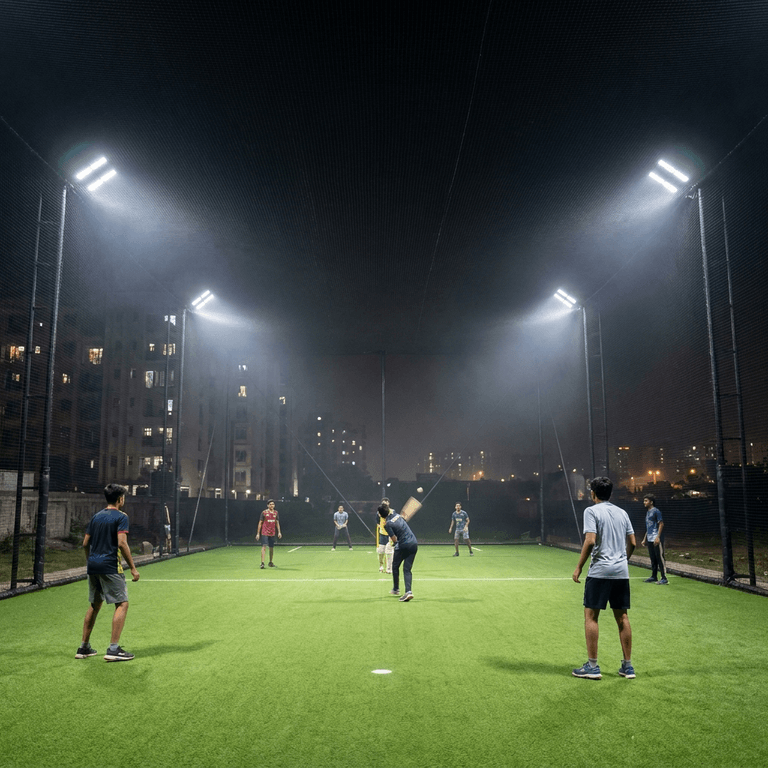
Light from at least two directions
For cricket and turf, a ball moving through a shadow is a safety issue. Four corner poles with crossing beams play better than two poles on one side.
Practice nets
2 lanes on 5-6 m poles: 100W per lane, clean aiming and low glare.
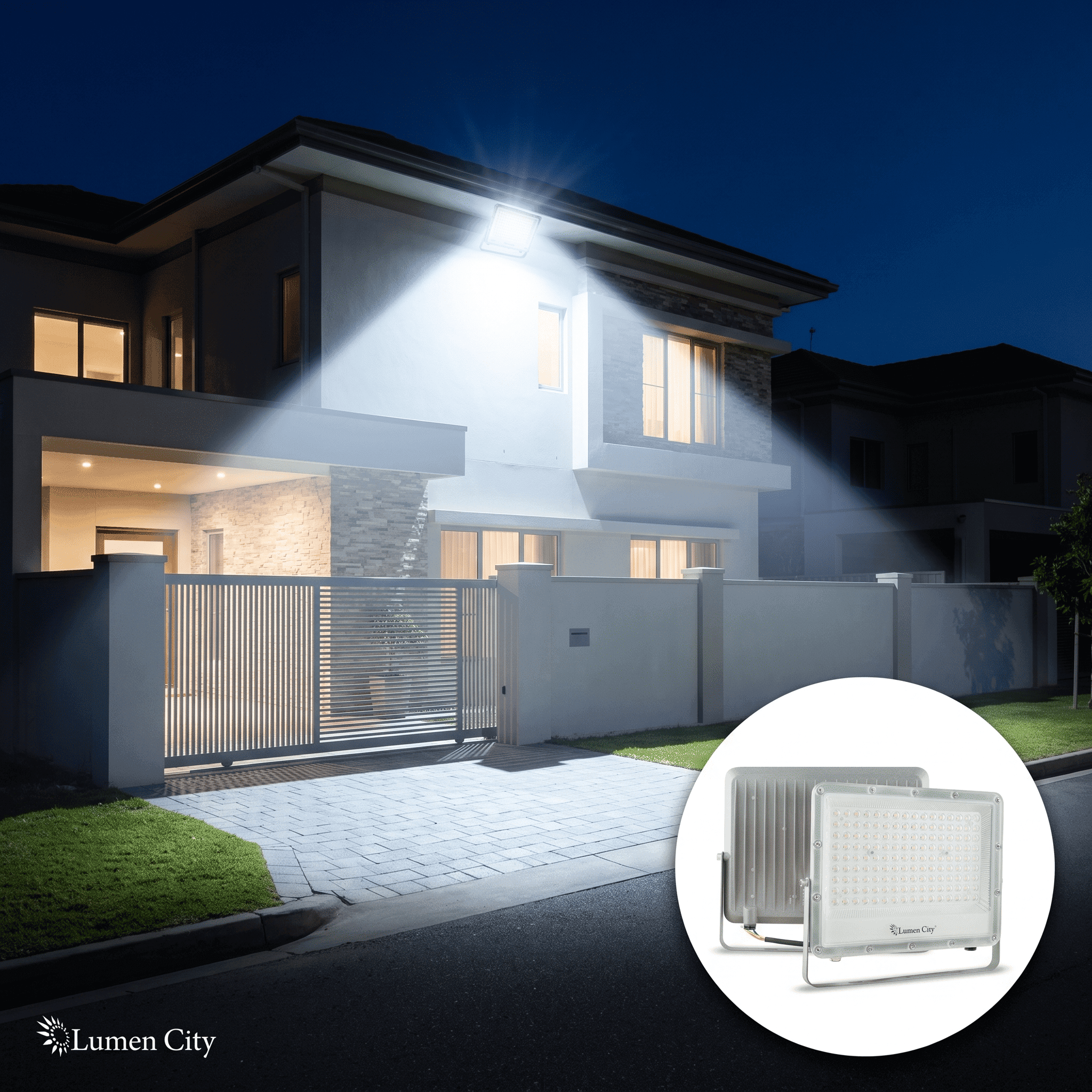
100W - IP65 Rating - 12000 Lumens - Cool White - Slim Flood Light
Use 100W floods for nets and 30W street lights for approach lanes and walkways.
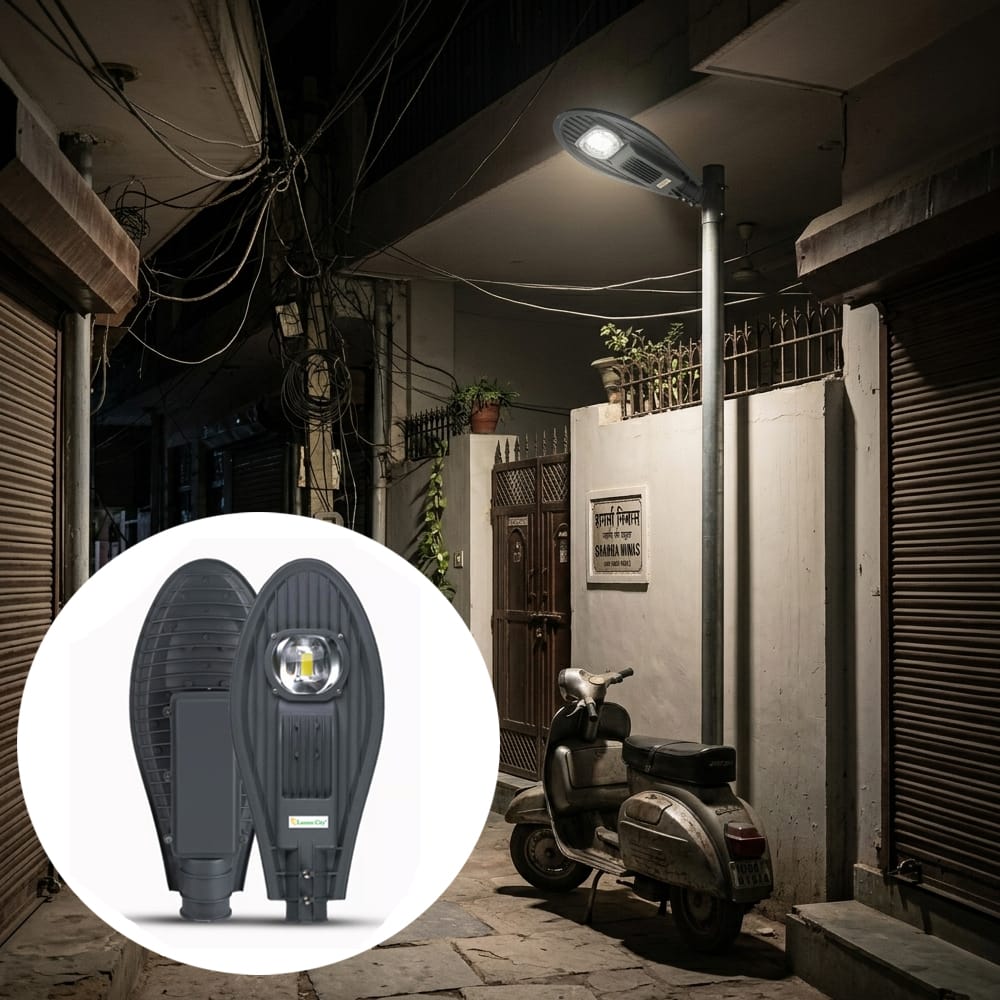
30W LED Street Light - 3000lm - IP65 - 90-265V - Cool White
Use 100W floods for nets and 30W street lights for approach lanes and walkways.
Small box cricket
30 x 20 m enclosed turf: four corner poles, one 300W per corner.
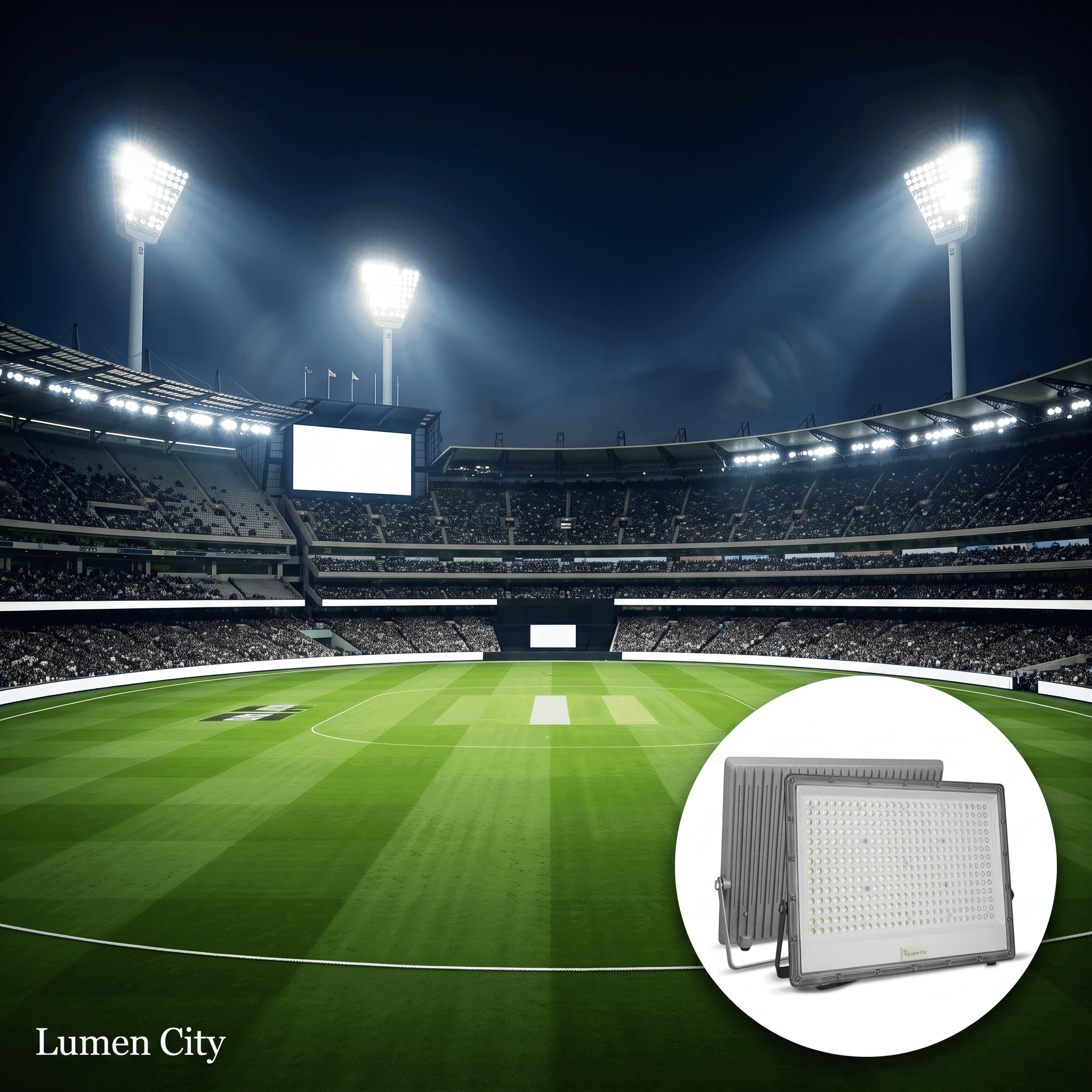
300W - IP65 Rating - 43200 Lumens - Wide Voltage - Slim Stadium Flood Light
300W is the working light for ball visibility; 200W supports smaller/secondary zones.
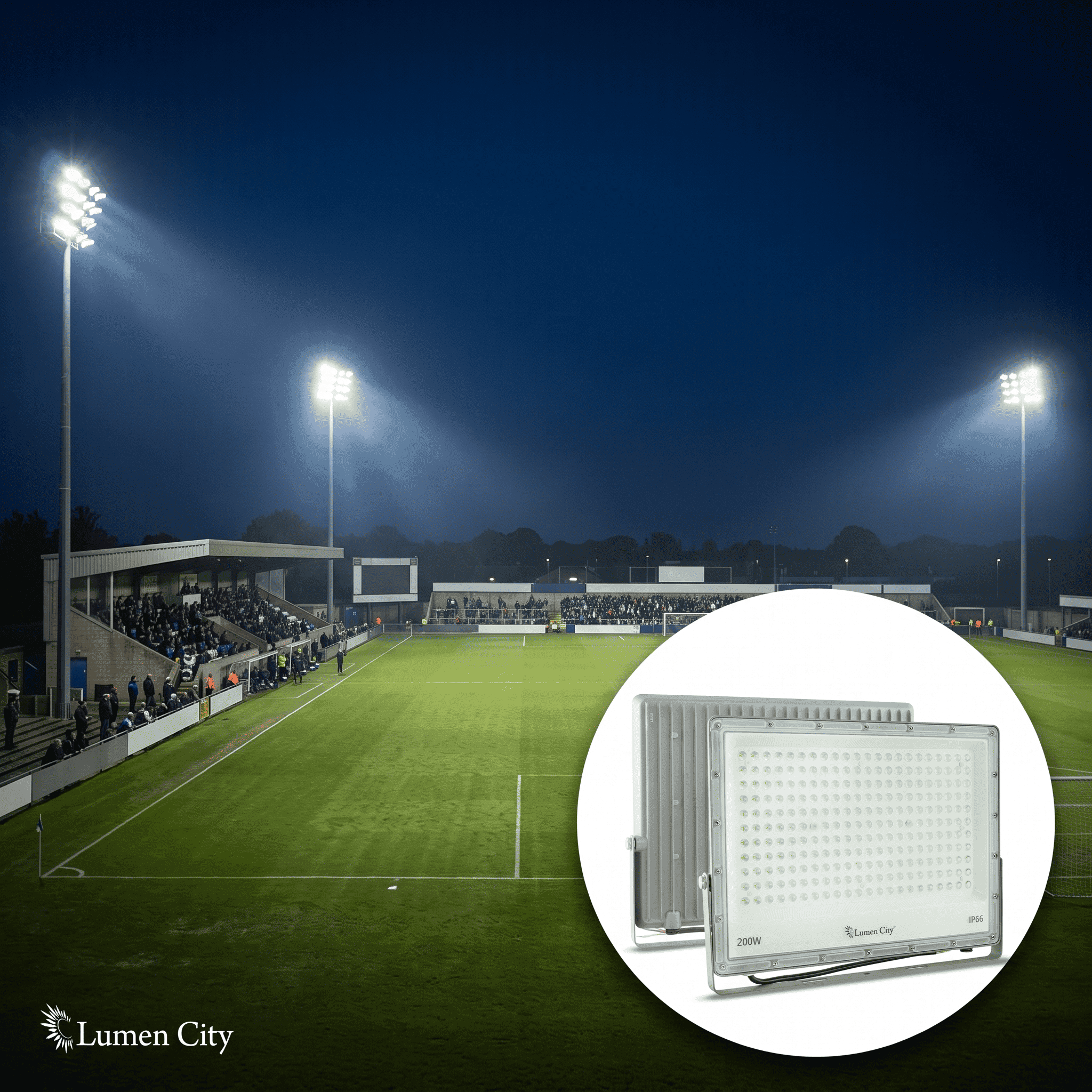
200W - IP65 Rating - 24000 Lumens - Cool White - Slim Stadium Flood Light
300W is the working light for ball visibility; 200W supports smaller/secondary zones.
100W - IP65 Rating - 12000 Lumens - Cool White - Slim Flood Light
300W is the working light for ball visibility; 200W supports smaller/secondary zones.
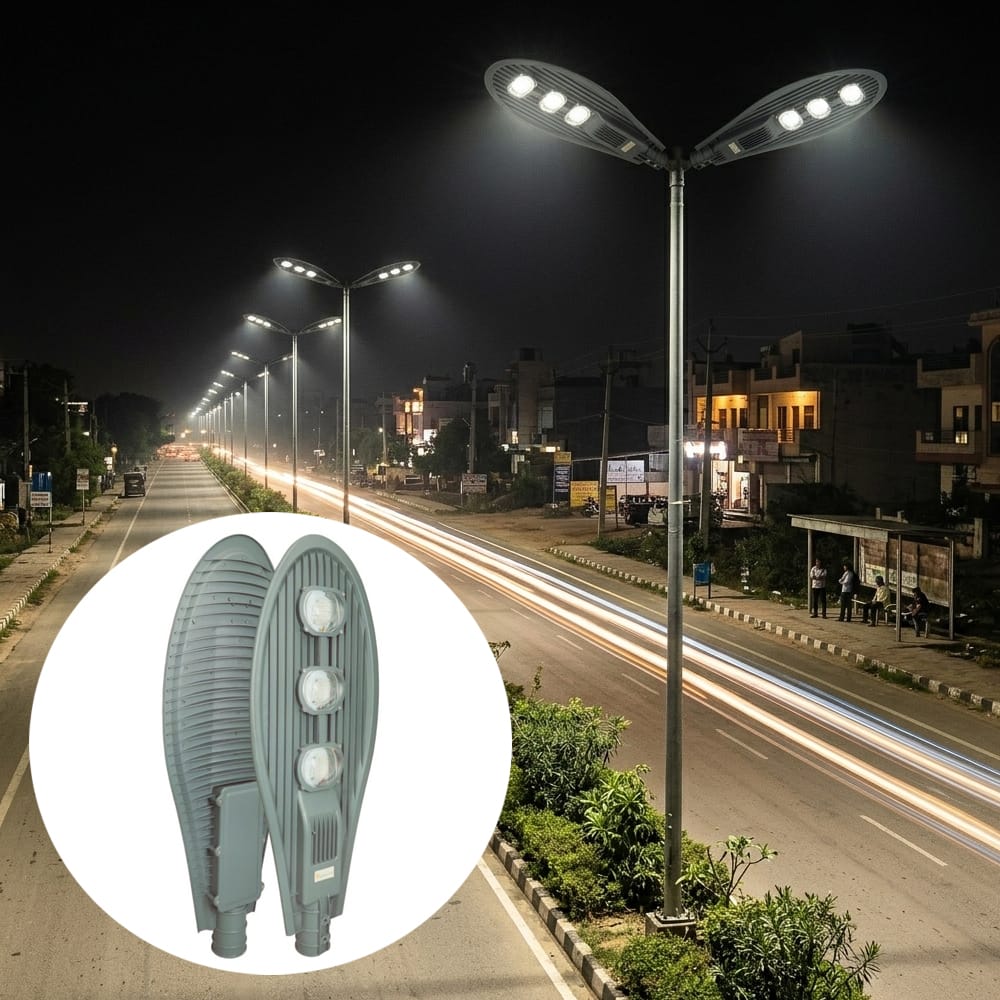
150W LED Street Light - 15000lm - IP65 - 90-265V - Cool White
300W is the working light for ball visibility; 200W supports smaller/secondary zones.
Standard box cricket & football turf
40 x 25 m: four corner poles with two 300W fixtures per pole.
300W - IP65 Rating - 43200 Lumens - Wide Voltage - Slim Stadium Flood Light
Eight 300W fixtures give cross-light from four corners and safer play through the centre.
200W - IP65 Rating - 24000 Lumens - Cool White - Slim Stadium Flood Light
Eight 300W fixtures give cross-light from four corners and safer play through the centre.
100W - IP65 Rating - 12000 Lumens - Cool White - Slim Flood Light
Eight 300W fixtures give cross-light from four corners and safer play through the centre.
150W LED Street Light - 15000lm - IP65 - 90-265V - Cool White
Eight 300W fixtures give cross-light from four corners and safer play through the centre.
Community or school ground
60-80 m grounds need more poles, higher mounting and a layout conversation.
300W - IP65 Rating - 43200 Lumens - Wide Voltage - Slim Stadium Flood Light
Use 300W where pole height allows; route larger grounds to a project layout first.
200W - IP65 Rating - 24000 Lumens - Cool White - Slim Stadium Flood Light
Use 300W where pole height allows; route larger grounds to a project layout first.
150W LED Street Light - 15000lm - IP65 - 90-265V - Cool White
Use 300W where pole height allows; route larger grounds to a project layout first.
100W - IP65 Rating - 12000 Lumens - Cool White - Slim Flood Light
Use 300W where pole height allows; route larger grounds to a project layout first.
Lighting built for evening play
Use proper aiming, height and fixture output before opening paid night slots.
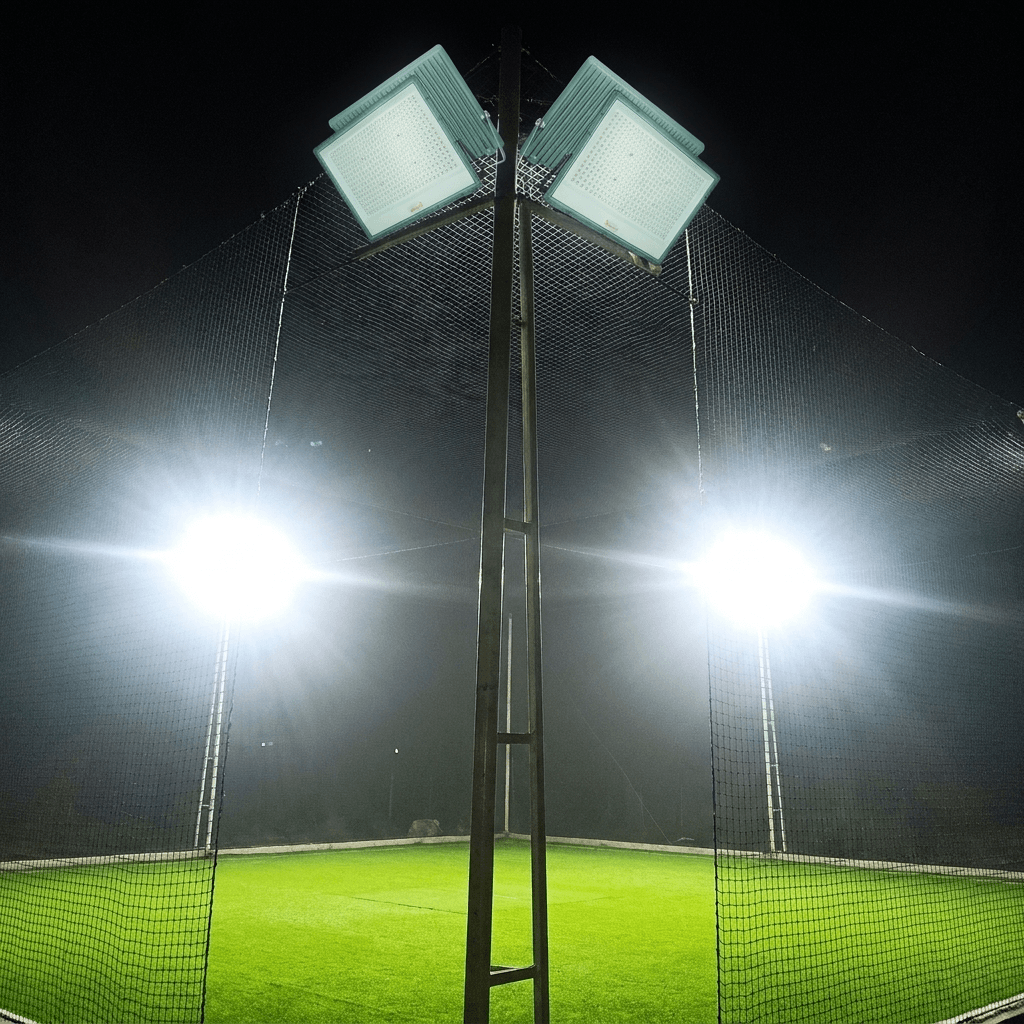
“The 300W fixtures gave much better ball visibility than our old side-only flood layout.”
Turf OperatorBox cricket turf, Pune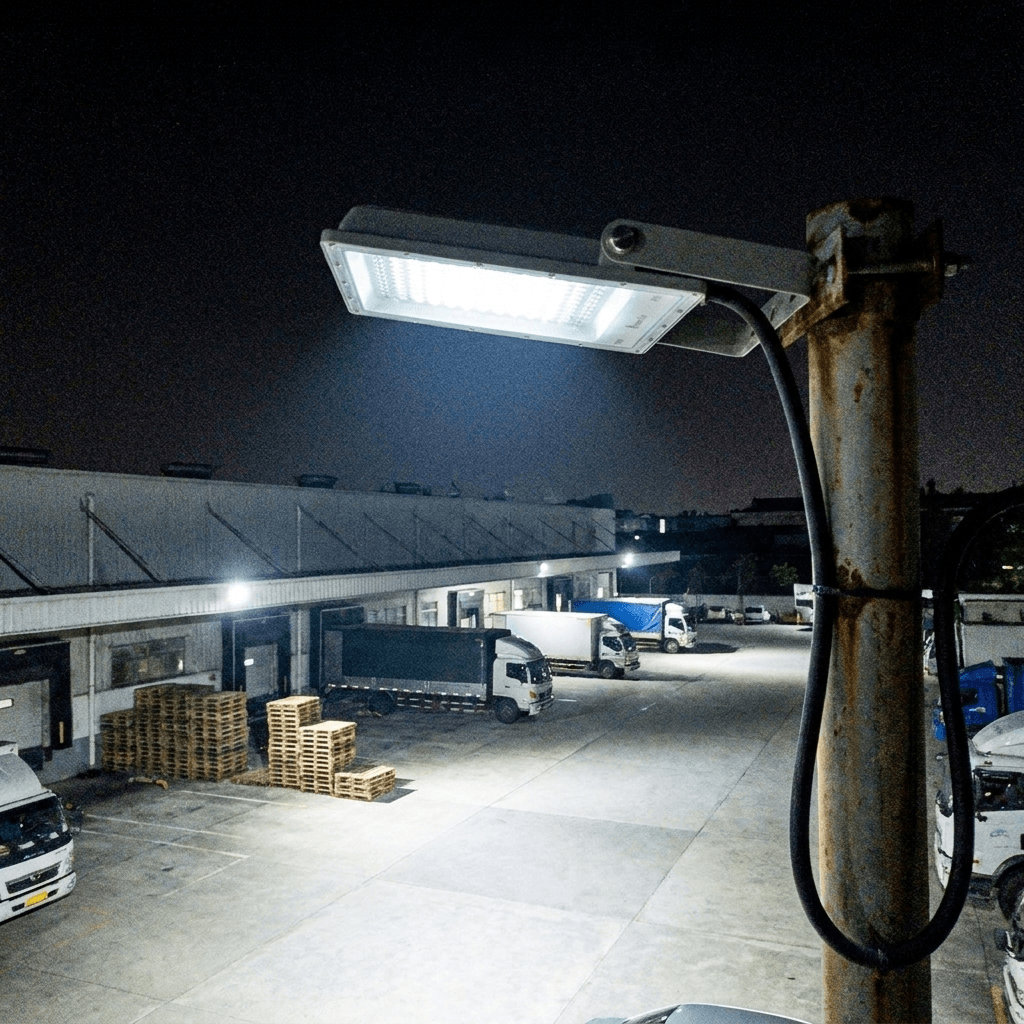
“The layout advice helped us avoid glare near the nets and keep the practice area even.”
School Sports Dept.Practice ground, Gurugram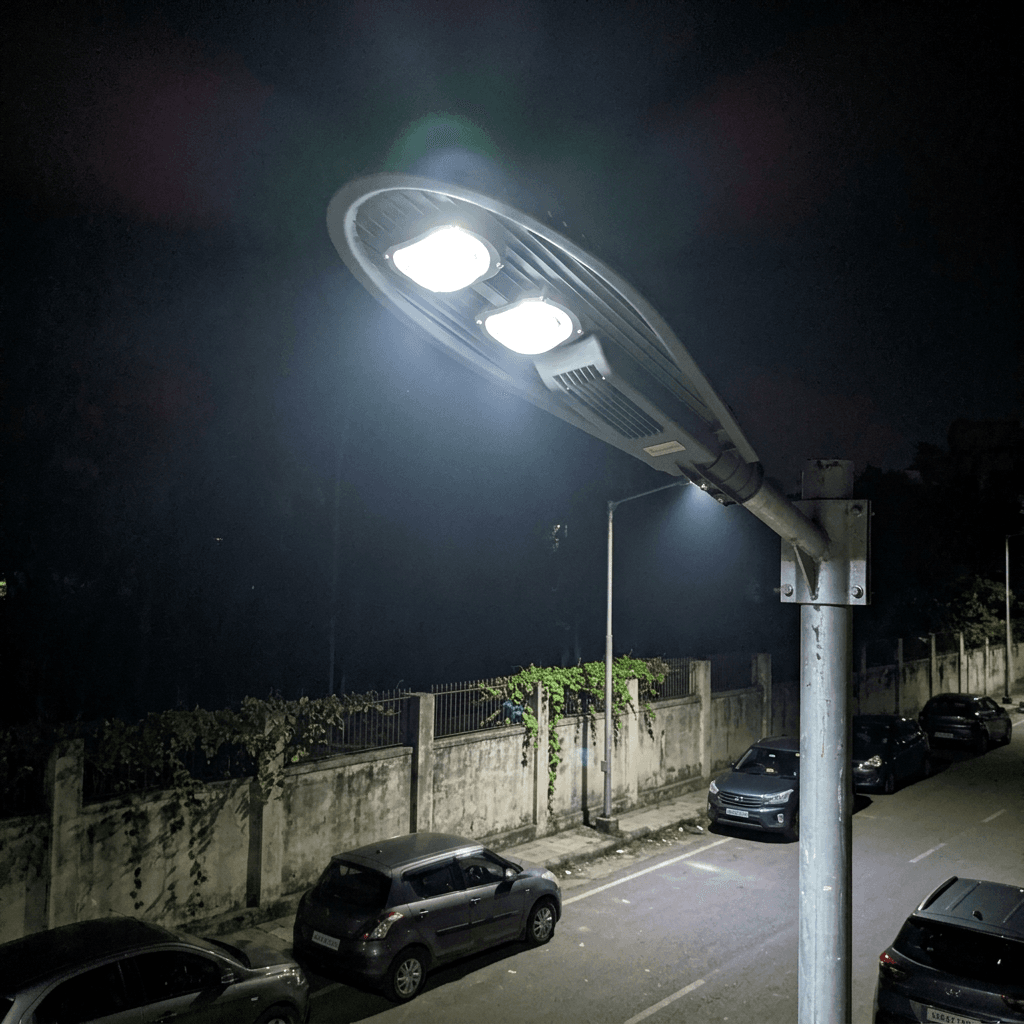
“Four-corner aiming made the centre far more playable at night.”
Club ManagerCommunity ground, Jaipur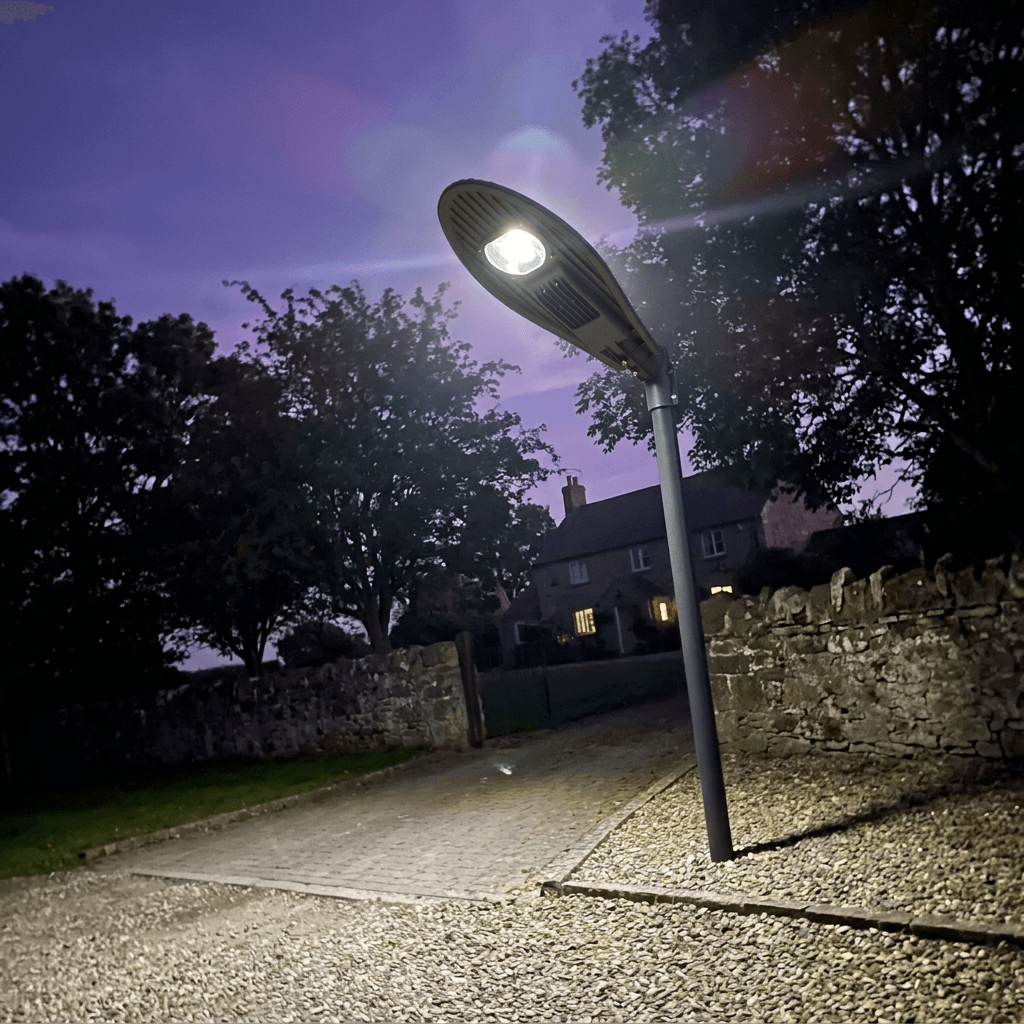
“The running cost is tiny compared with evening booking revenue.”
Venue OwnerMulti-sport turf, LucknowLumencity in the press
Coverage across energy, solar and national media for Lumencity's lighting work.
 Mercom India
 The Hindu
 Saur Energy
 EQ Magazine
 DD News
How to Light a Cricket Ground, Box Cricket or Turf
Ground lighting is layout-driven: pole height, aiming and uniformity matter as much as lumens.
1. Decide which kind of ground you're lighting
The specification changes dramatically with the type. Find yours first. Typical size Pole height || 20 x 4 m per lane 5-6 m | 30 x 20 m to 40 x 25 m 6-9 m | 40 x 20 m (5-a-side) 8-10 m | 60-80 m diameter 12-15 m | 100 m+ diameter 15-20 m | 130-150 m 25-40 m | Our 200W and 300W range covers the first three rows well, and the fourth with enough poles. Club match grounds and above need 500W-1000W fixtures on tall poles - talk to us about availability before planning around them.
2. Four corner poles - why the layout matters more than the wattage
The single most important decision on a small ground is where the poles go, not what goes on them. Light from at least two directions at every point of the playing area. In practice that means poles at the four corners, each carrying fixtures aimed diagonally across the ground. Beams from opposite corners cross in the middle, which is what eliminates shadows.
3. Wattage by ground type
Configuration 2 x 100W per lane on 5-6 m poles 4 corner poles x 1 x 300W 4 corner poles x 2 x 300W 4 corner poles x 2 x 300W 6 poles, shared centre poles x 2 x 300W 4-6 poles x 3-4 x 300W on 12-15 m The 300W is the working fixture for grounds because of what it delivers: 43,200 lumens. That's not a linear step up from the 200W's 24,000 - it's a different class of output, and it's why it's the right choice anywhere a ball is in the air. Use the 200W where poles are lower or the ground is smaller, and the 100W for practice nets and secondary areas.
4. Pole height - the spec that fixes glare
Height is the single most effective glare control available, and it is where turf owners most often economise wrongly. Minimum 6 m for box cricket. 8-10 m is materially better. The reason is geometry: the higher the fixture, the steeper the angle at which light arrives, and the further the lamp sits outside a player's normal sightline when they look up.
5. Overlap the beams
A single flood light gives a bright centre and a fading edge. Coverage on a ground comes from overlap, not from intensity. Aim each fixture so its beam edge reaches roughly the centre of the next fixture's pool. On a four-pole box cricket layout, that means each corner's beams cross the diagonal and meet the opposite corner's.
6. Uniformity - the number players feel
Sellers advertise peak lux. Players experience uniformity. Uniformity is the ratio of the dimmest point on the ground to the average. A ground averaging 250 lux with good uniformity plays better than one averaging 400 lux with bright pools and dark corners, because the human eye adapts to the bright areas and then can't see into the dark ones.
7. Cool white, always
6500K cool white for every ground application. Cool light reads as brighter at the same lumen output and improves contrast - which is precisely the job when the task is picking up a red or white ball against turf, netting and night sky. Warm white has no place on a playing surface. It reduces perceived brightness and flattens the contrast that lets a player track the ball.
8. Poles, mounting and earthing
The fixtures are the easy part. The pole work decides whether the installation survives. - Pole specification. A 9 m pole carrying two 300W fixtures faces real wind loading. Use a pole rated for the load, on a proper concrete foundation.
9. Running cost and payback - the turf owner's arithmetic
This is the section a commercial operator needs, and almost nobody publishes it. A standard box cricket setup - eight 300W fixtures - draws 2,400W, or 2.4 units per hour. At ₹8 per unit that's ₹19.20 an hour in electricity. Turf slots in most Indian cities sell between ₹800 and ₹2,000 an hour.
10. Larger grounds - 400W, 500W and 1000W
Community grounds above roughly 80 m, club match grounds and anything approaching full size need fixtures above 300W on poles of 15 m and up. Our 400W, 500W and 1000W stadium units are part of the range and currently out of stock. If you're specifying a full ground, send the dimensions and intended pole positions and we'll advise on configuration and current availability - rather than you buying a larger number of 300W fixtures that won't reach. What we'd rather tell you than sell you: 300W fixtures on a 20 m pole across a 100 m ground will not deliver playable light.
11. Before you order
- Send the ground dimensions and the pole positions you have or plan. This category is layout-driven and a sketch answers more than a description. - Say what's played there - box cricket, football, practice, mixed use. Football and cricket have different aiming priorities. - Note the pole height available or planned. If it's under 6 m, tell us before you buy; we may recommend raising it rather than upsizing the fixtures. - Confirm the supply - single or three phase, and the available load at the board. - Ask for project pricing.
Cricket Ground & Turf Lighting FAQ
Answers for turf owners, clubs, schools and ground operators planning night play.
The standard configuration for a 40 x 25 m box cricket ground is four corner poles carrying two 300W fixtures each - eight fixtures, 2,400W total. A smaller 30 x 20 m ground can work with one 300W per corner. Four corner poles matter more than the fixture count, because light must reach every point from at least two directions.
It depends on the ground type. Practice nets need 100W per lane. Box cricket and 5-a-side turf need 300W fixtures on four corner poles - typically 1,200W to 2,400W in total. Community grounds of 60 to 80 m need 3,600W to 7,200W. Full-size club and stadium grounds need 500W to 1000W fixtures on 15 to 40 m poles.
Recreational and box cricket play well at 150 to 250 lux. School and community grounds want 250 to 350. Club match cricket wants 300 to 500. Televised professional cricket runs 750 to 2,500 lux - a standard nobody building a commercial turf needs to meet.
Six metres is the minimum; eight to ten metres is materially better. Height is the most effective glare control available - at four metres, a fielder looking up to take a catch is looking almost straight into the fixture. If you're choosing between a taller pole and a bigger fixture, choose the taller pole.
So that every point of the playing area receives light from at least two directions. Two poles on one side produce hard shadows behind every player, a bright near half and a dark far half, and dazzle for anyone looking back toward the poles. A ball travelling at speed through a shadow is a safety problem, not a comfort one.
Output, and by more than the wattage suggests. The 200W gives 24,000 lumens; the 300W gives 43,200 - nearly double, not one and a half times. The 300W is the working fixture for any ground where a ball is in the air. Use the 200W on smaller grounds, lower poles and secondary areas.
An eight-fixture 300W setup draws 2,400W - 2.4 units an hour, about ₹19 at ₹8 per unit. Running five hours a night for 300 nights, that's roughly ₹28,800 a year. Against turf slot rates of ₹800 to ₹2,000 an hour, lighting is between 1% and 2.5% of slot revenue.
Substantially. The same coverage in metal halide draws around three times the power, needs lamp replacement every couple of years at height, and requires a warm-up delay every time it's switched on. LED runs 50,000-plus hours, starts instantly, and holds its output.
Cool white, 6500K. Cool light reads brighter at the same lumen output and improves contrast, which is exactly what a player needs to track a ball against turf, netting and night sky. Warm white reduces perceived brightness and flattens the contrast - it has no place on a playing surface.
Three things: mount high - at least 6 m, ideally 8 to 10 - angle fixtures downward so the beam lands on the surface rather than firing across it, and light from four corners so no player faces a single dominant light source. Height does more work here than any other single change.
Yes. Football turf uses the same four-corner 300W configuration as box cricket. Racquet sports need extra glare care because players look up frequently - mount along the sides rather than the ends, so nobody is serving or receiving directly into a light.
Yes, IP65 - fully dust-tight and protected against water jets from any direction, which covers monsoon on pole-mounted fixtures. More important on a ground is surge protection: tall metal poles in open ground are lightning-exposed, so fit a surge protection device at the distribution board.
Aim each fixture so its beam edge reaches roughly the centre of the next fixture's pool. On a four-pole layout each corner's beams cross the diagonal to meet the opposite corner's. The test: walk the ground at night and watch your shadow. One hard edge means a single-direction problem; soft and multiple means the layout is right.
They're part of our range and currently out of stock. A full-size ground genuinely needs them - 300W fixtures on a 20 m pole across a 100 m ground will not deliver playable light, and we'd rather tell you that than sell you the wrong quantity. Send the dimensions and pole positions and we'll advise on configuration and availability.
Yes, and for a ground you should ask before ordering. Send the dimensions, intended pole positions and pole height, what's played there, and your available supply. We'll return fixture count, wattage, aiming and expected coverage rather than you estimating.
Yes. Ground projects are typically eight to twenty fixtures, quoted at project pricing with GST invoicing - necessary for a commercial turf's accounts and depreciation. We're BIS certified and government empanelled, shipping PAN India from Delhi.
Read the latest lighting guides
Buying advice, project notes and category explainers from Lumencity.