
Temple & Mandir Facade Lighting
Warm-gold exterior lighting for temple shikhara, carved stone, plinths, mandapa walls, steps and festival colour scenes.
Light the exterior in five jobs
Start with the shikhara and carved walls, then ground the plinth, add safe path lighting and keep colour for festival scenes.
Shikhara & Pillar Uplights
Narrow 7° beams lift the tower and carve pillars without spilling light into the sky.
2Plinth & Base Uplights
Flush IP68 burial lights ground the temple so the structure does not float in darkness.
3Mandapa Wall Washers
Wall washers graze broad stone surfaces so carvings and texture read from a distance.
4Festival Colour Scenes
Keep warm gold as default, then switch to RGB or DMX for Navratri, Diwali and temple festivals.
5Compound, Steps & Garden
Functional light keeps devotees safe without fighting the warm temple facade.
Temple elevation lighting zones
A temple lit badly looks like a warehouse. A temple lit well looks like it did to the people who built it carved stone reading in relief, the shikhara rising clear against the sky, the plinth grounded rather than floating in darkness.
The difference is almost never budget. It's technique. Two floodlights aimed at a temple from the compound wall will produce a bright, flat, shadowless surface that erases every carving the stonemasons cut. Twelve small narrow-beam fixtures placed close to the stone will cost about the same and reveal all of it.
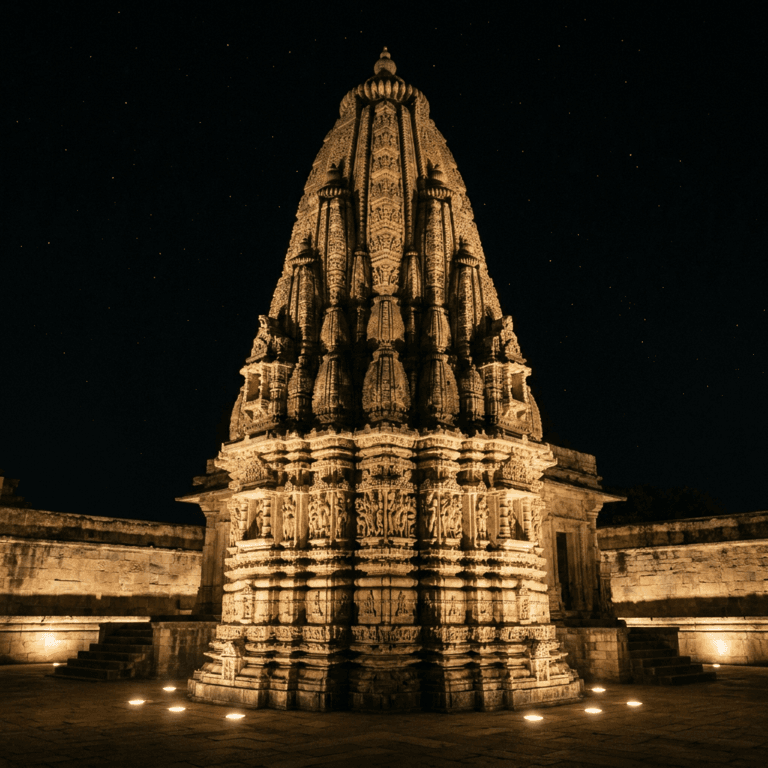
Shikhara & Pillar Uplights
Narrow 7° beams lift the tower and carve pillars without spilling light into the sky.
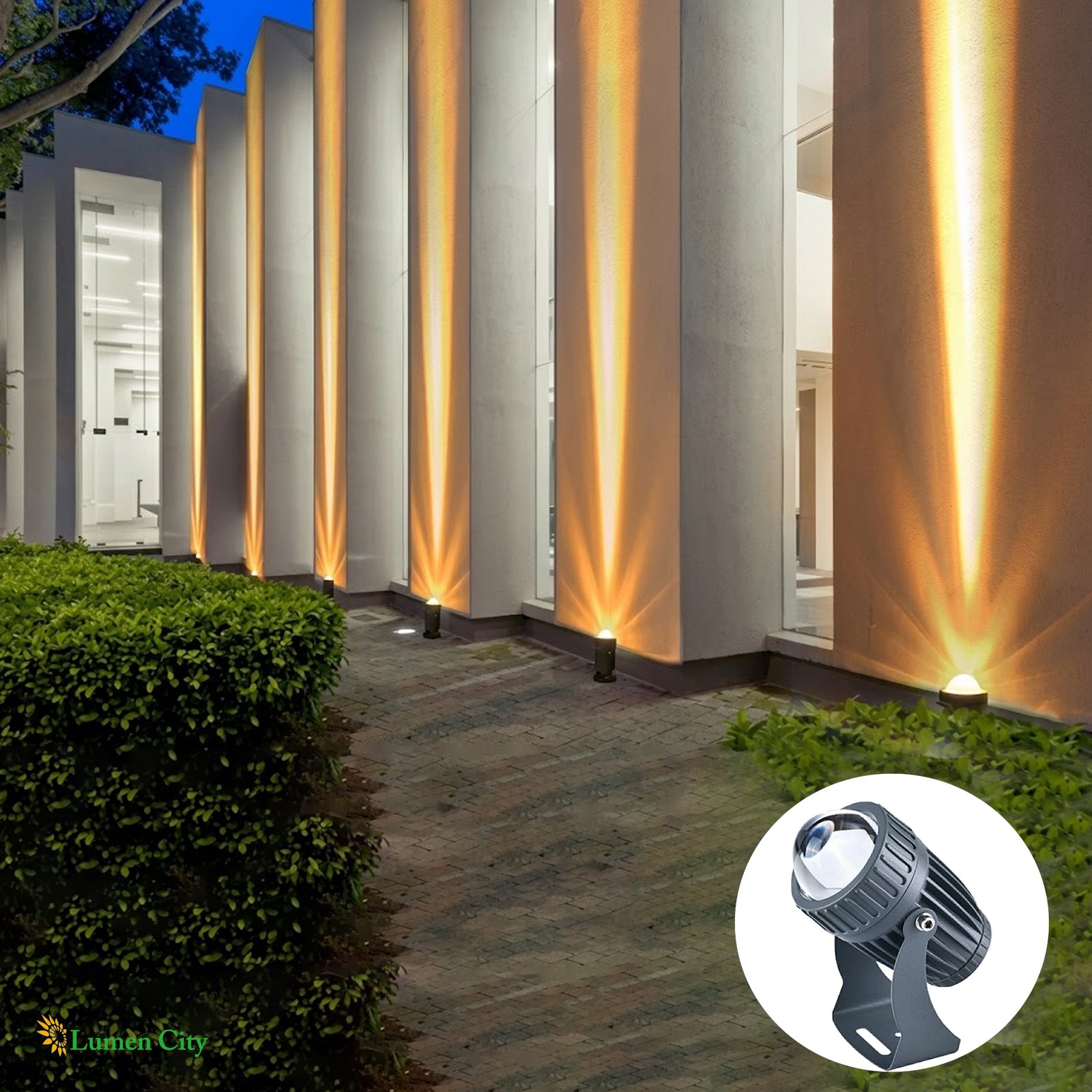
10W Facade Column Light Warm White
Warm gold everyday uplight for shikhara corners and carved pillars.
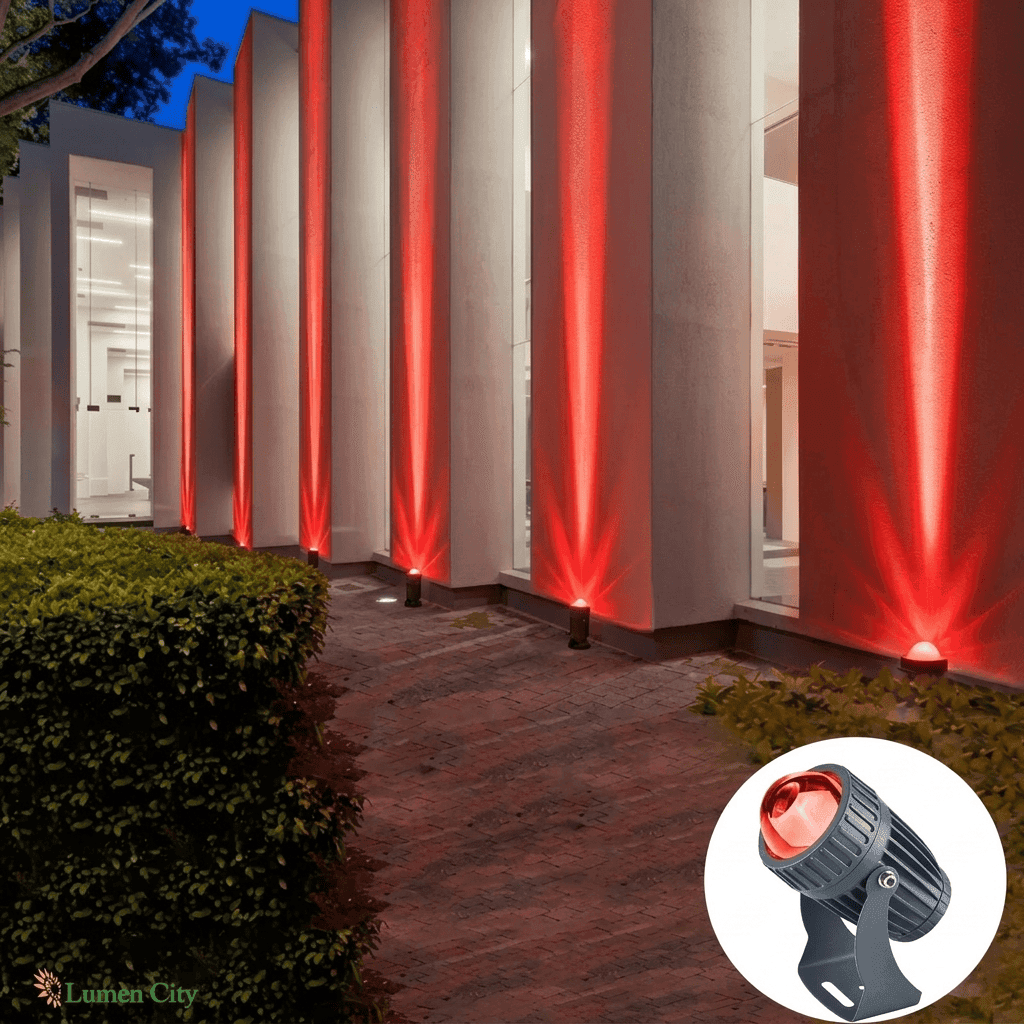
10W Facade Column Light Red
Festival red beam for special temple scenes and accent nights.
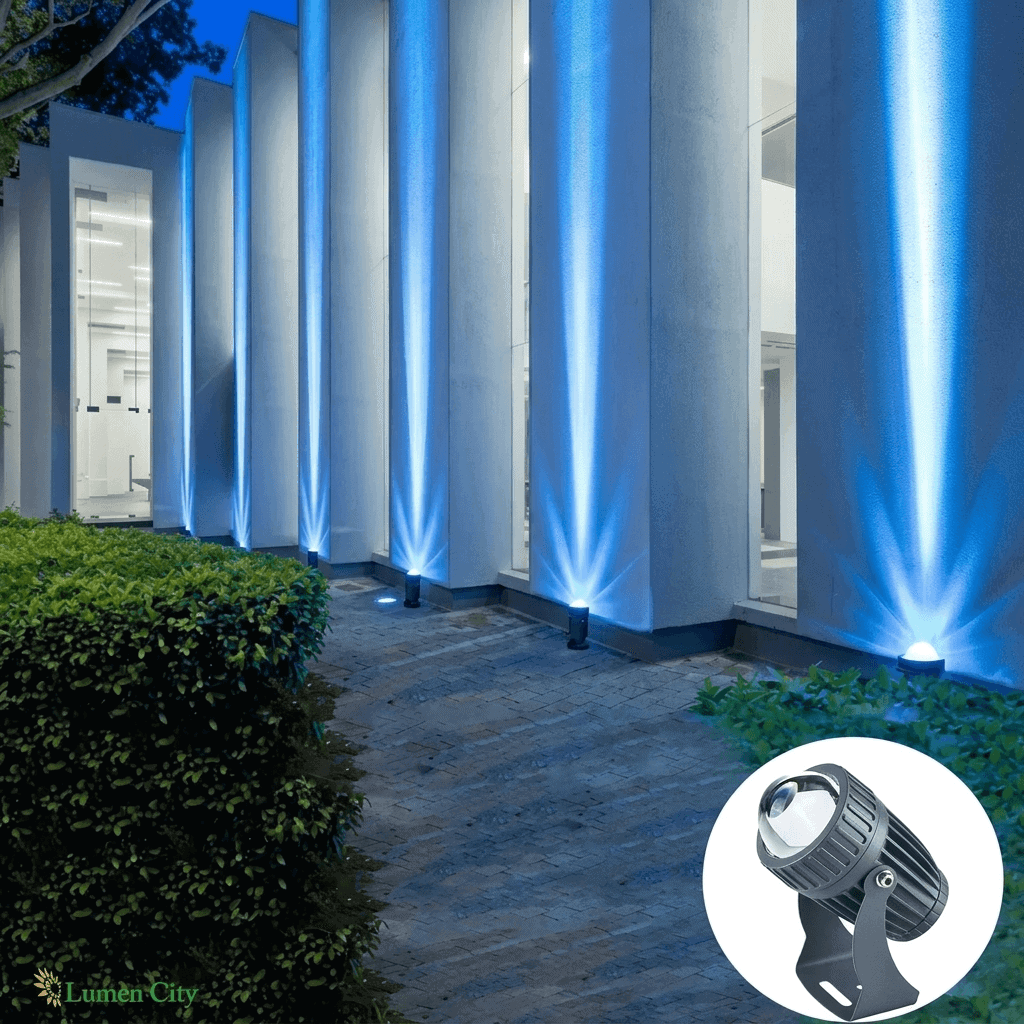
10W Facade Column Light Blue
Blue 7° column beam for controlled colour on towers and mandapa pillars.
Plinth & Base Uplights
Flush IP68 burial lights ground the temple so the structure does not float in darkness.
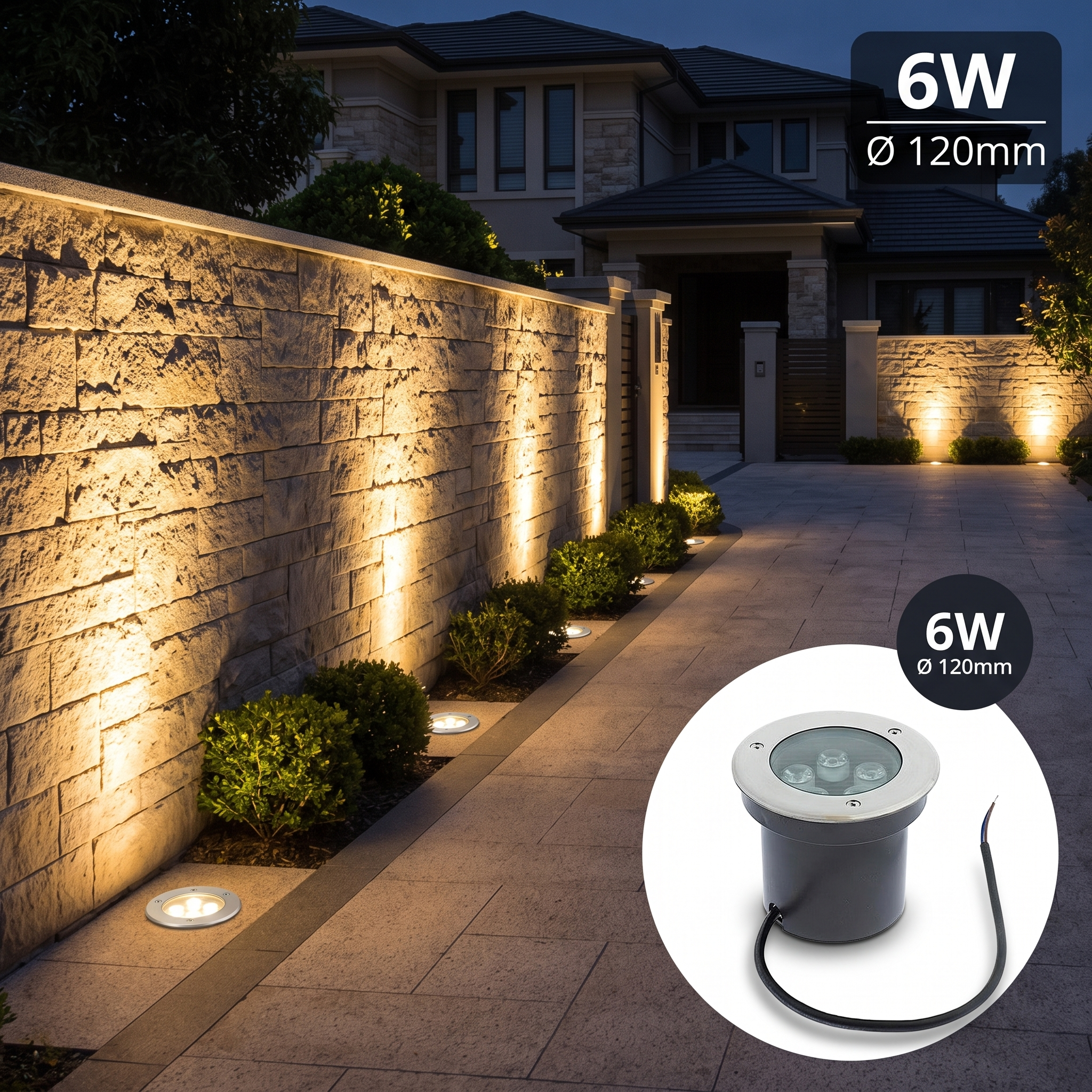
6W Burial Light Warm White
All-round plinth uplight for temple base, parikrama path and low stone walls.
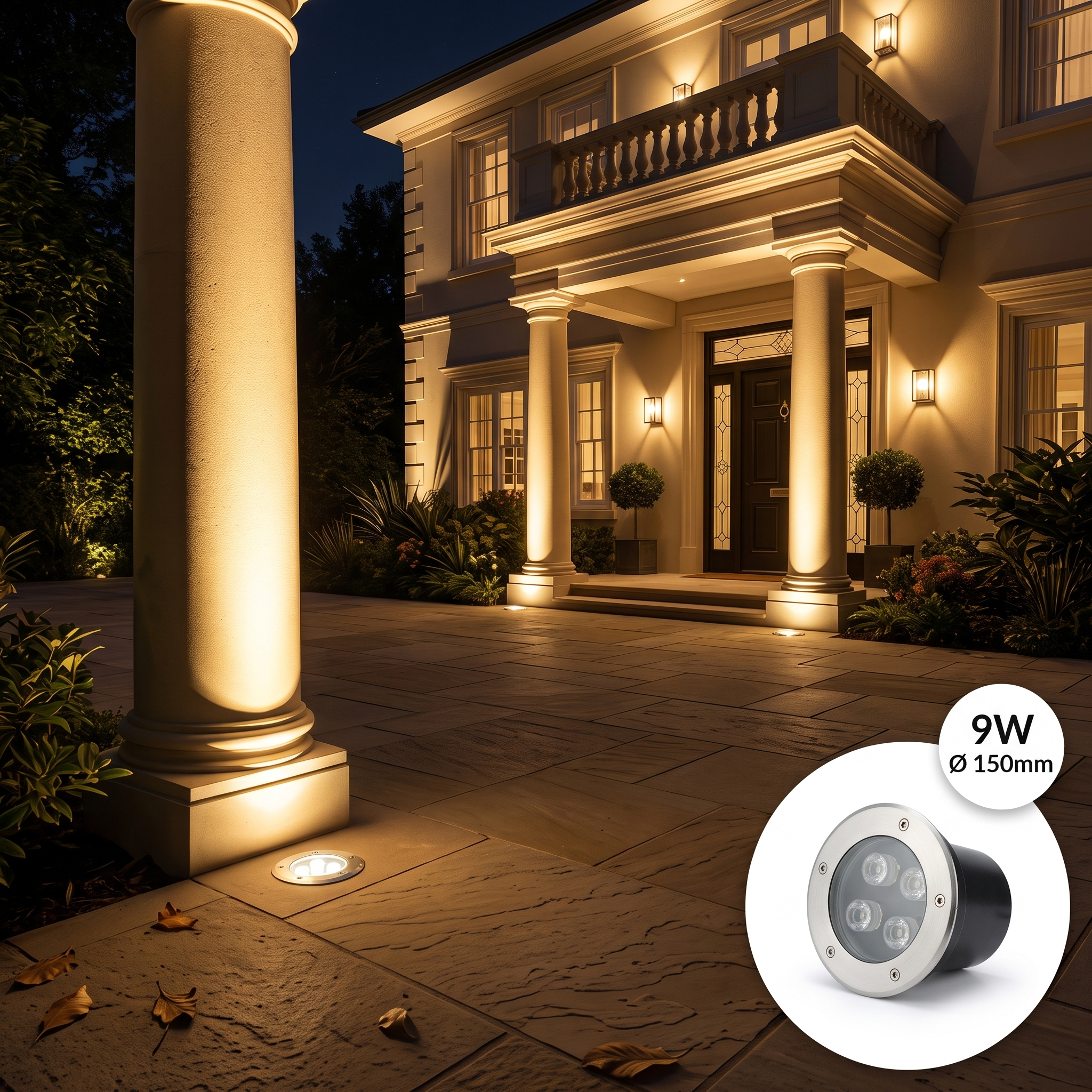
9W Burial Light Warm White
Stronger 30° column from the ground for taller plinths and pillar bases.
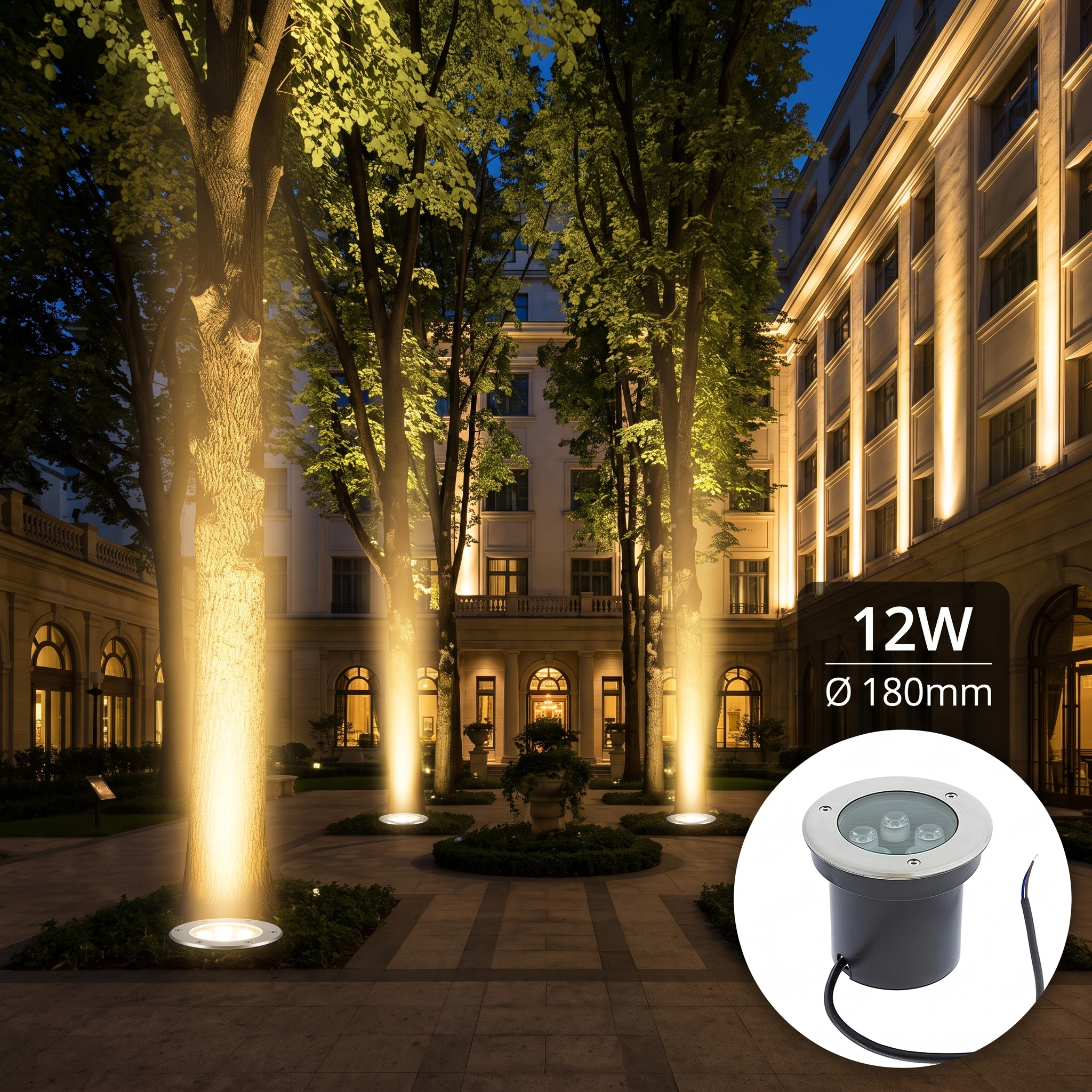
12W Burial Light Warm White
Highest-output warm burial light for larger stone surfaces and mature trees.
Mandapa Wall Washers
Wall washers graze broad stone surfaces so carvings and texture read from a distance.
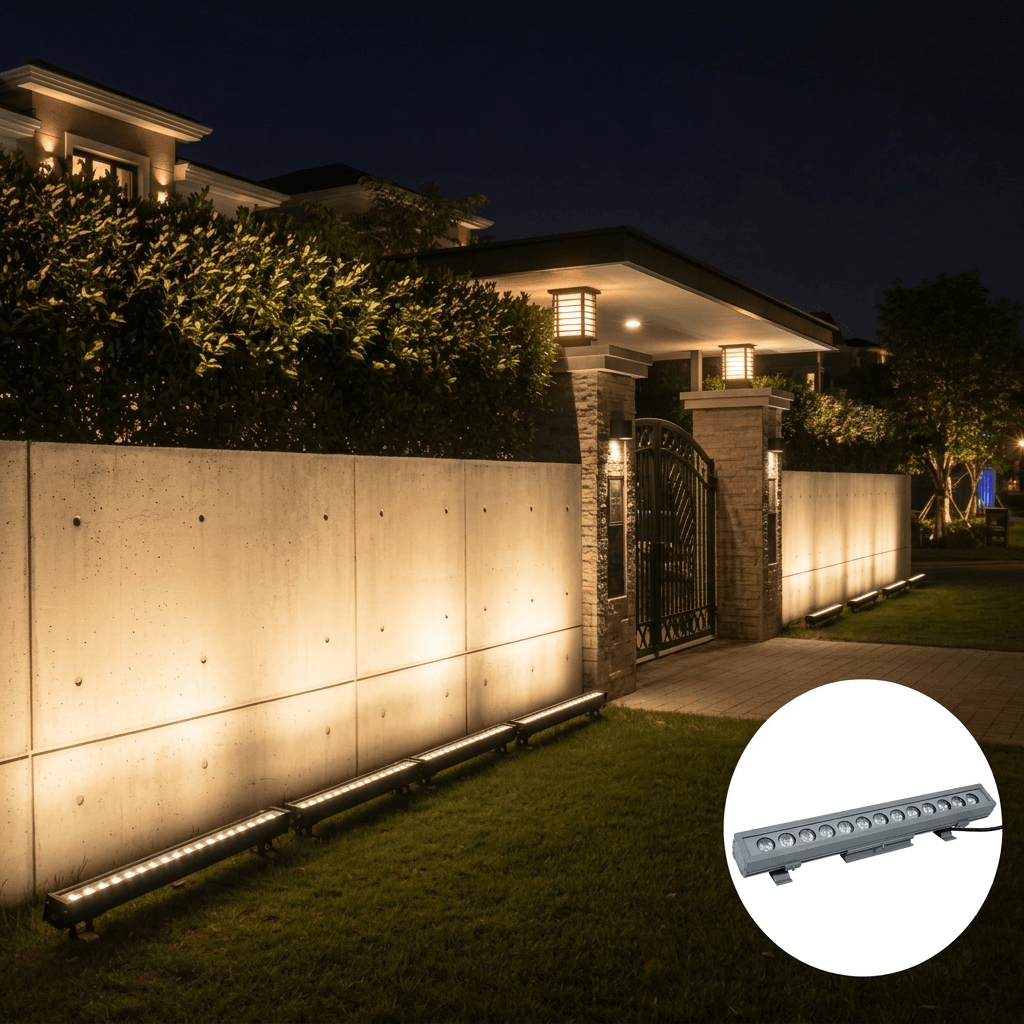
18W Wall Washer Light Warm White
Half-meter warm washer for smaller mandapa walls and shrine sides.
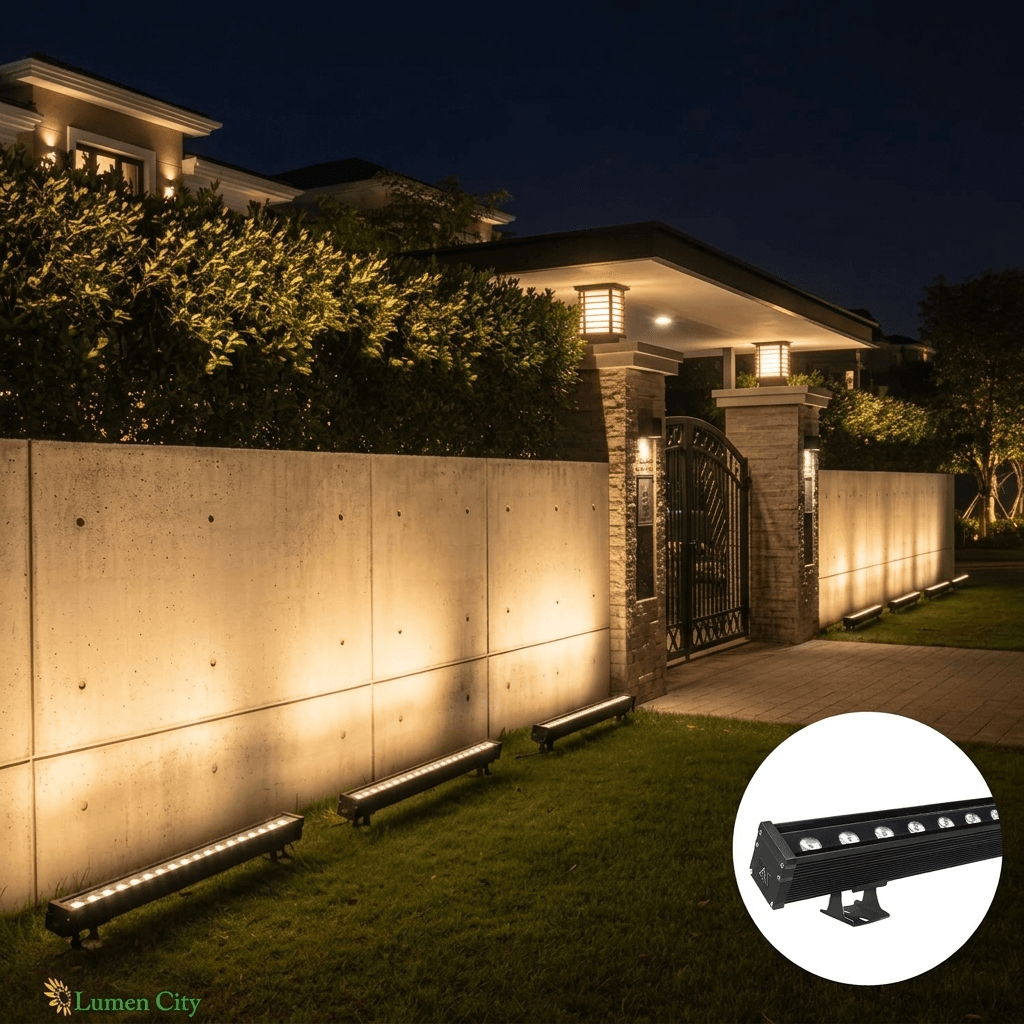
36W Wall Washer Light Warm White
One-meter warm washer for the main facade and larger wall faces.
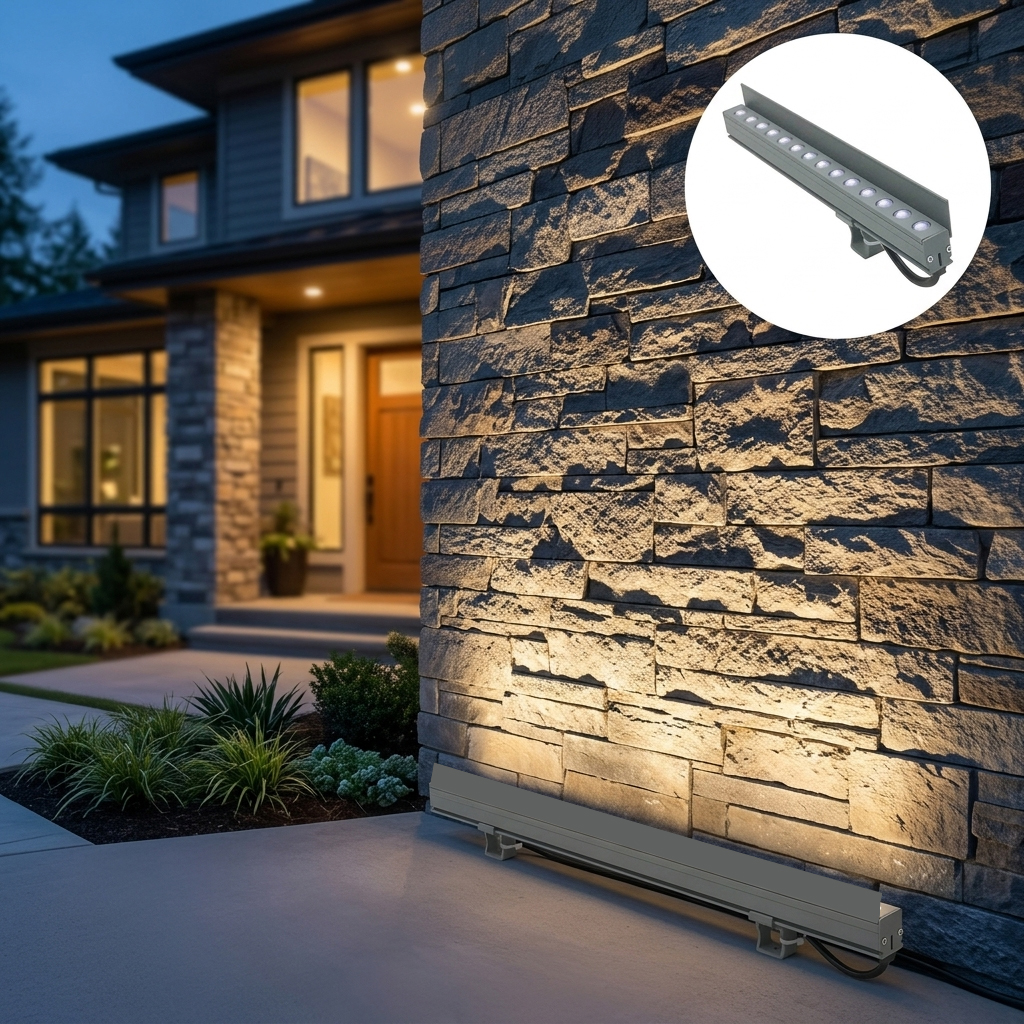
36W Wall Washer Light with Visor Warm White
Warm wall washer with visor to reduce glare near devotee walkways.
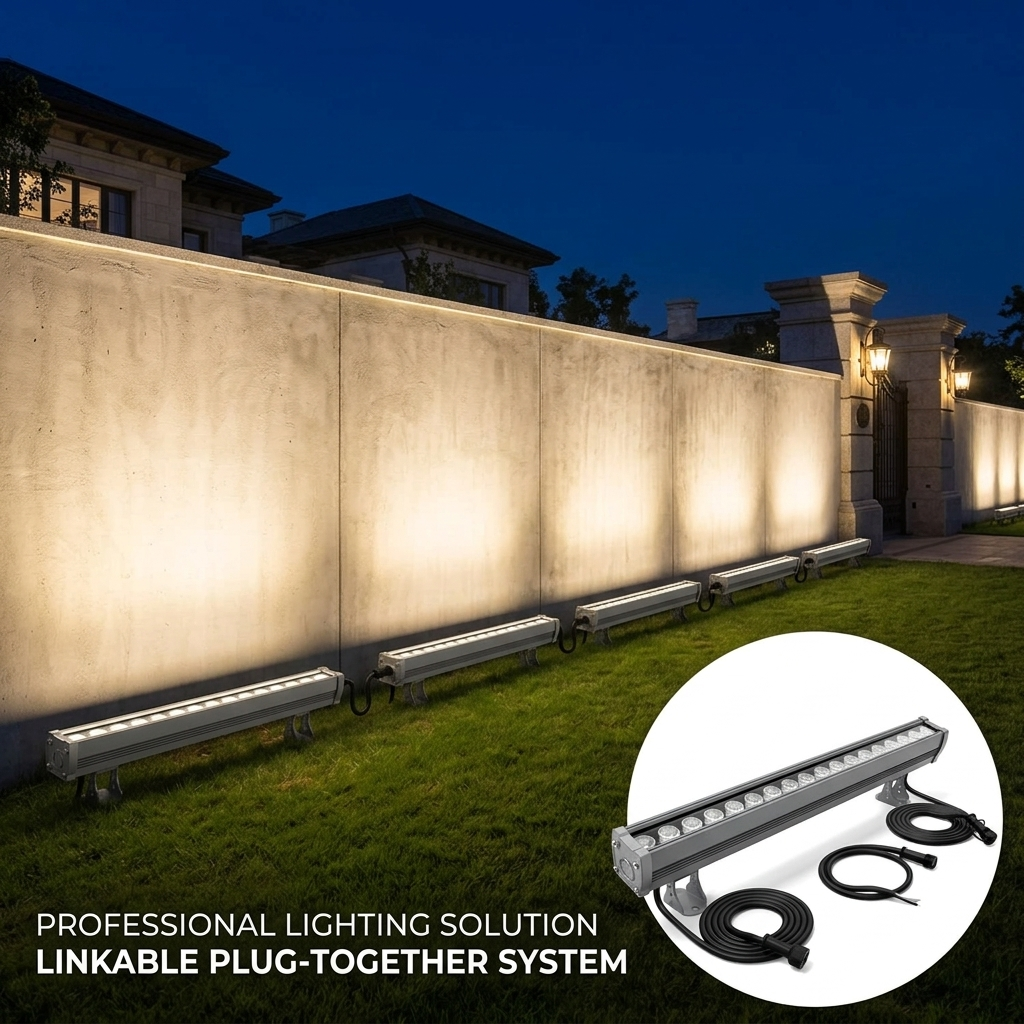
36W Linkable Wall Washer Light Warm White
Linkable 24V wall washer for long continuous runs around boundary or mandapa.

Power Supply 24 Volt 16 Amp (For Wall Washer Lights)
24V 16A power supply for linkable, DMX and flexible wall washer runs.
Festival Colour Scenes
Keep warm gold as default, then switch to RGB or DMX for Navratri, Diwali and temple festivals.
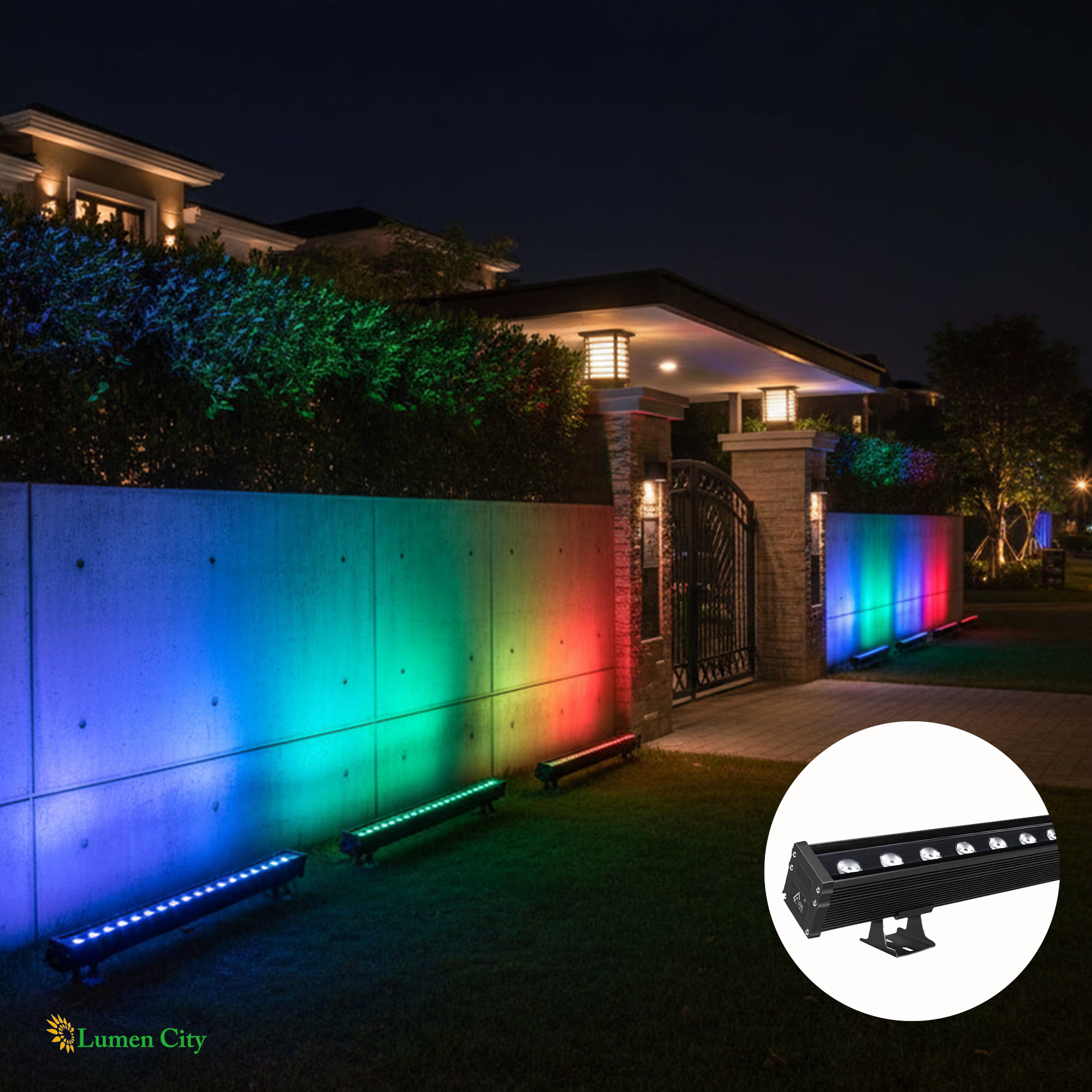
36W RGB Wall Washer Light With Remote
Remote RGB wall washer for simple festival colour scenes on broad walls.
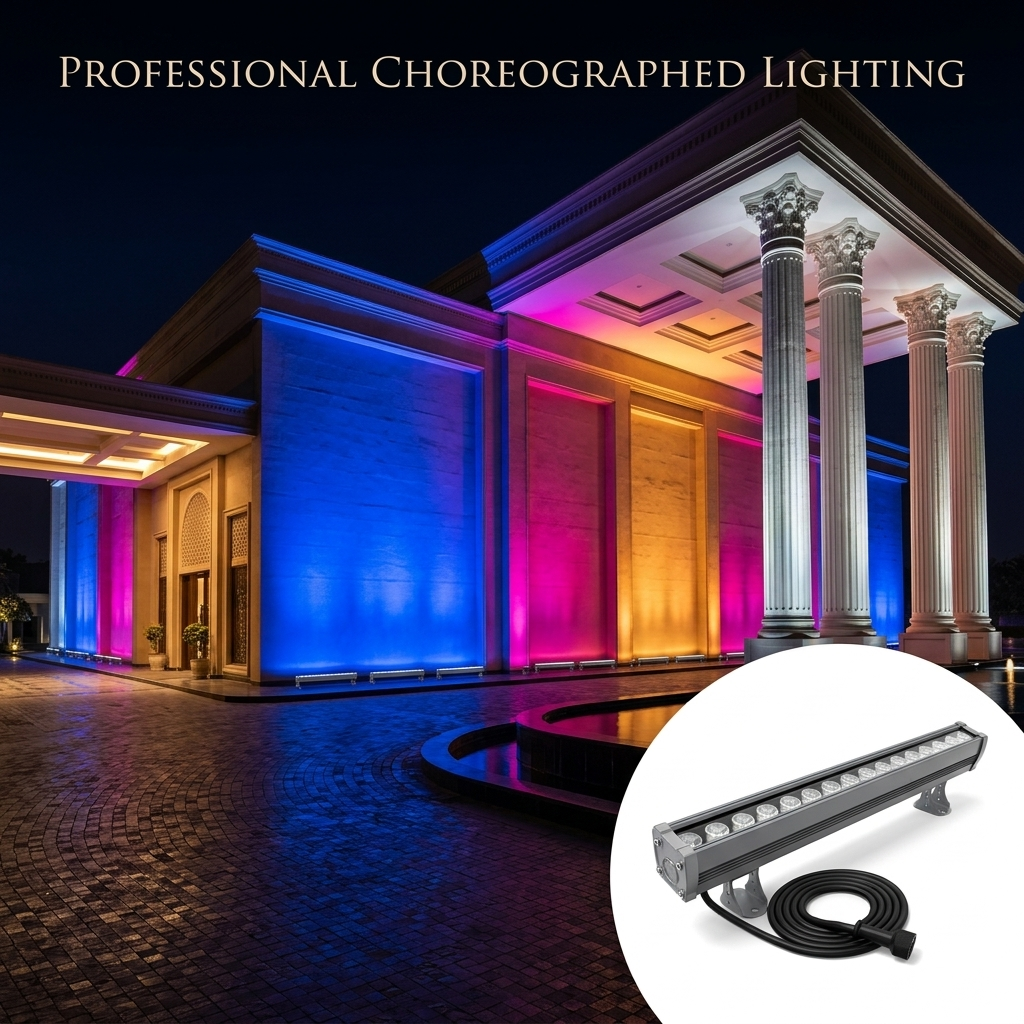
36W DMX Wall Washer Light RGBW
DMX RGBW wall washer for programmable scenes across larger temple elevations.
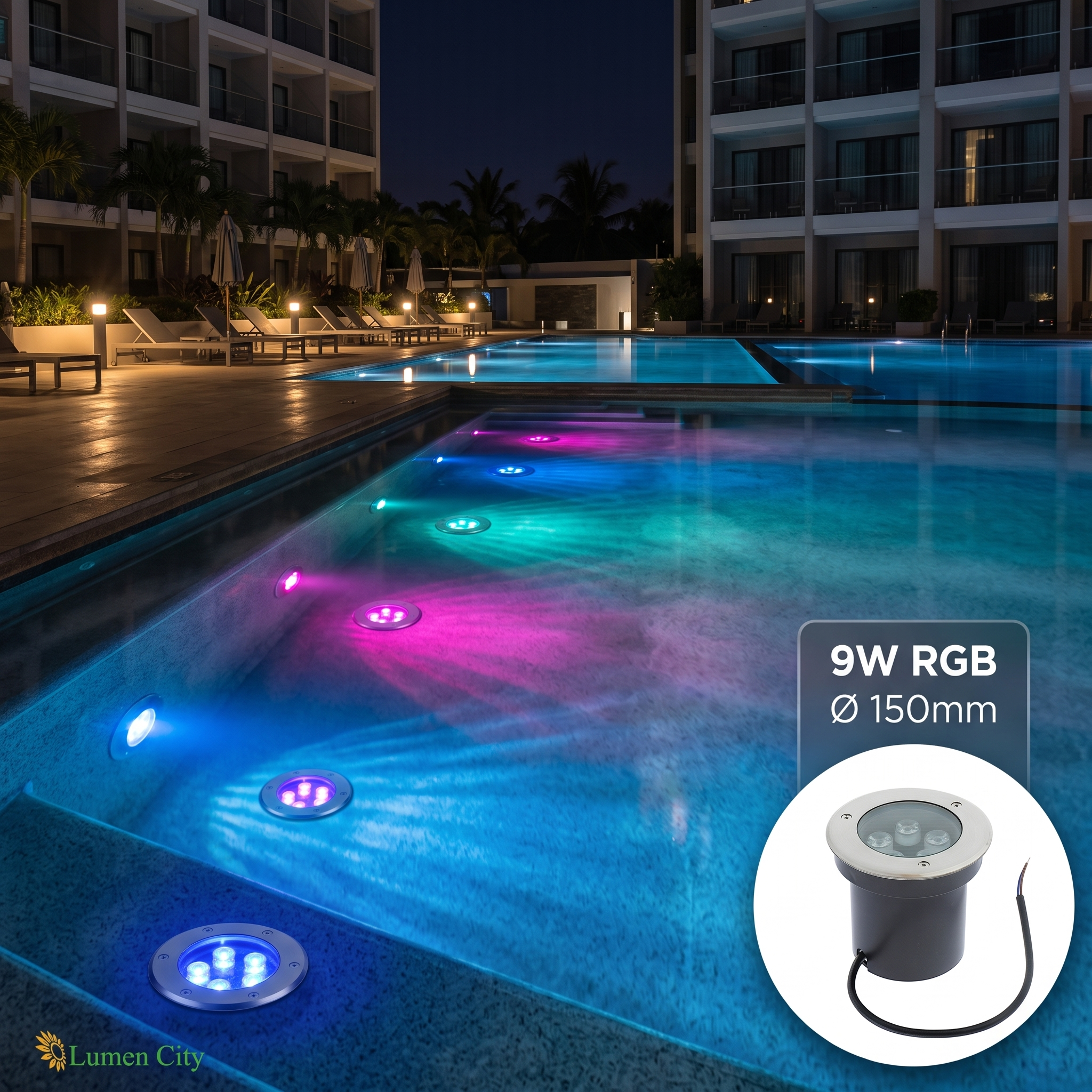
9W RGB Burial Light With Remote
RGB burial light for colour at plinths, fountains and festival accents.
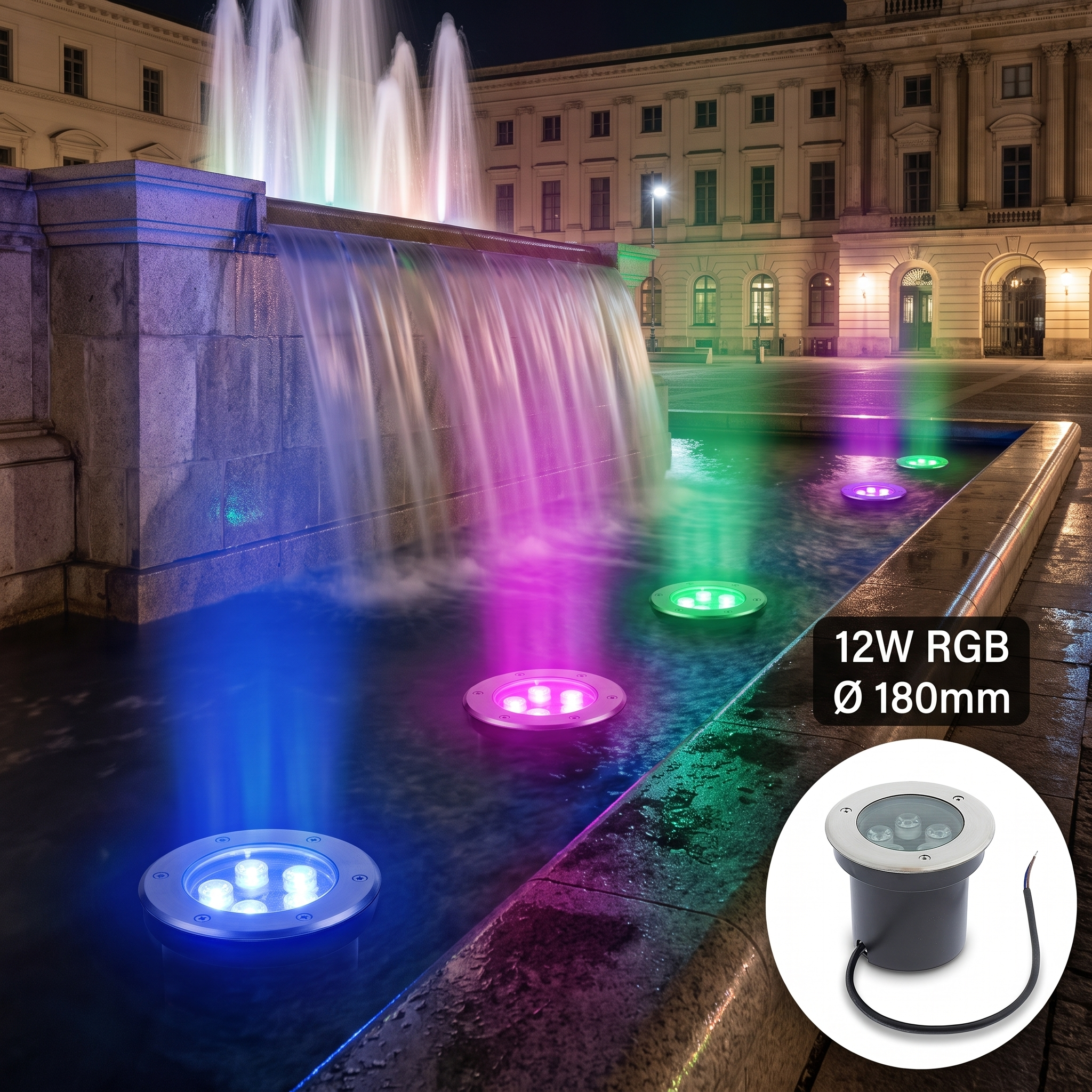
12W RGB Burial Light With Remote
Higher-output RGB burial light for larger colour scenes and water features.
Power Supply 24 Volt 16 Amp (For Wall Washer Lights)
24V 16A power supply for DMX and linkable wall washer installations.
Compound, Steps & Garden
Functional light keeps devotees safe without fighting the warm temple facade.
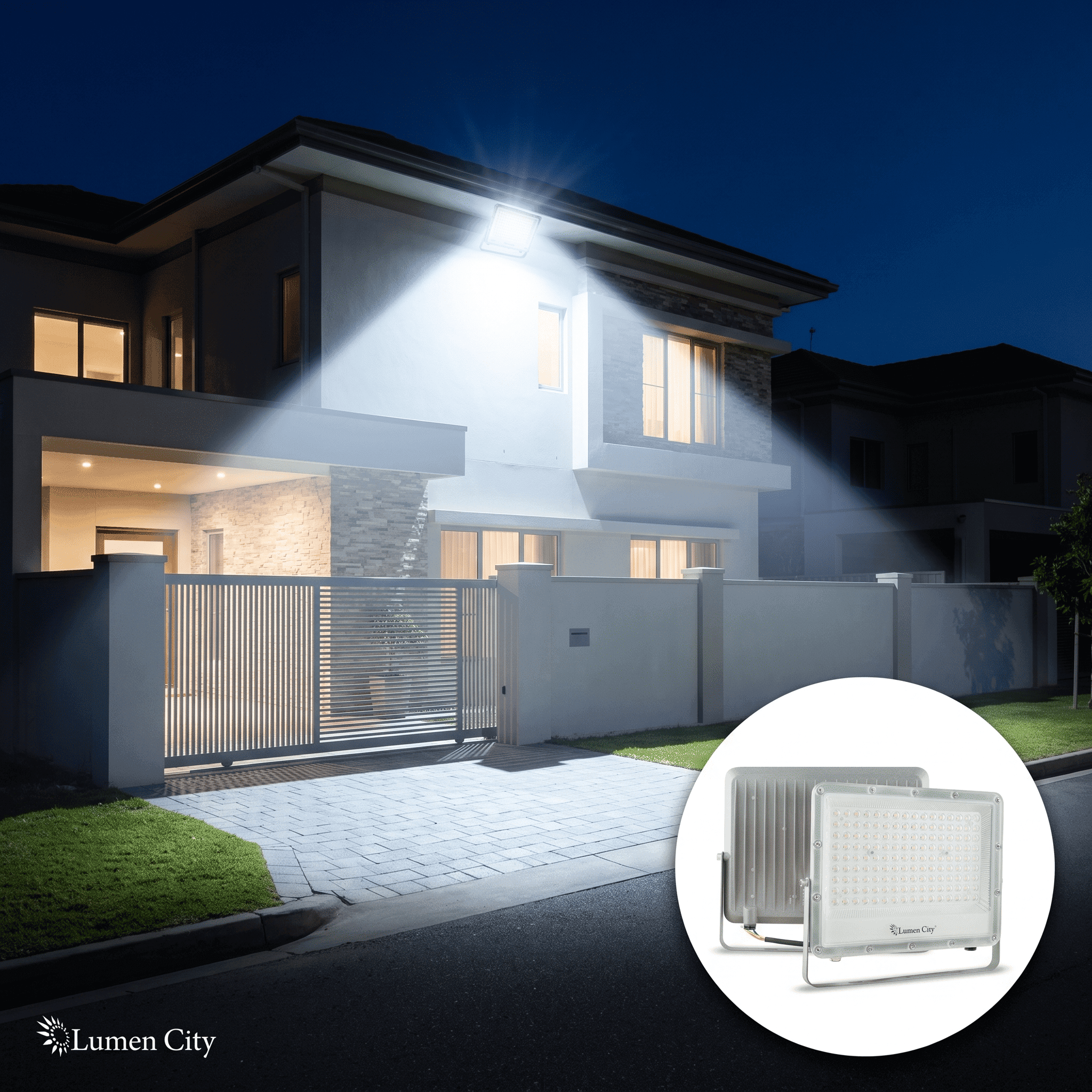
100W
100W cool-white flood for parking, compound wall and approach movement.
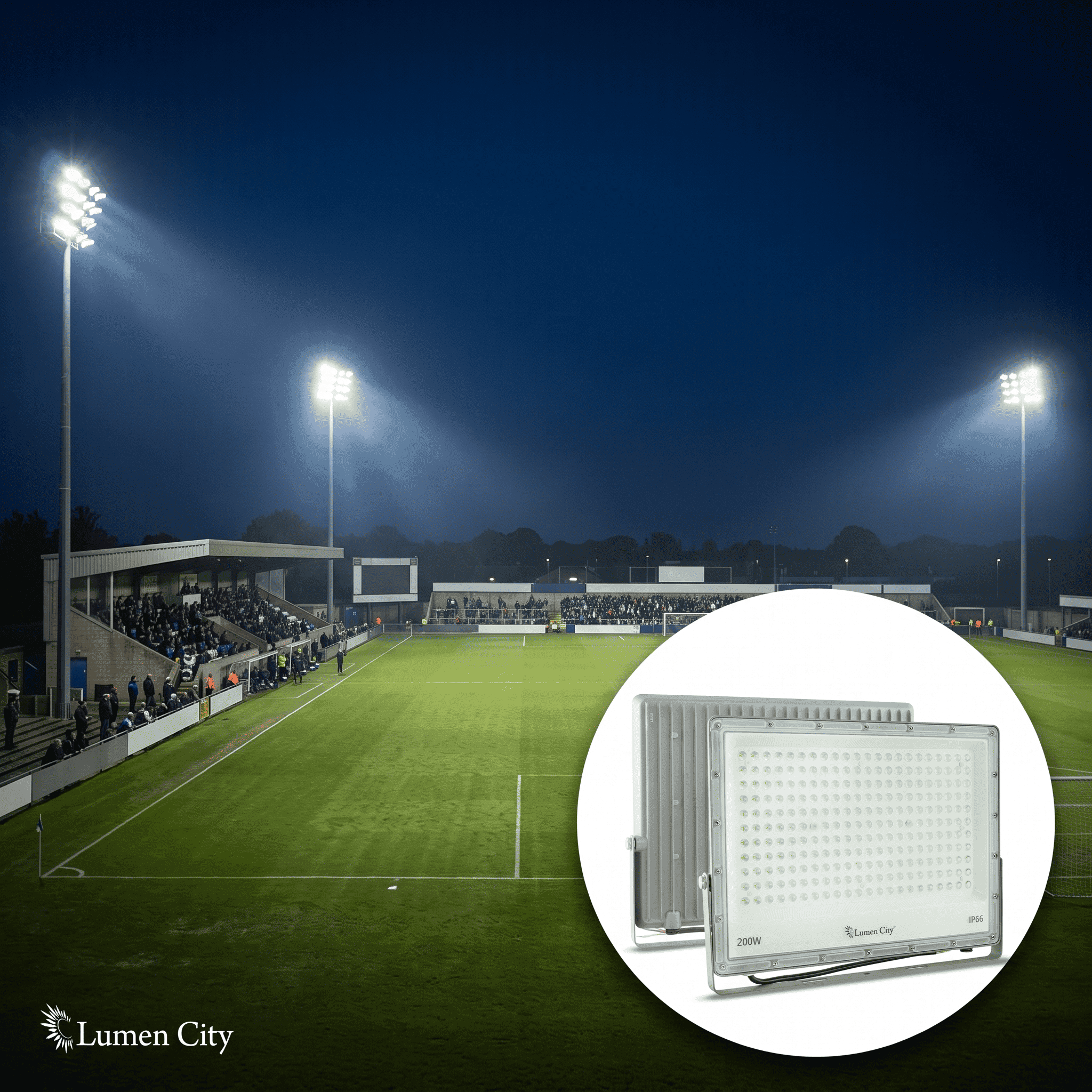
200W
200W high-output flood for larger temple grounds and event parking.
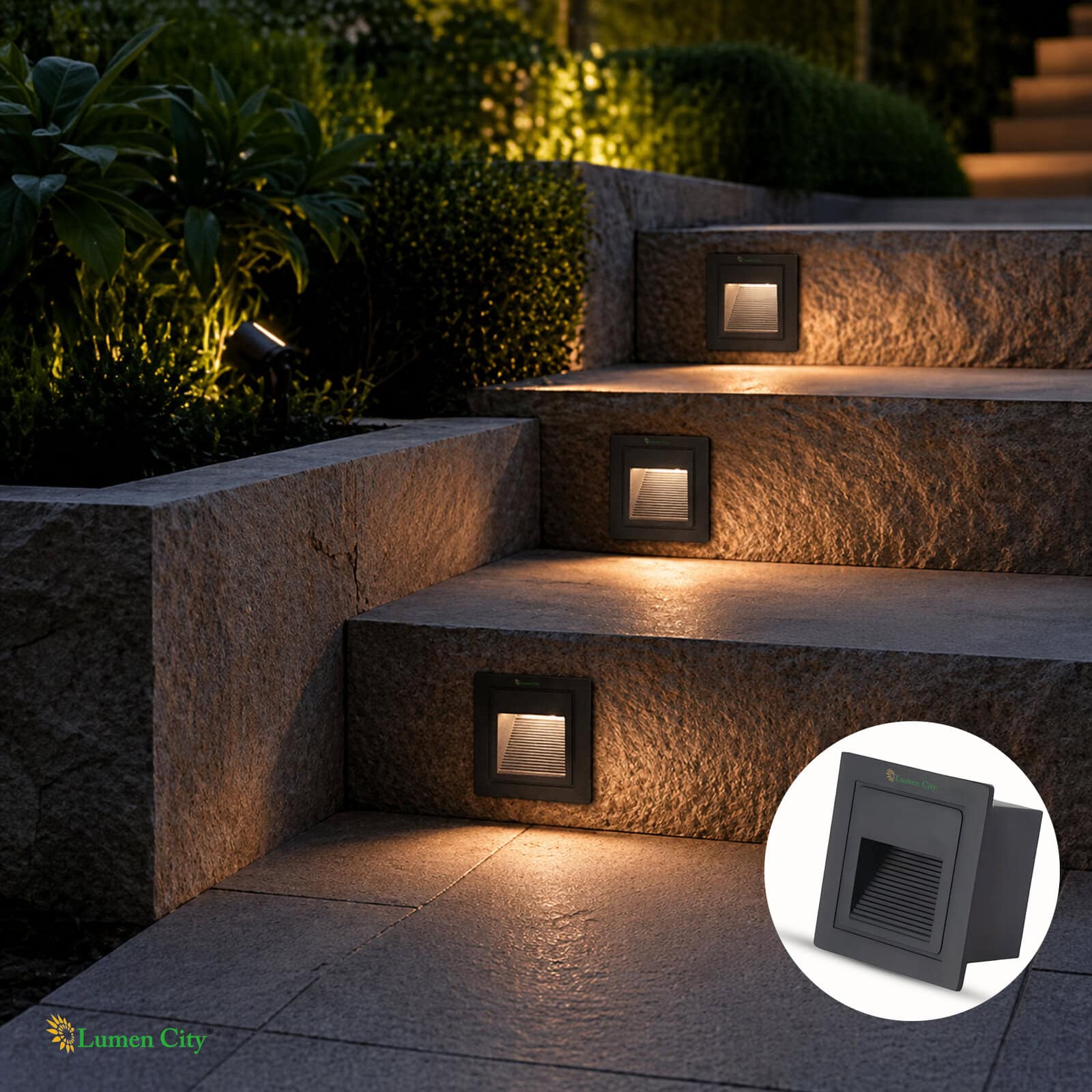
3W LED Step Light Square Recessed
Compact recessed step light for glare-controlled stair visibility.
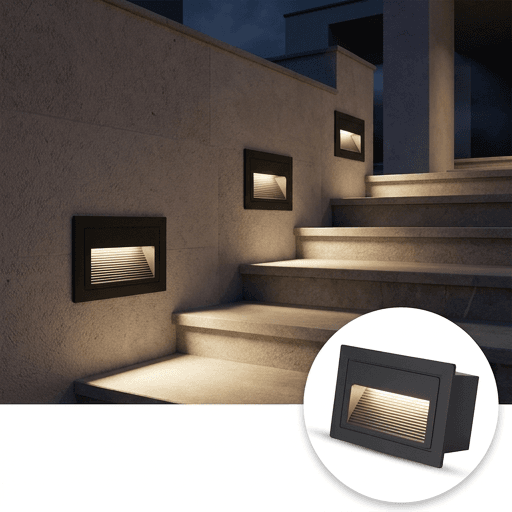
6W LED Step Light Rectangular Recessed
Wider 6W step light for broader temple stairs and raised platforms.
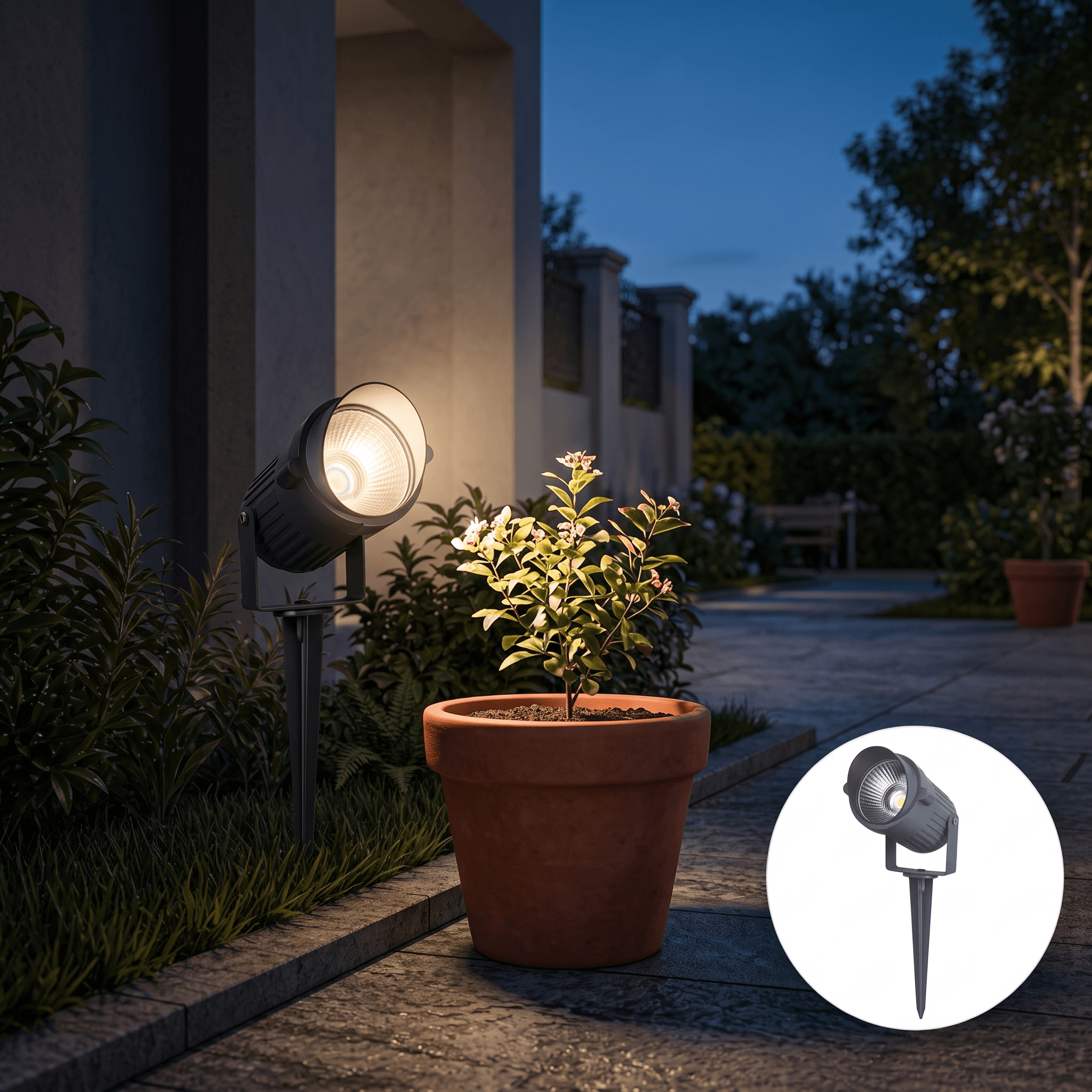
7W Garden Spike Light Warm, Neutral & Cool White
Garden spike light for trees, pathway edges and shrine landscaping.
Need a lighting layout for a temple trust°
Send front and side elevation photos, stone type and festival colour requirement. Lumencity can suggest fixtures, positions and project pricing.
Facade and temple-style installations
Warm uplighting, wall washers and burial lights used on exterior architectural surfaces.
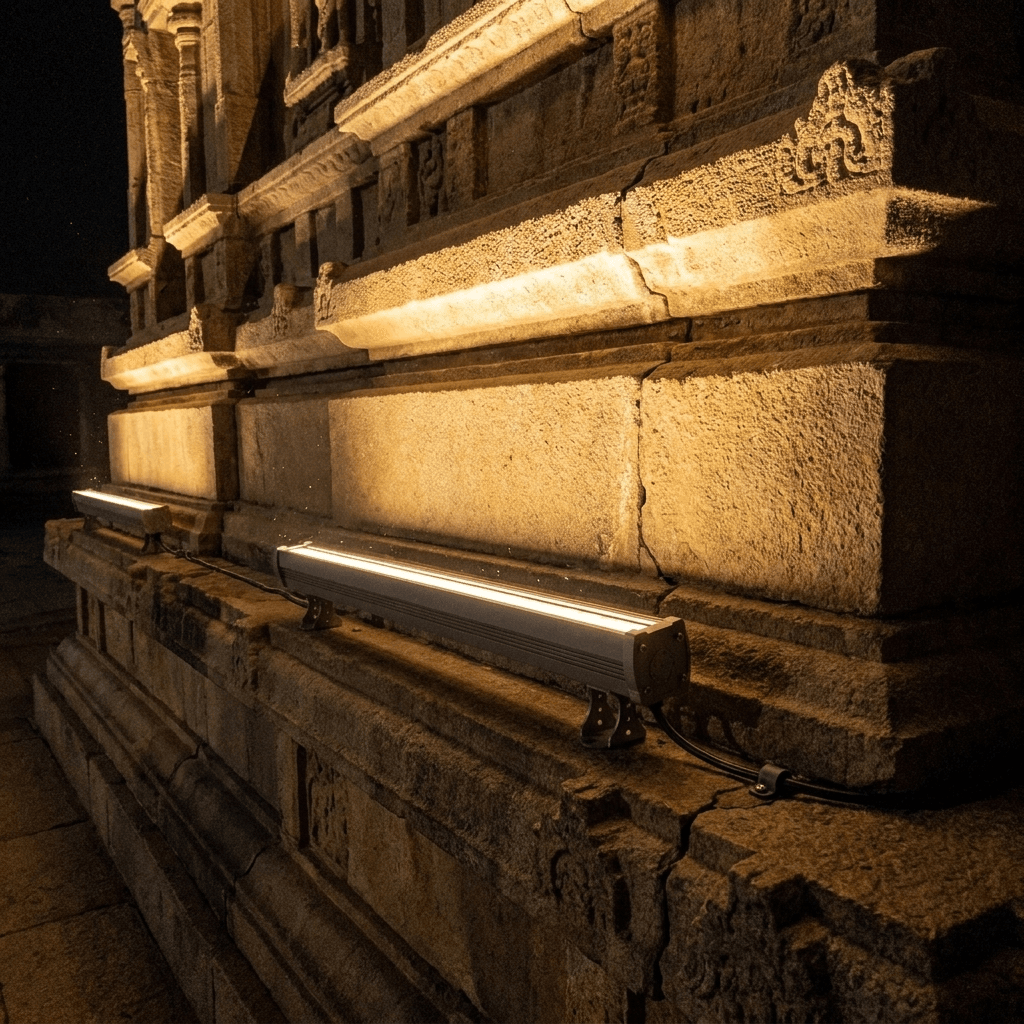
“The warm wall washers brought out the stone texture without glare near the entrance.”
Temple trust committeeTemple facade wall washer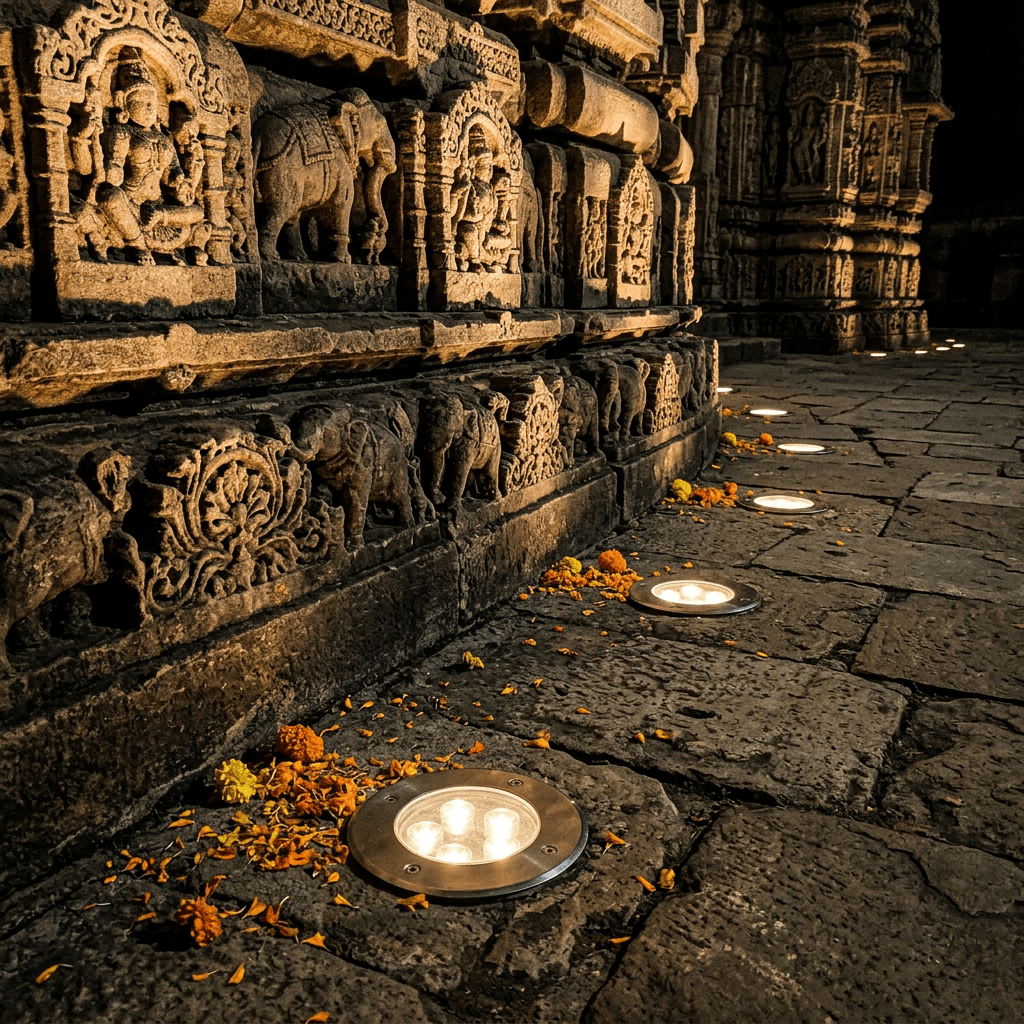
“The plinth now reads clearly at night and the fixtures sit flush in the paving.”
Mandir renovation teamPlinth burial lighting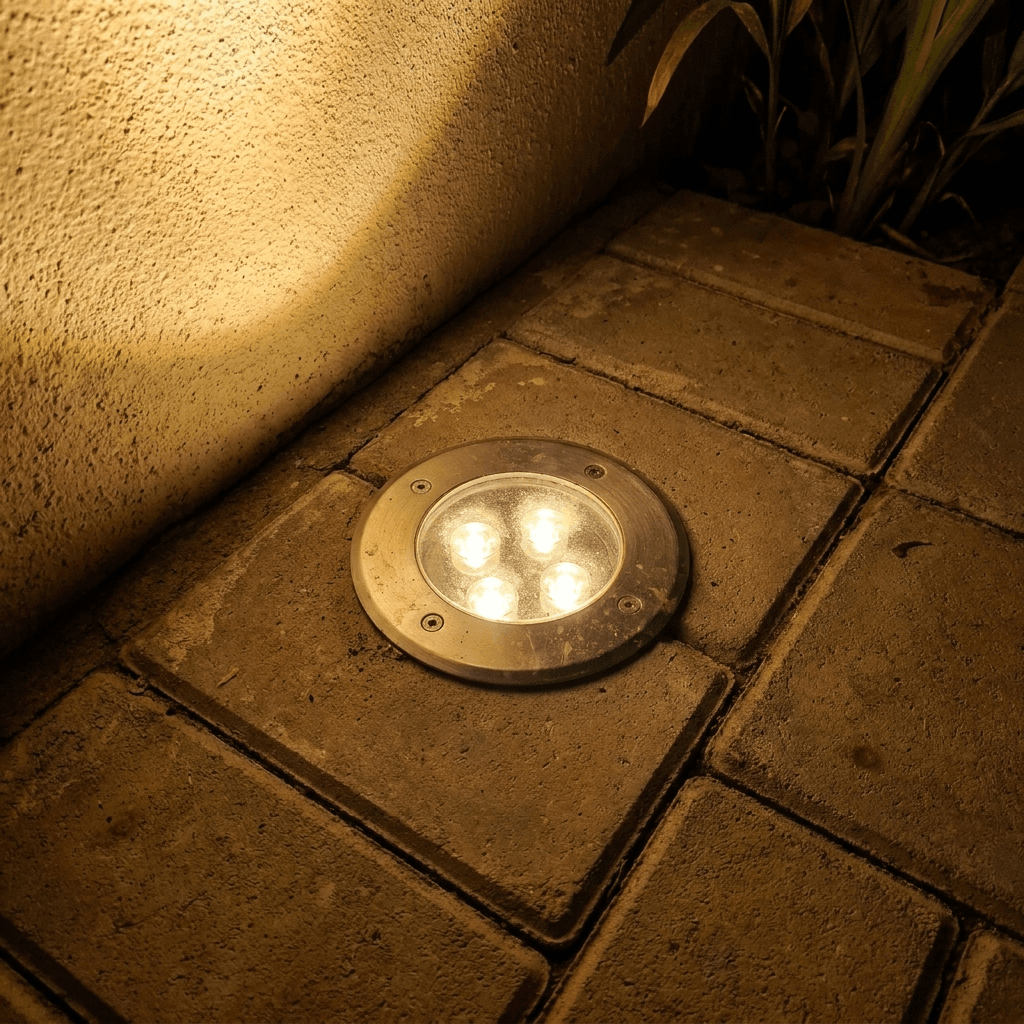
“Warm white was the right call. The building looks calm, not commercial.”
Project contractorWarm uplighting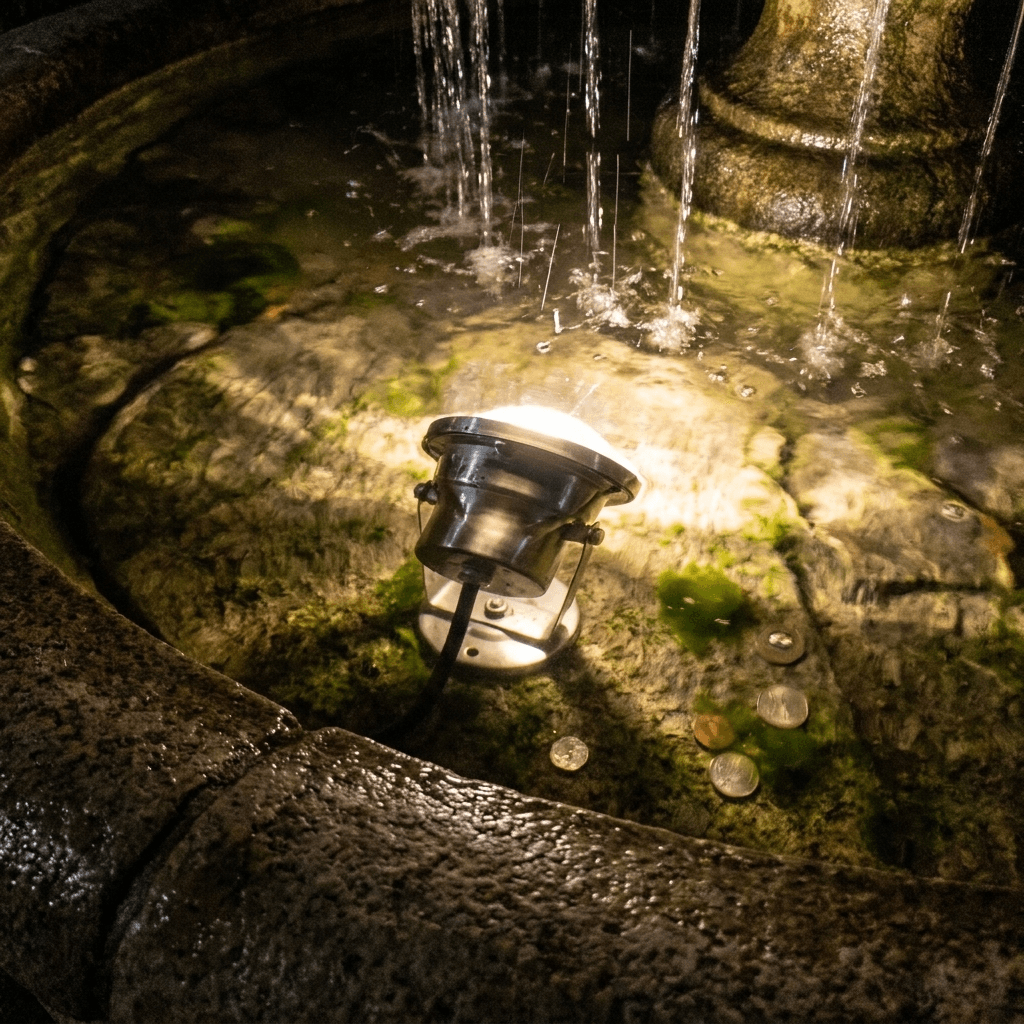
“The RGB scenes are useful for festival days while warm white stays the everyday setting.”
Temple courtyard teamFestival fountain lightingHow to Light a Temple Exterior
A temple lit badly looks like a warehouse. A temple lit well looks like it did to the people who built it carved stone reading in relief, the shikhara rising clear against the sky, the plinth grounded rather than floating in darkness.
1. Graze the stone never flood it
If you take one principle from this page, take this one. Grazing places the fixture close to the wall roughly 150 to 300 mm out so light travels almost parallel to the surface. Every carved edge, every joint, every raised figure casts its own small shadow. Depth appears. Detail becomes visible from a distance.
2. Warm gold is the default colour is for occasions
3000K warm white is the correct everyday setting for temple stone. Sandstone, granite, marble and lime plaster all read warm; lighting them warm keeps them looking like themselves. Warm light also carries the association most people expect at a temple diya, lamp, brass, gold. 6500K cool white turns the same stone grey and institutional. It is the single most common mistake on Indian temple exteriors, and it usually happens because someone bought street light fixtures for the job.
3. The five zones of a temple exterior
Work through these in order. Each one does a different job, and skipping any of them is visible. Zone 1 The shikhara or tower. The tallest element and the one seen from furthest away. Narrow-beam 7 column lights placed at the base of the tower, aimed straight up. The narrow beam is essential: a wide beam scatters most of its output into the sky before it reaches the top. For a tall shikhara, a second tier of fixtures partway up gives even coverage rather than a bright base fading to a dark peak.
4. Fixture selection, zone by zone
| Zone | Fixture | Wattage | Why | | Shikhara, tower | Facade column light, 7 narrow | 10W | All output goes up the tower, none into the sky | | Pillars, columns | Facade column light, 7 narrow | 10W | Tight vertical shaft reveals full height | | Plinth, base | Burial light, IP68 | 6W / 9W / 12W | Flush in paving, walked over, survives standing water | | Main walls, mandapa | Wall washer, 30 | 18W / 36W | Even sheet across broad surfaces | | Festival scenes | RGB wall washer / DMX RGBW | 36W | Programmable colour, warm gold default | | Compound, parking | Flood light | 50W / 100W / 200W | Wide area coverage for movement | | Steps, stairs | Recessed step light | 3W / 6W | Glare-shielded, at foot level | | Trees, garden | Garden spike light | 7W 20W | Re-aimable as planting grows |
5. How many fixtures working numbers
Exact counts need the elevation, but these are the ratios that hold across most temple jobs: - Column lights: one per pillar face to be lit. One per corner of the shikhara base, minimum four. - Burial lights: 1 to 1.5 m apart along the plinth. Closer for a continuous band of light, further apart for distinct pools. - Wall washers: butted end to end covers wall length one-for-one a 6 m wall takes six 1 m bars. Spaced at 1.5 m centres, four bars. - Step lights: one per 1.5 m of stair width, on every flight. - Compound floods: one 100W every 10 12 m of boundary, mounted at 10 12 feet, angled 30 down.
6. IP68 is not optional here
Temple compounds flood. Paving pools water through the monsoon, abhishekam and cleaning water runs across the plinth, and festival crowds mean surfaces get washed down regularly. Every in-ground and near-ground fixture in this range is IP68 rated for continuous submersion, not merely rain-resistant. That covers burial lights, column lights, wall washers and fountain lights. A fixture rated IP65 sitting in a driveway that floods will fill with water and fail, usually in its first monsoon.
7. Mounting on old stone do it reversibly
If the structure is old, protected, or of any heritage significance, treat the stone as untouchable. - Prefer freestanding and ground-set fixtures. Burial lights in the surrounding paving and spike lights in planting beds achieve most of the effect without a single hole in the building. - Where a fixture must attach to the structure, fix into mortar joints rather than through carved or dressed stone. Joints can be repointed; a drilled carving cannot be undone. - Run cable in existing chases and along paving edges, not chased into masonry. - Keep it reversible. A good installation is one that could be removed in twenty years leaving no trace.
8. Wiring, control and who operates it
Temple lighting is usually operated by a committee, a trustee or a priest not by an electrician. Design for that. - A day/night photocell switches the facade on at dusk and off at dawn with no daily intervention. This is the right default for the main scheme. - A digital timer lets you shut the display down at a set hour useful where the temple wants the facade off after 10 pm to reduce running cost or avoid disturbing neighbours. - Separate the circuits. Facade, compound and festival colour should be on different switches. Someone will want the pathway lights on while the facade is off. - Label the board. Obvious, and almost never done. Six months later nobody remembers which MCB does what.
9. Running cost the question the committee will ask
This decides most temple projects, because the money comes from donations and the trustees are accountable for it. A 30-fixture LED scheme say twelve column lights, ten burial lights and eight wall washers draws roughly 500 watts total. Running dusk to dawn, about 11 hours a night, that's around 5.5 units a day, or roughly 165 units a month. At 8 a unit that's about 1,300 a month for the whole temple to be lit every night of the year.
10. Before you order
- Send elevation photographs. Front, side, and one taken at night if the temple currently has any lighting. Photographs tell us more than dimensions do for this category. - Note the stone. Carved sandstone, plain granite, marble, painted plaster the material changes the technique. - Mark the festival requirement. If colour is wanted for specific occasions, that decides whether you need RGB remote fixtures or a DMX system. - Confirm the power point locations and whether the compound already has a lighting circuit. - Ask for bulk pricing. Temple projects are almost always 20+ fixtures, and we quote accordingly, with GST invoicing for the trust's records.
Temple Facade Lighting Questions
Answers for temple exterior, shikhara, plinth and festival lighting projects.
Four fixture types do most of the work: 7 narrow-beam column lights for the shikhara and pillars, IP68 burial lights set flush into the plinth paving, wall washers grazing the main wall surfaces, and flood lights for the compound and parking. Step lights on stairs and spike lights in the garden complete the scheme.
Warm white at 3000K for everyday lighting it flatters sandstone, granite, marble and lime plaster, and carries the warmth people associate with a temple. Cool white makes stone look grey and institutional. RGB colour is best kept for festivals like Mahashivratri, Janmashtami, Navratri and Diwali rather than run every night.
Because flood lights erase shadows. A wide beam aimed at carved stone from a distance lights every surface equally, so the carving loses its relief and reads as flat texture. Carved surfaces need narrow-beam fixtures placed close to the wall a technique called grazing so each edge casts its own small shadow.
Use 7 narrow-beam column lights at the base of the tower, aimed straight up. The narrow beam is essential a wide beam scatters most of its light into the sky before reaching the top. On a tall shikhara, add a second tier of fixtures partway up so the peak is as bright as the base.
It depends on the size and the number of elements. As working ratios: one column light per pillar face, burial lights 1 to 1.5 m apart along the plinth, wall washers butted end to end along feature walls, one step light per 1.5 m of stair width. A modest neighbourhood temple usually needs 20 to 40 fixtures; a large complex runs into the hundreds.
Grazing places the fixture 150 to 300 mm from the wall so light skims parallel to the surface, making every carving cast a shadow and appear in relief. Flooding places a wide-beam fixture further away, hitting the surface straight on and flattening the detail. Graze carved stone; flood only the compound and parking.
The in-ground and near-ground fixtures are IP68, rated for continuous submersion rather than just rain. That matters in a temple compound, where paving pools during monsoon and abhishekam and cleaning water runs across the plinth. Compound flood lights are IP65, which is correct for wall and pole mounting.
Yes. RGB burial lights and the RGB wall washer come with remotes for straightforward colour switching. The DMX RGBW washer allows programmed scenes across multiple fixtures useful for a temple that wants distinct settings for different festivals. The usual approach is warm gold as the everyday default with colour available on occasion.
A typical 30-fixture LED scheme draws around 500 watts total. Running dusk to dawn, that's roughly 165 units a month, or about 1,300 at 8 a unit. For comparison, four old 400W halogen floods alone draw 1,600 watts over three times the consumption for worse-looking light.
Yes, and it should be planned that way. Burial lights in the surrounding paving and spike lights in planting beds achieve most of the effect without touching the structure. Where fixtures must attach, fix into mortar joints rather than carved stone, run cable along paving edges rather than chasing masonry, and keep the whole installation reversible. For protected monuments, check whether ASI or state archaeology permissions apply before starting.
With a day/night photocell sensor, yes it switches at dusk and dawn automatically, with no daily intervention from the committee. A digital timer is the alternative where the temple wants the display off at a fixed hour. Keep facade, compound and festival circuits on separate switches so they can be operated independently.
Some do. The standard 18W and 36W warm white washers, the visor model and the RGB remote model run direct from 220V mains. The linkable washer, the DMX RGBW washer and the flexible cuttable roll need a 24V DC power supply, sold separately one 24V 16A unit powers up to eight bars or around 13 m of flexible roll.
Burial lights sit flush in hard surfaces the paved plinth, the parikrama path, the courtyard so devotees walk over them safely and nothing protrudes. Spike lights stake into soil in the garden and can be re-aimed as planting grows. Use burial on paving, spike in beds.
Yes. The technique is architectural, not denominational narrow beams to reveal carving, warm light on stone, uplighting at the plinth, controlled colour for festival occasions. The zones change with the building's form, but the fixtures and the approach are the same.
Yes. Temple projects are almost always 20-plus fixtures and we quote at project pricing with GST invoicing for the trust's records. Send elevation photographs, the stone type and your festival colour requirement, and we'll return a fixture list with positions.
Yes. Photographs are more useful than dimensions for this category send front and side elevations, plus a night photograph if any lighting already exists. We'll come back with which fixture goes where, how many, and what it will draw. WhatsApp is the fastest route.