
LED Flood Lights & Stadium Lights
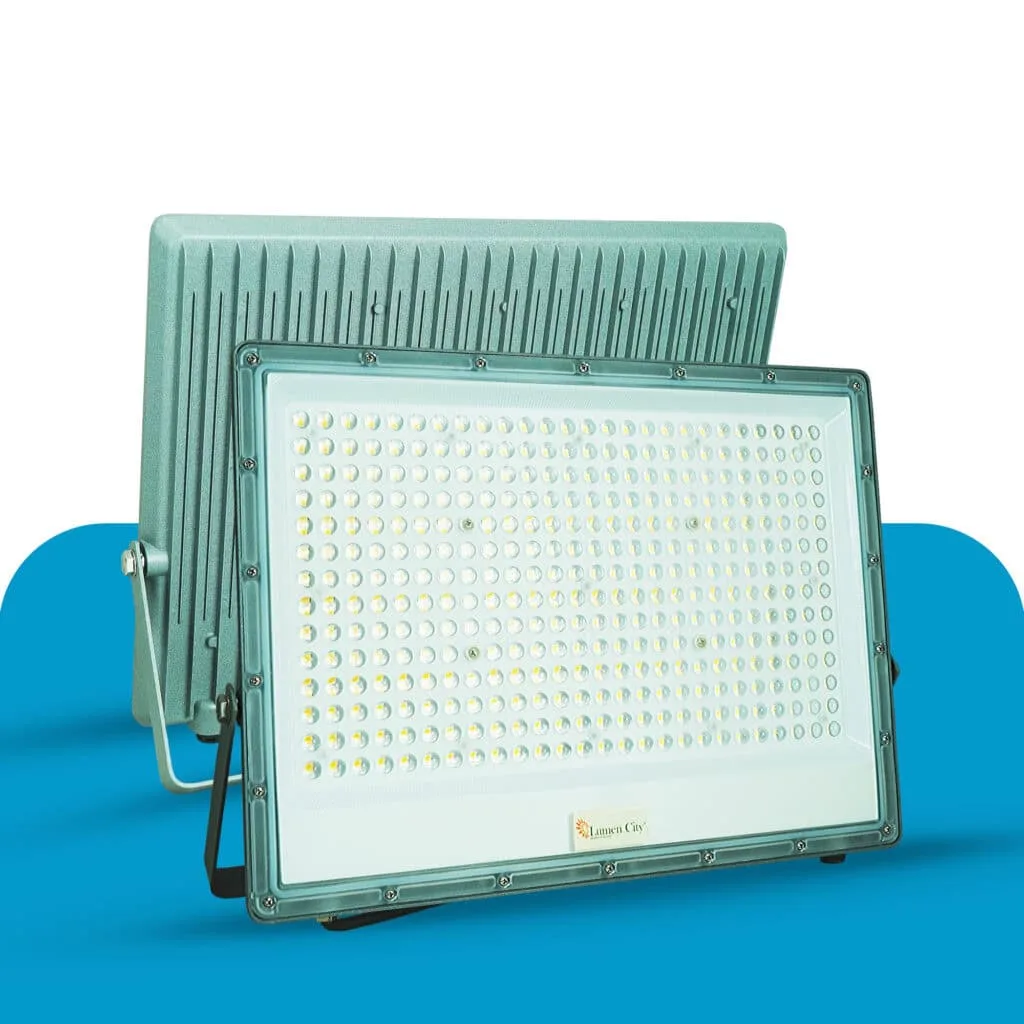
Choose 50W to 300W flood lights for gates, yards, loading bays, turf grounds and large outdoor areas.
Shop Outdoor Lights
Street · High Bay · Stadium Flood · Facade Landscape
Stadium & Flood Lights
All in-stock products from the Lumencity outdoor catalogue for this category.
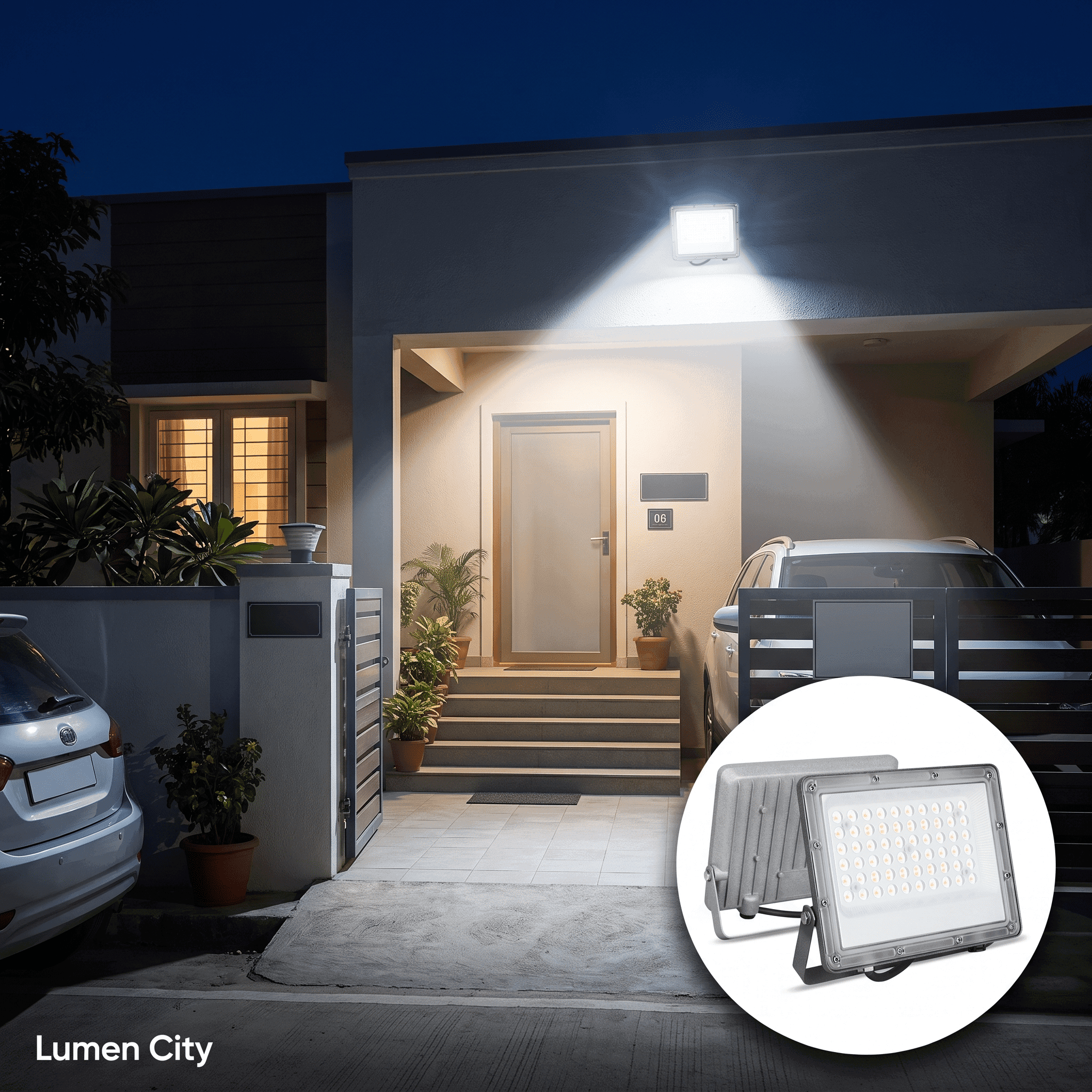
50W
50W outdoor lighting fixture for Lumencity project and retail buyers.
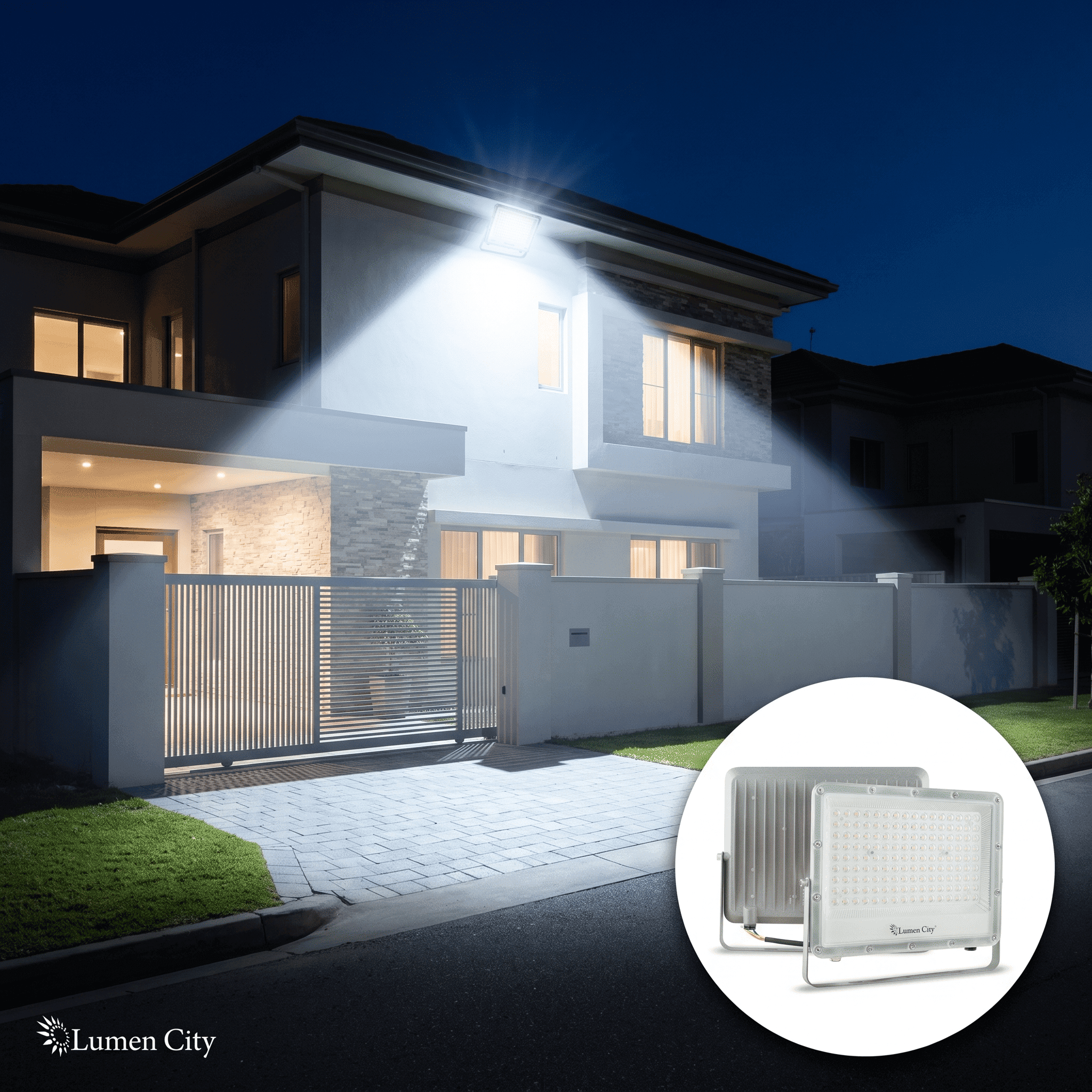
100W
100W outdoor lighting fixture for Lumencity project and retail buyers.
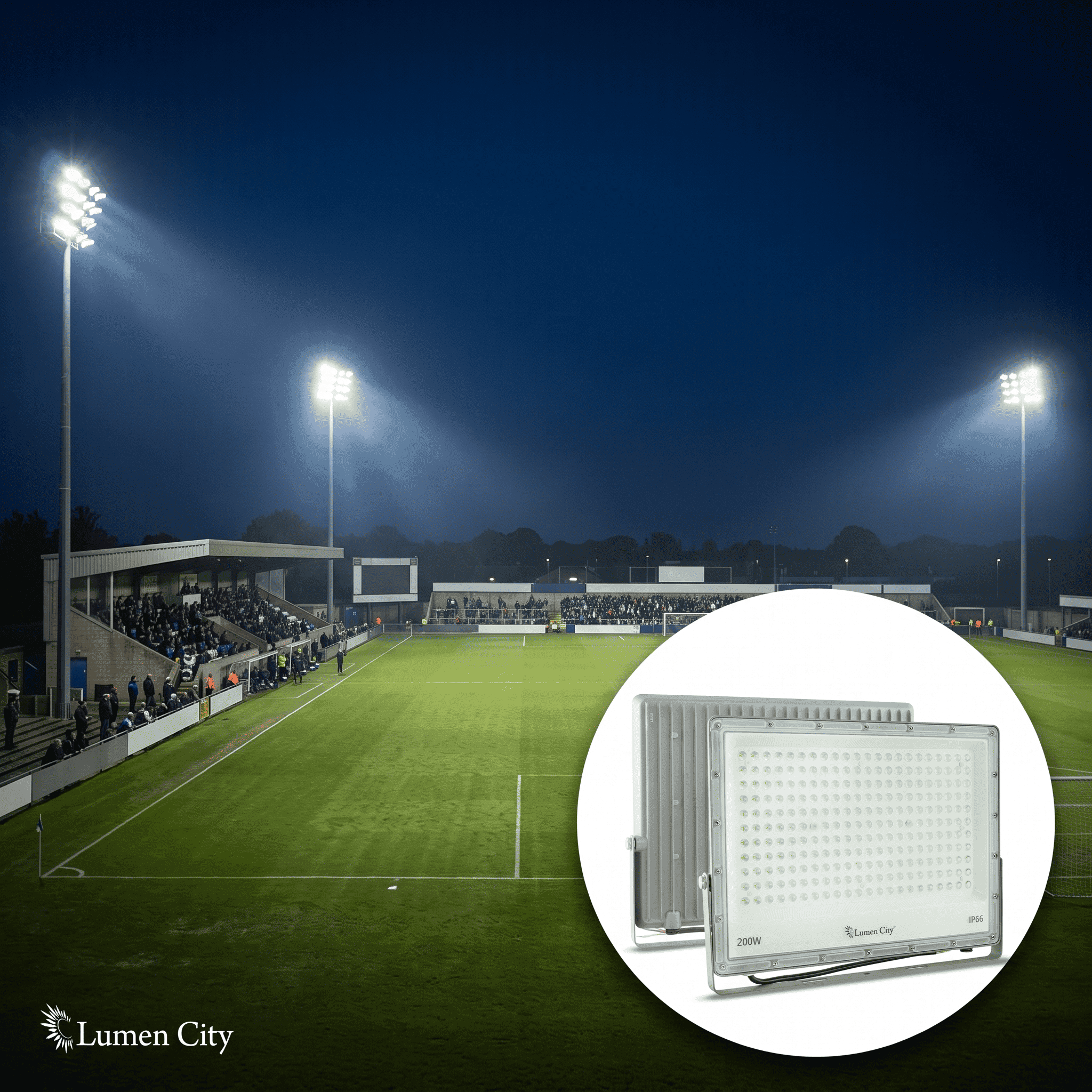 Stadium Use
200W
200W outdoor lighting fixture for Lumencity project and retail buyers.
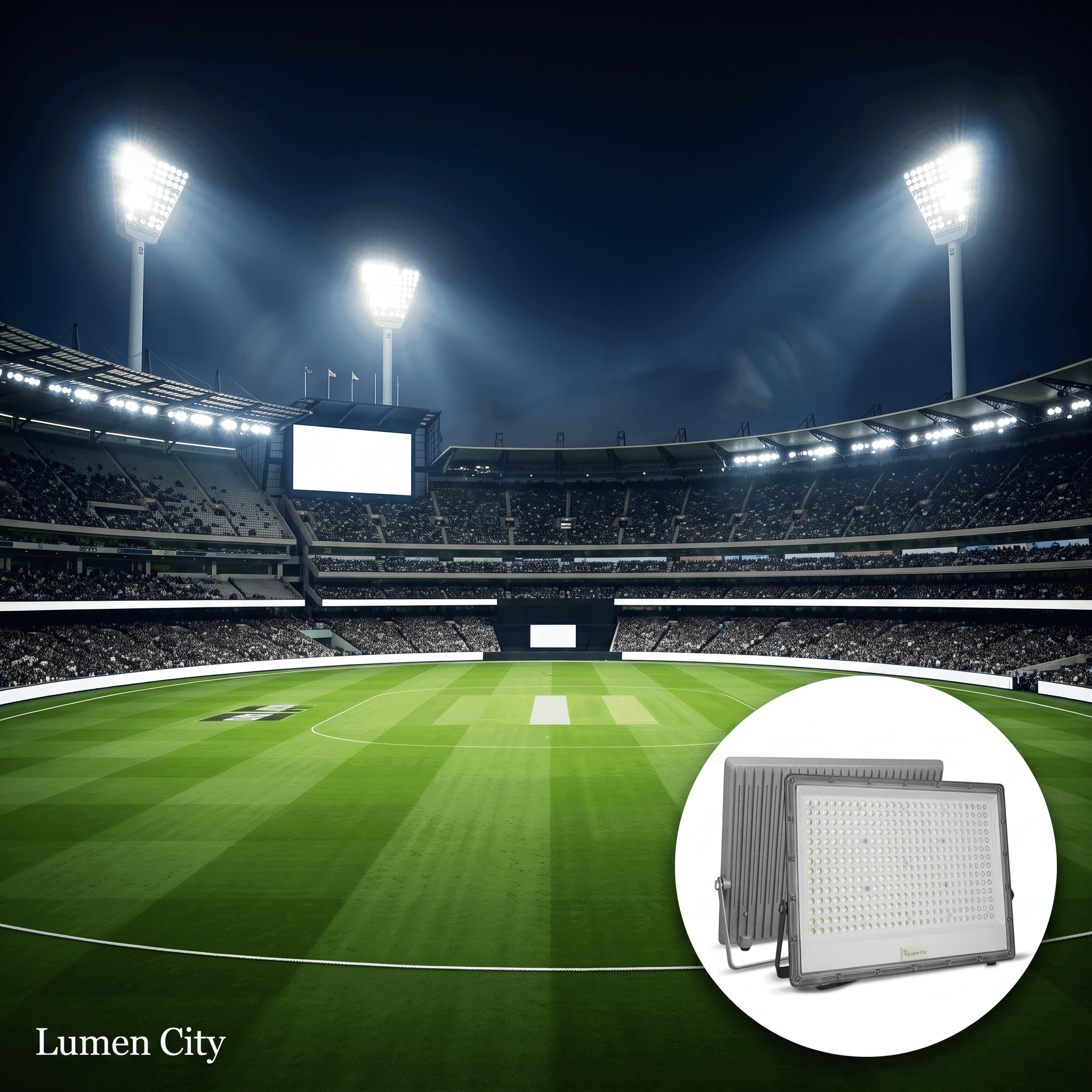 Stadium Use
300W
300W outdoor lighting fixture for Lumencity project and retail buyers.
Plan by installation area
Choose the right outdoor light by where it will be installed, then pick the product category and wattage.
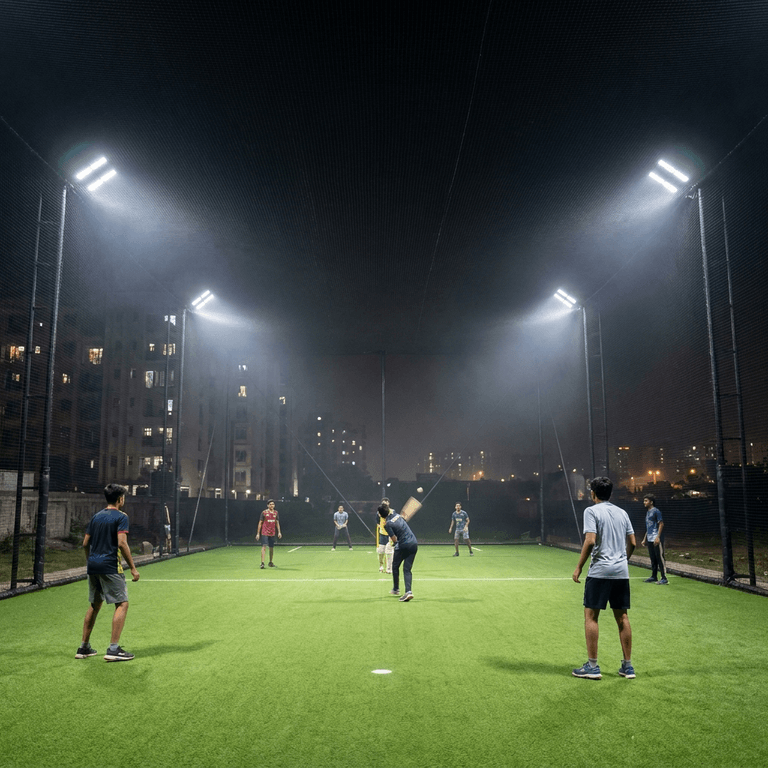
Cricket Ground & Turf Lighting
Choose flood and stadium lights for box cricket, turfs and practice nets.

Warehouse, Factory & Godown Lighting
Plan high bays, bay lighting and loading-area coverage for industrial spaces.
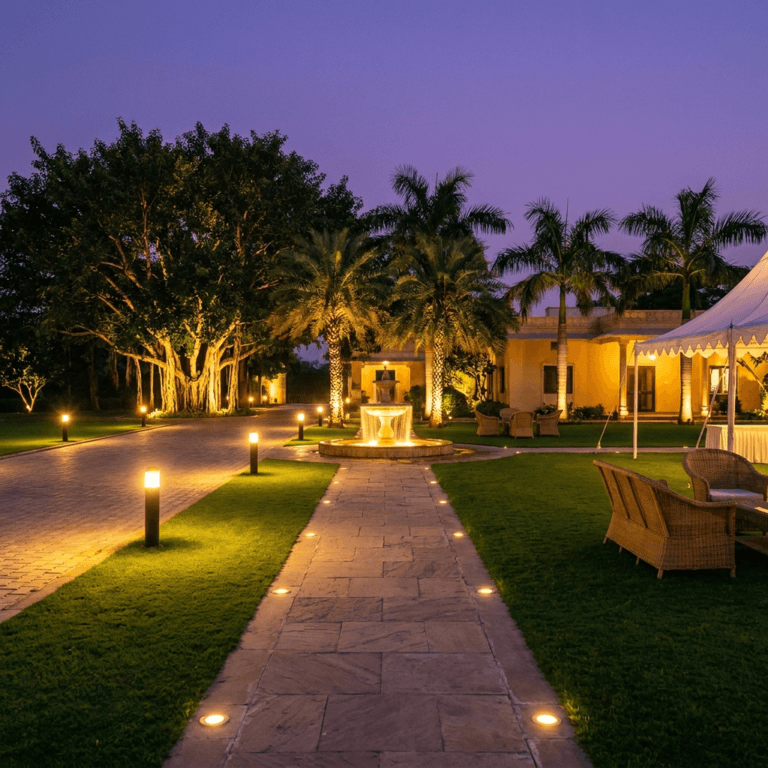
Farmhouse, Resort & Venue Lighting
Layer street, flood, facade and garden lights across larger outdoor properties.
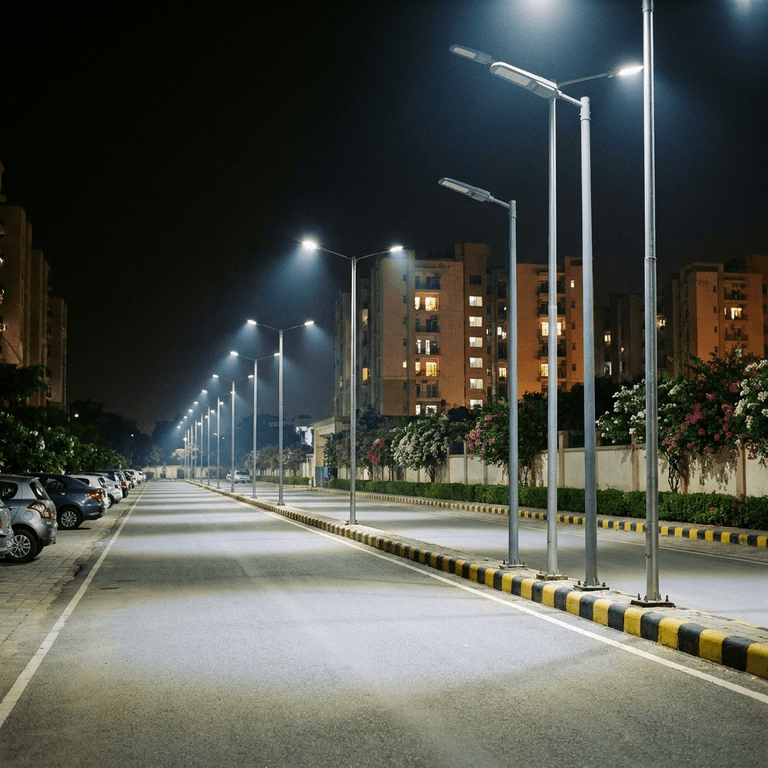
Society & Campus Street Lighting
Light internal roads, parking rows, entry gates and shared campus areas.
Installed outdoor lighting results
Shuffled review images and buyer notes matched to this category.
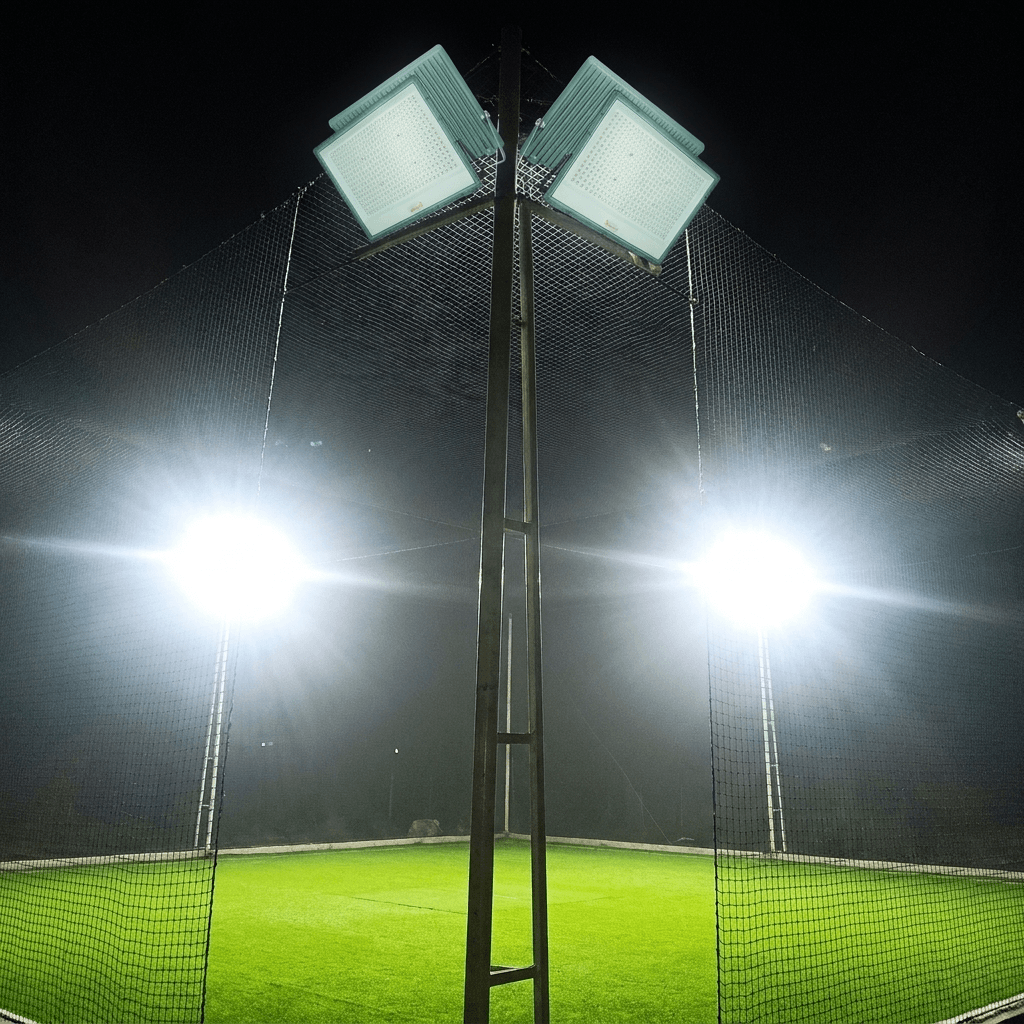
“The 300W lights made evening play comfortable across the corners.”
Turf facility ownerSports ground lighting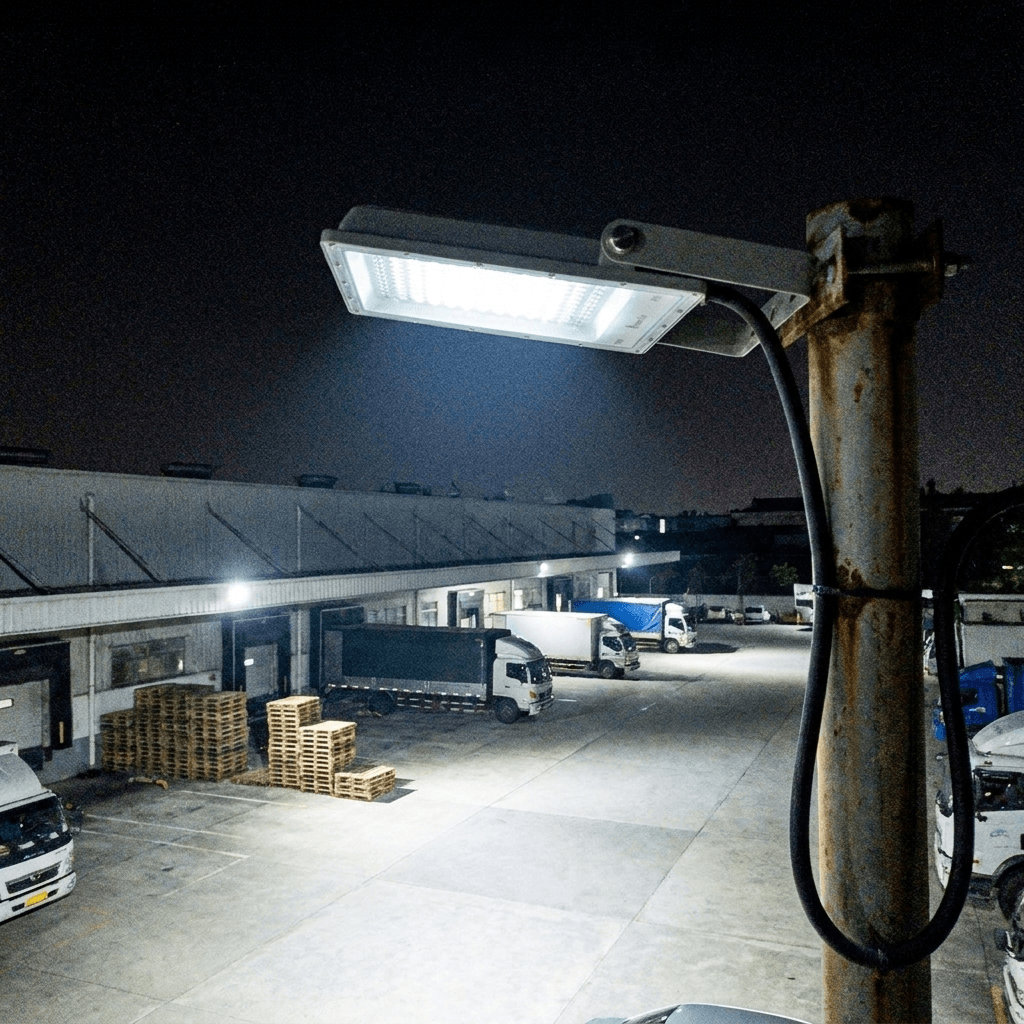
“The 200W floods cover our pickup point much better than the old fittings.”
Factory adminLoading bay lighting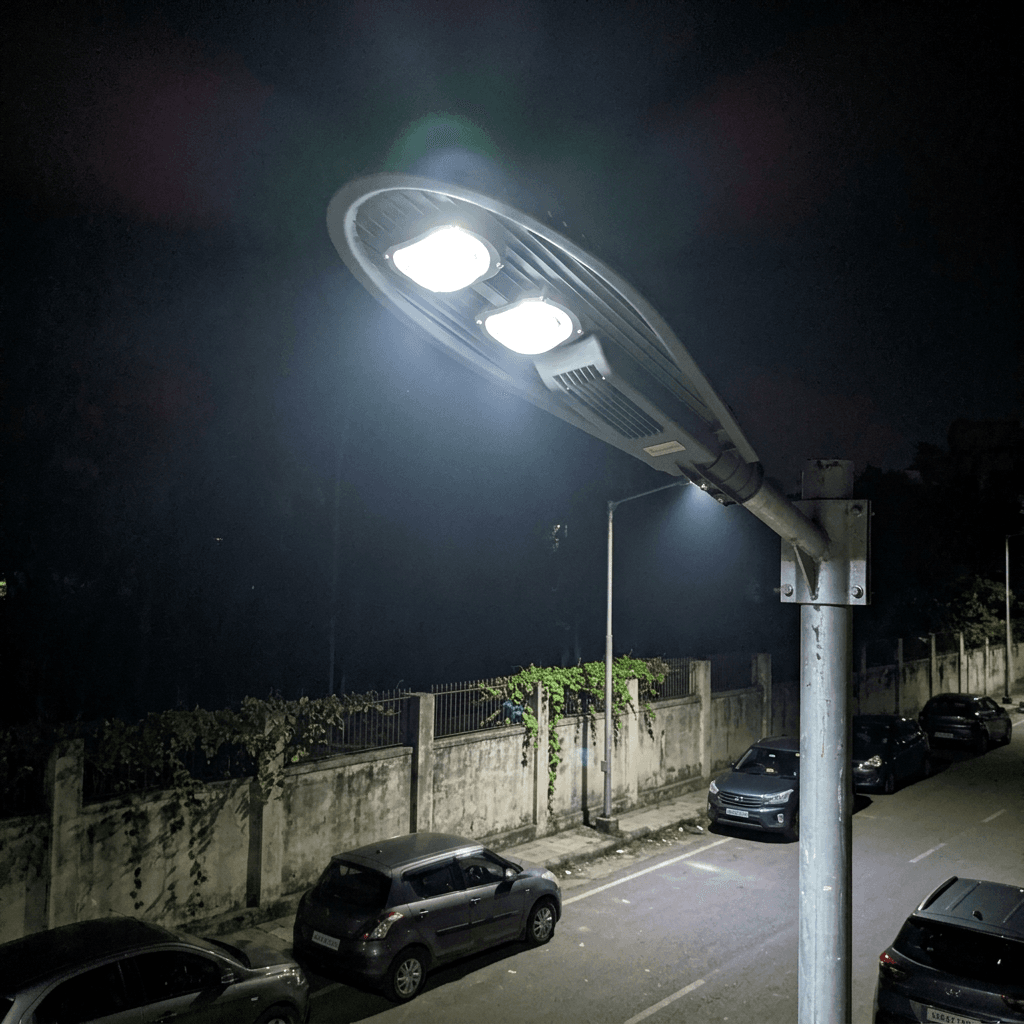
“The beam spread is strong without needing too many fixtures.”
School facility teamOutdoor court lighting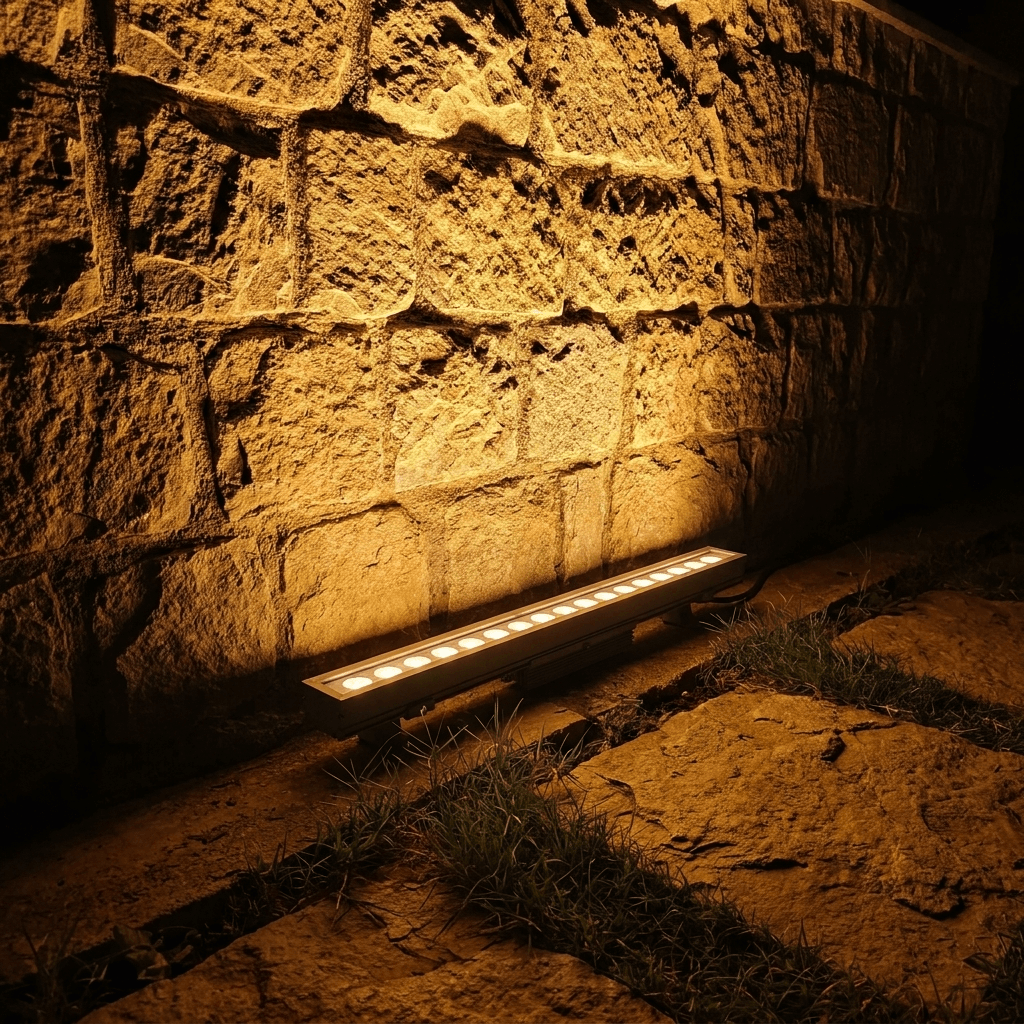
“The lighting advice helped us avoid over-bright glare near seating.”
Venue ownerEvent lawn lightingLumencity in the press
Coverage across energy, solar and national media for Lumencity's lighting work.
 Mercom India
 The Hindu
 Saur Energy
 EQ Magazine
 DD News
How to Choose an LED Flood Light
Flood lights are the most over-bought category in outdoor lighting. People buy 200W for a gate that needs 50W, then complain about glare and the neighbour complains about light in their bedroom. The right wattage is set by the size of the area and the height of the mounting - and going bigger than that makes the installation worse, not better.
1. Wattage by area, not by ambition
The 300W is worth noting: at 43,200 lumens it is not a linear step up from the 200W's 24,000. It's a genuinely different class of fixture, and it's the model for anything where people are tracking a moving ball.
---
2. Mounting height and the glare problem
The most common flood light mistake in Indian homes is mounting too low. A flood light at 8 feet on a boundary wall throws light straight into the eyes of anyone approaching, creates a hard shadow behind every object, and lights the neighbour's window more effectively than your own driveway.
**Mount flood lights at 10-12 feet minimum, angled roughly 30° downward.** At that height and angle the beam lands on the ground where you want it, glare drops sharply, and the light stays on your property.
3. Overlap the beams
A single flood light produces a bright centre and a dark edge. Coverage comes from overlapping, not from intensity.
Position fixtures so each beam's edge reaches the next fixture's centre. On a boundary wall, that generally means one fixture every 10-12 metres for 100W units. On a ground, it means beams from opposite corners crossing in the middle.
4. Sports lighting - what actually matters
If people are playing a game under these lights, three things matter more than raw brightness:
**Shadow-free coverage.** A ball travelling at speed through a dark patch is a safety problem. Light from at least two directions at every point of the playing area - which in practice means corner poles rather than a row along one side.
5. Wide voltage and surge - the reliability question
Every fixture here accepts 90-265V. This matters most for flood lights on tall poles in open ground, which are exposed to exactly the conditions that kill drivers: voltage swings on long feeders, restoration surges after cuts, and nearby lightning.
Two practical steps on any pole-mounted sports or yard installation:
6. Metal body and heat
These are die-cast metal fixtures, not plastic. On a flood light this is not a finish decision - the housing is the heat sink, and a 300W fixture generates real heat.
A flood light that runs hot loses brightness over time (lumen depreciation) and loses its driver early. Fin area and metal mass are what prevent that. When comparing quotes, weigh the fixtures if you can: on flood lights, lighter almost always means less heat sink.
7. IP65 and outdoor exposure
All fixtures here are IP65 - fully dust-tight, protected against water jets from any direction. Correct for wall and pole mounting, where the fixture sheds water and is never submerged.
Two situations that need a conversation before ordering: coastal sites, where salt air rather than rain is the threat, and any position where the fixture sits below the water line of monsoon pooling. Neither is common for flood lights, but both are worth flagging.
8. Larger grounds - 400W and above
Full-size cricket grounds, football fields and high-mast installations need fixtures above 300W. Our 400W, 500W and 1000W stadium units are part of the range and currently out of stock.
If you're specifying a full ground, WhatsApp the dimensions and pole positions and we'll advise on the configuration and current availability rather than you buying the wrong number of 300W units.
Stadium & Flood Lights FAQ
Quick answers before choosing the right model.
Match wattage to the area. 50W for a gate, porch or small yard. 100W for a driveway, boundary wall or parking bay. 200W for a loading bay, practice nets or event lawn. 300W for box cricket, turf grounds and large open areas where people are tracking a moving ball.
12,000 lumens. The range runs 6,000 lm at 50W, 12,000 lm at 100W, 24,000 lm at 200W and 43,200 lm at 300W. The 300W is a step change rather than a linear increase, which is why it's the model for sports grounds.
At least 10 to 12 feet, angled roughly 30° downward. Mounting lower produces glare straight into the eyes of anyone approaching, hard shadows behind every object, and light spilling onto neighbouring property. For larger areas, extra height improves coverage more than extra wattage does.
Beam shape. A flood light throws a wide symmetrical beam to cover an area - a yard, a wall, a ground. A street light throws an elongated asymmetric beam along a road. Using a flood light on a road creates glare at the pole and dark patches between poles.
Scale rather than category. Stadium lights are high-power flood lights - in this range 200W and above - built for large open areas where light has to travel from tall poles. The 50W and 100W in the same family are the domestic and small-commercial versions of the same fixture type.
It depends on the ground dimensions and pole height, and on whether it's box cricket, a turf ground or a full field. For box cricket, 300W units on corner poles is the working configuration. Send us the dimensions and pole positions and we'll return a layout.
Yes, with care about glare. Racquet sports involve looking upward frequently, so fixtures must be mounted high and angled to keep the lamp out of players' sightlines. Position lights along the sides rather than at the ends, so nobody is serving or receiving into a light.
These are IP65 - fully dust-tight and protected against water jets from any direction, which covers monsoon rain on wall and pole mounting. IP65 is the correct rating for a fixture that sheds water and is never submerged; a higher rating adds cost without adding life.
Not built in, but they work with external sensors. A motion sensor is useful on security floods where you want light only when someone approaches; a day/night photocell suits floods that should run all night. Both are available separately and wire to any fixture here.
It's the wrong shape for the job. A flood light throws light outward at an angle; inside a building that puts glare directly into workers' eyes and wastes output on walls. Use a high bay for indoor ceilings and keep flood lights for outdoor areas and loading bays.
Two years' warranty, BIS certified, manufactured in Delhi and shipped PAN India with GST invoicing. Keep the invoice as the warranty reference.
Yes - 400W, 500W and 1000W units are part of the range, currently out of stock. For full-size grounds and high-mast installations, send the dimensions and pole positions and we'll advise on configuration and availability.
Read the latest lighting guides
Buying advice, project notes and category explainers from Lumencity.