
Warehouse, Factory & Godown Lighting
Choose high bay wattage by ceiling height, then add loading bay, yard and internal road lighting for the full shed.
Start with mounting height, then spacing
The same floor area needs different fixtures at 5 m, 8 m and 12 m. Height comes first.
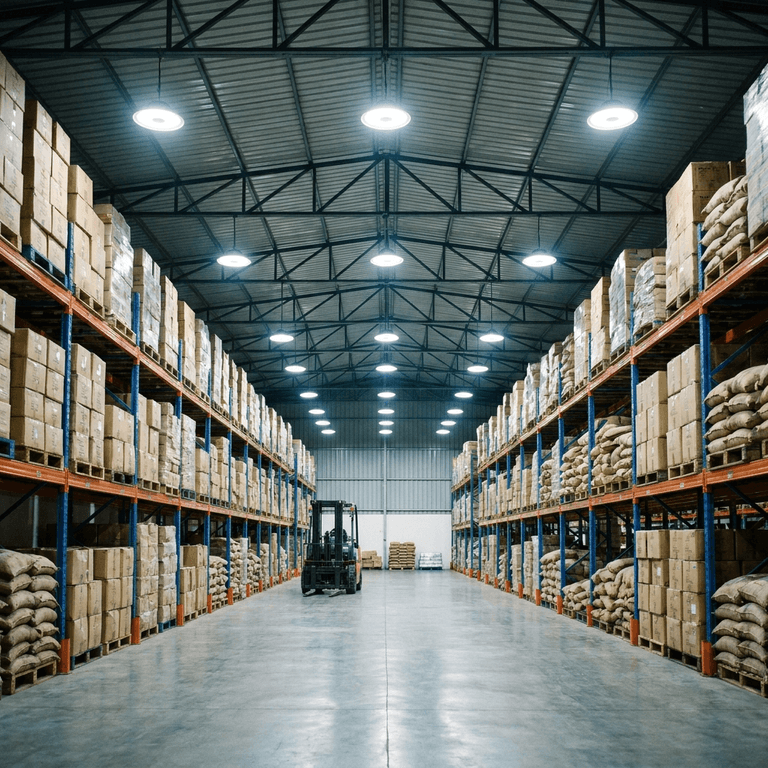
Ceiling height decides the fixture
Low sheds need narrower beams, mid-height godowns need 100W-120W, and tall sheds need 150W-200W fixtures with spacing based on mounting height.
Low ceilings up to 5 m
50W and 60W reflector high bays with narrower 90 degree beams for lower sheds and aisles.
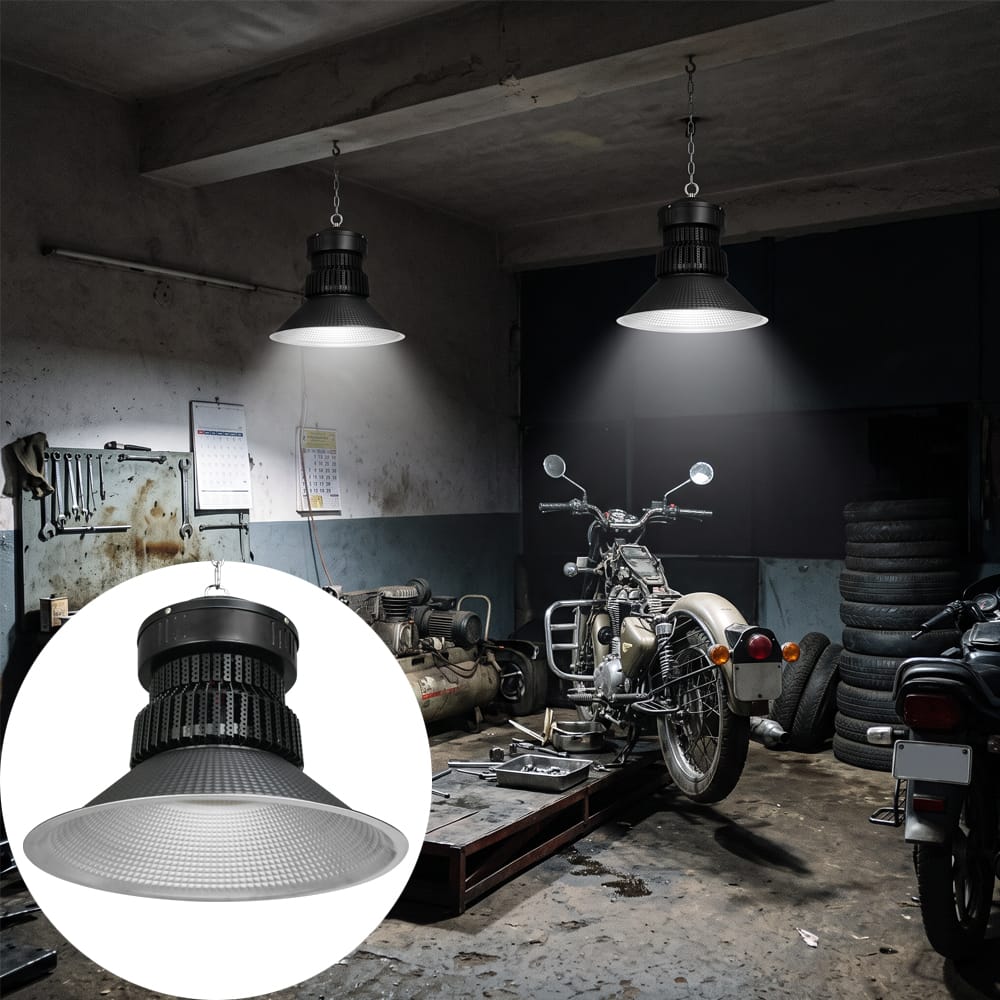
50W Reflector High Bay Light - 5000lm - 90° - IP65
Use 50W or 60W where the mounting point is low; add 100W slim only when brighter working light is needed.
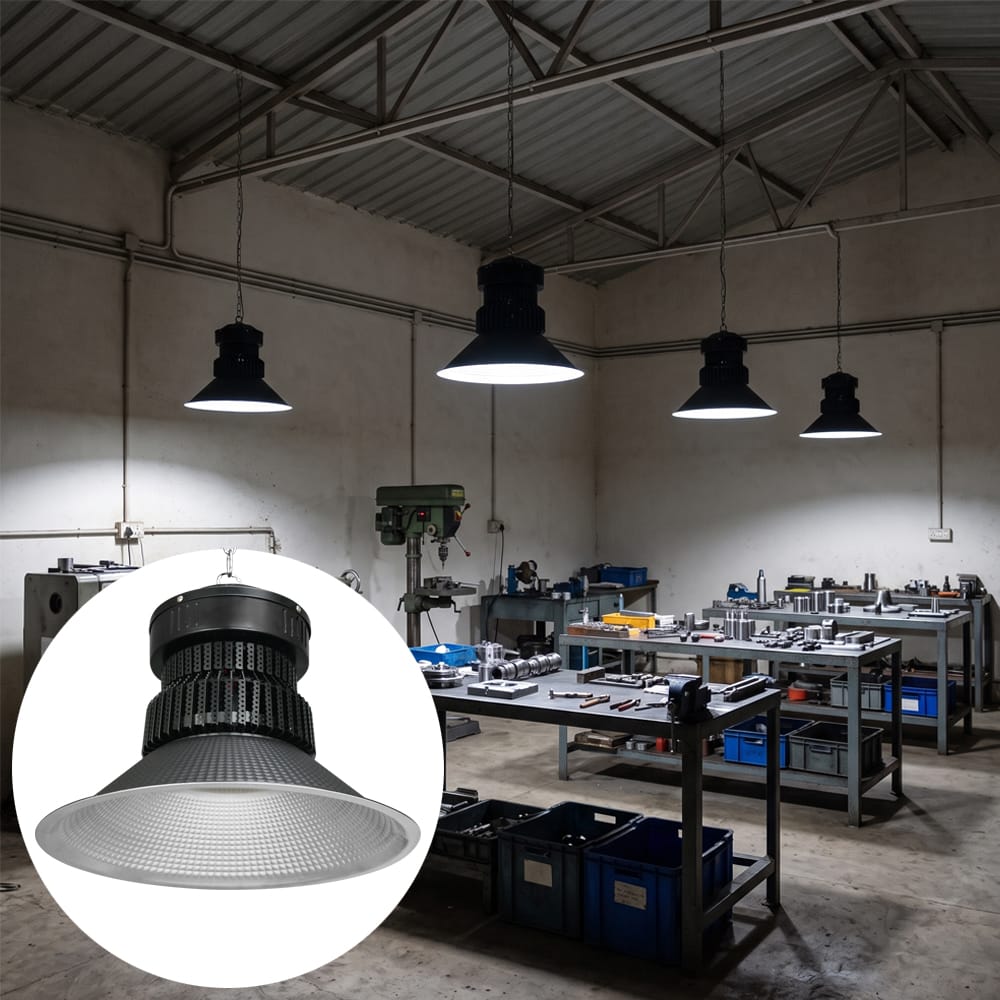
60W Reflector High Bay Light - 6000lm - 90° - IP65
Use 50W or 60W where the mounting point is low; add 100W slim only when brighter working light is needed.
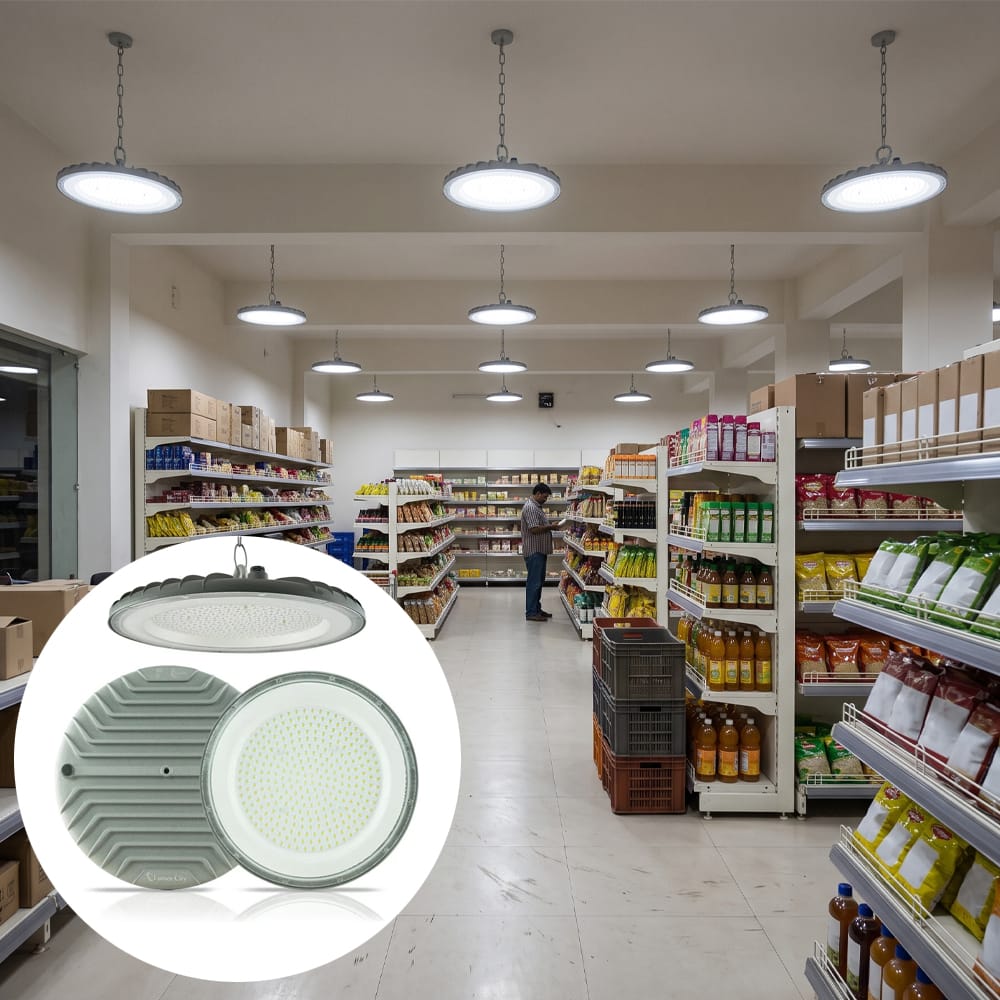
100W Slim UFO High Bay Light - 10000lm - Only 660g - 120° - Cool White
Use 50W or 60W where the mounting point is low; add 100W slim only when brighter working light is needed.
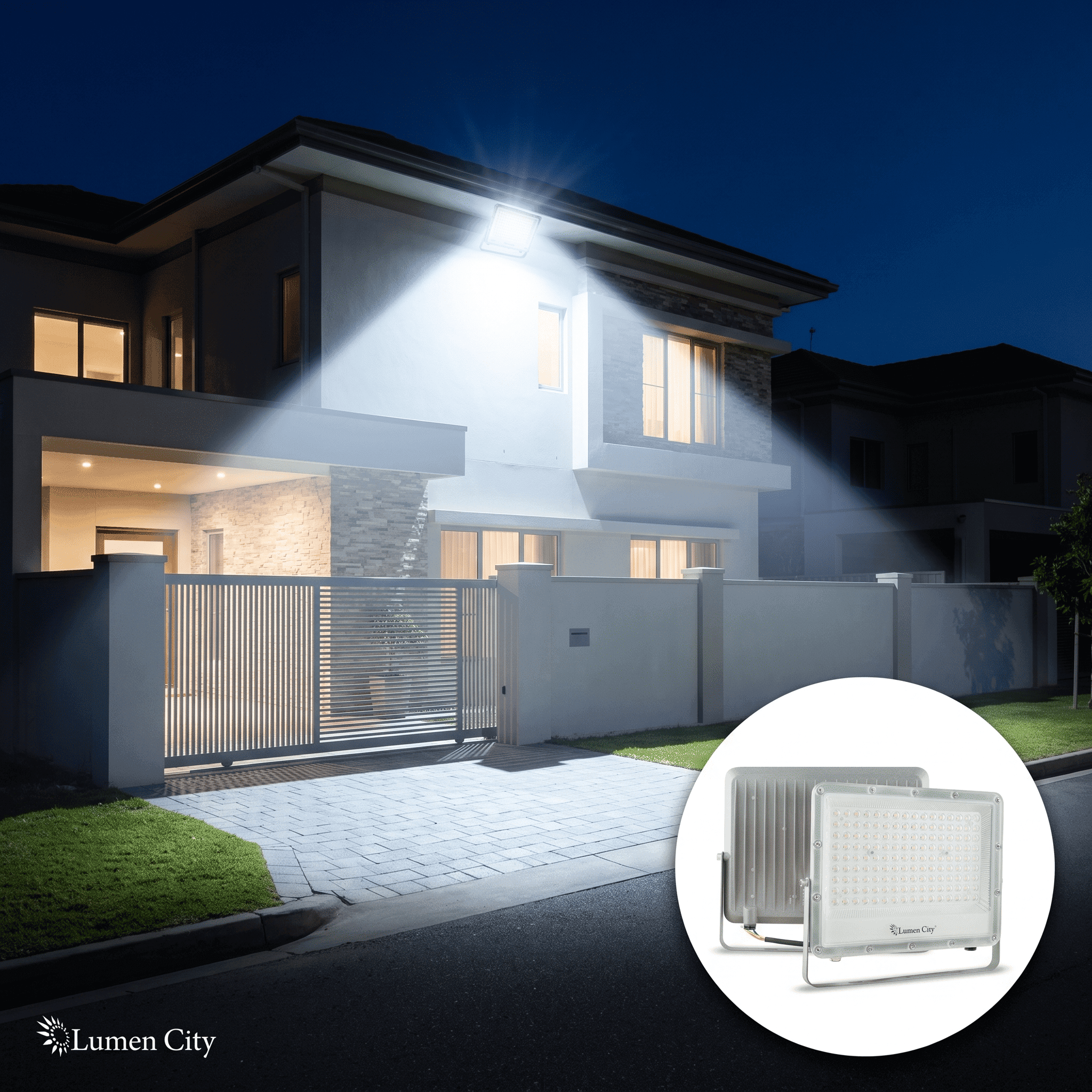
100W - IP65 Rating - 12000 Lumens - Cool White - Slim Flood Light
Use 50W or 60W where the mounting point is low; add 100W slim only when brighter working light is needed.
Mid-height sheds 5-8 m
100W and 120W high bays for godowns, packing halls and open storage.
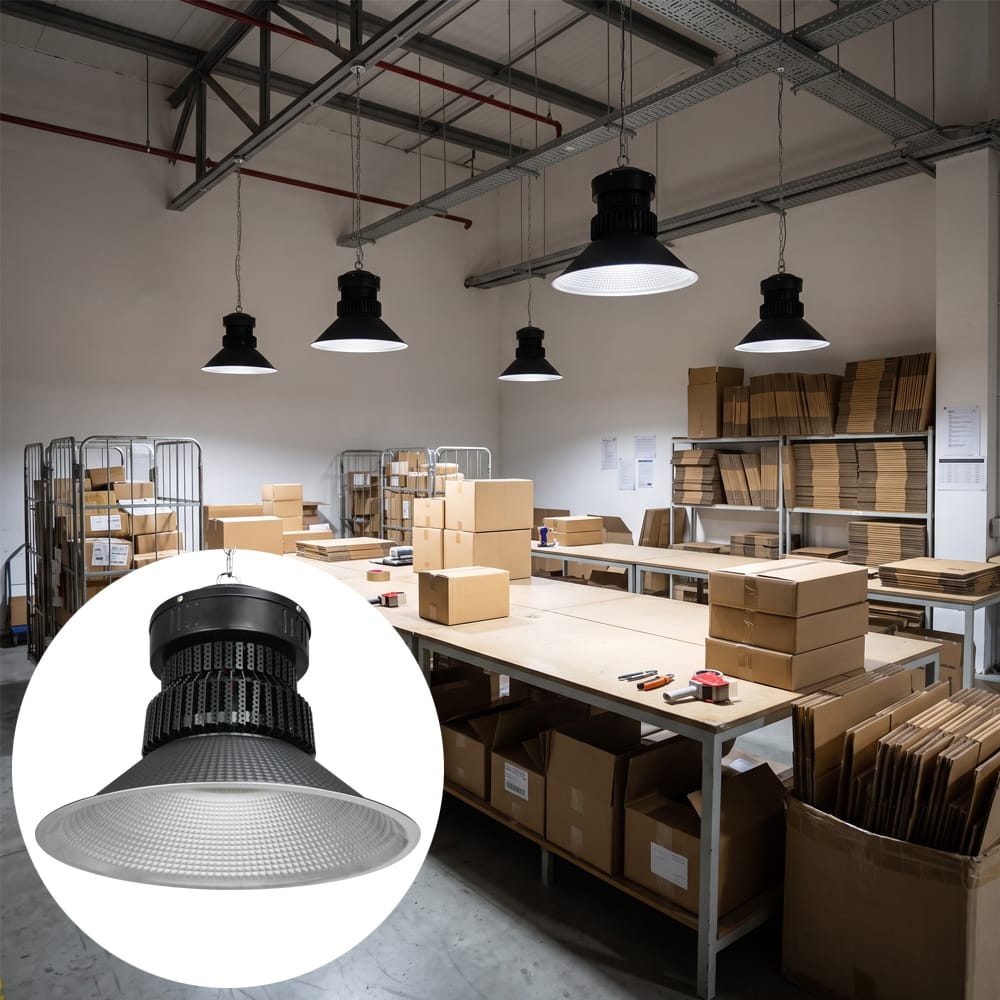
100W Reflector High Bay Light - 10000lm - 120° - IP65
Use 100W around 5-7 m and 120W around 7-8 m, then tune spacing by aisle layout.
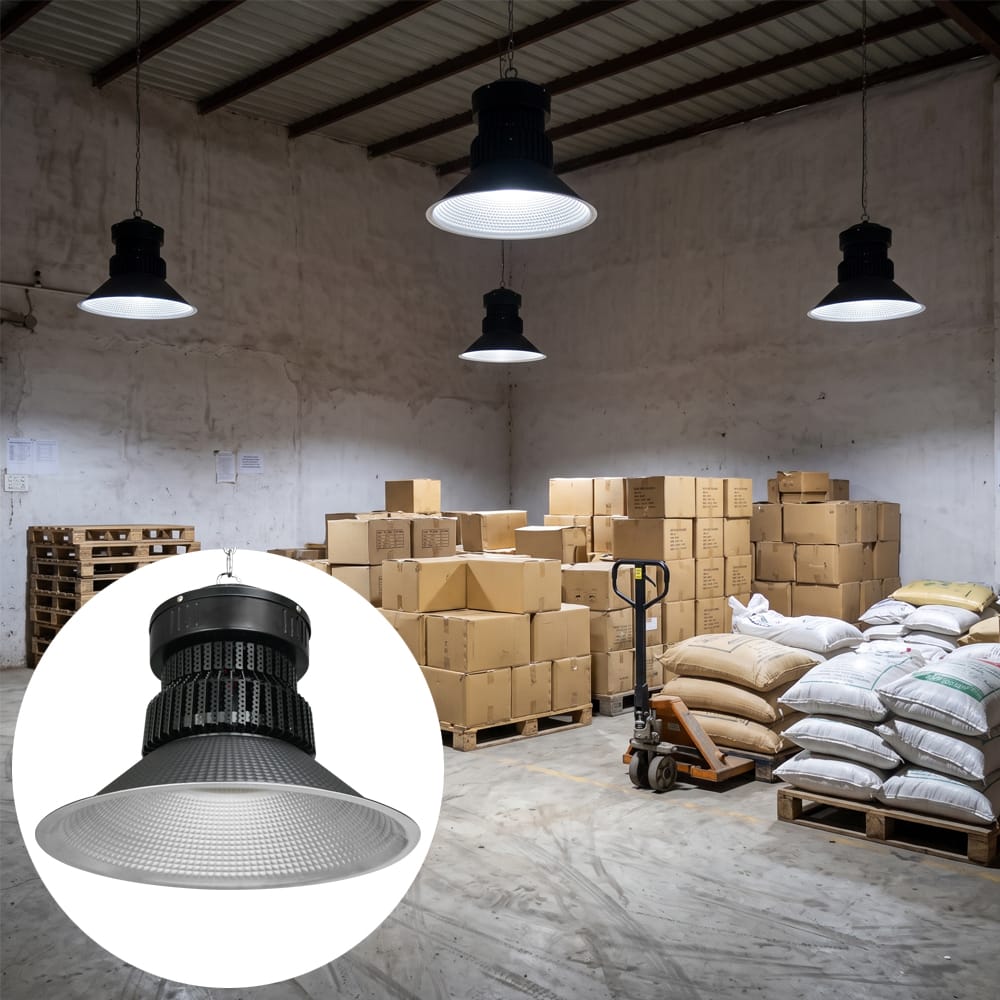
120W Reflector High Bay Light - 12000lm - 120° - IP65
Use 100W around 5-7 m and 120W around 7-8 m, then tune spacing by aisle layout.
100W Slim UFO High Bay Light - 10000lm - Only 660g - 120° - Cool White
Use 100W around 5-7 m and 120W around 7-8 m, then tune spacing by aisle layout.
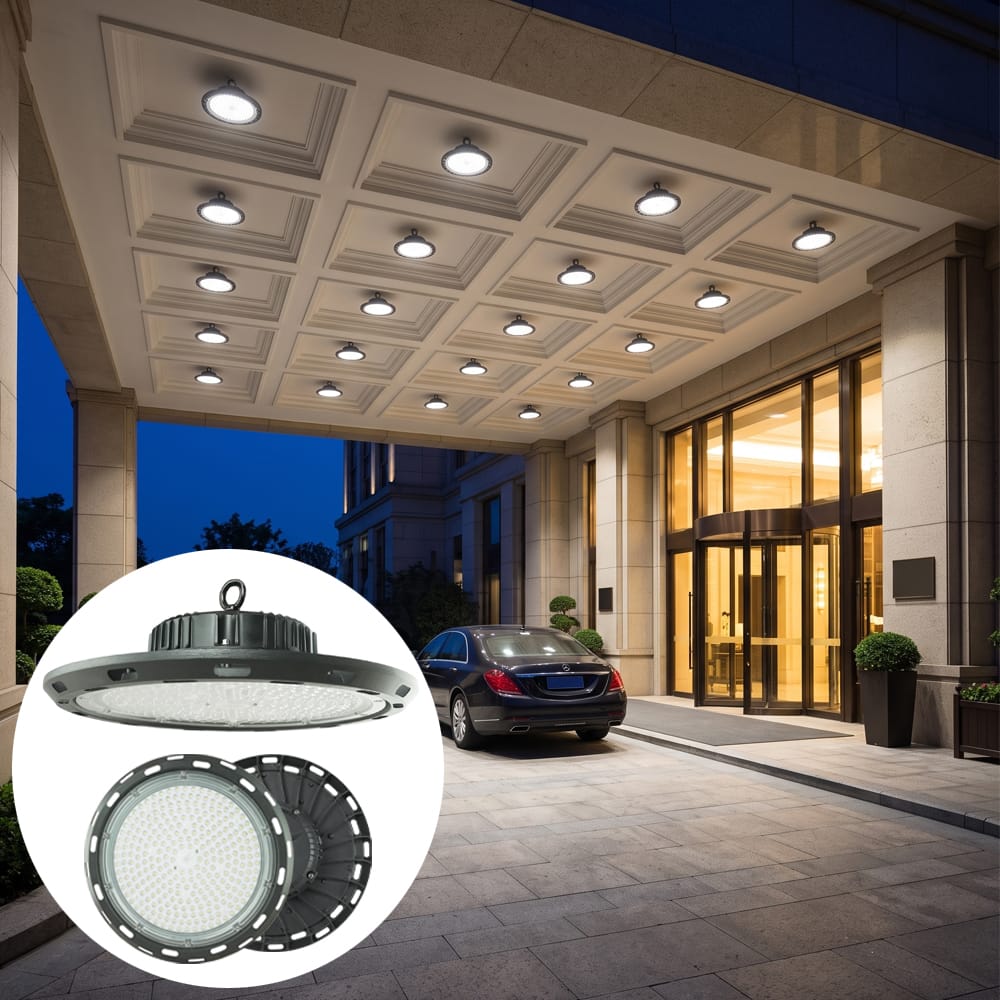
100W UFO High Bay Light - Pro - 10000lm - 120° - IP65
Use 100W around 5-7 m and 120W around 7-8 m, then tune spacing by aisle layout.
High sheds 7-14 m
150W to 200W fixtures for tall trusses, production sheds and large warehouses.
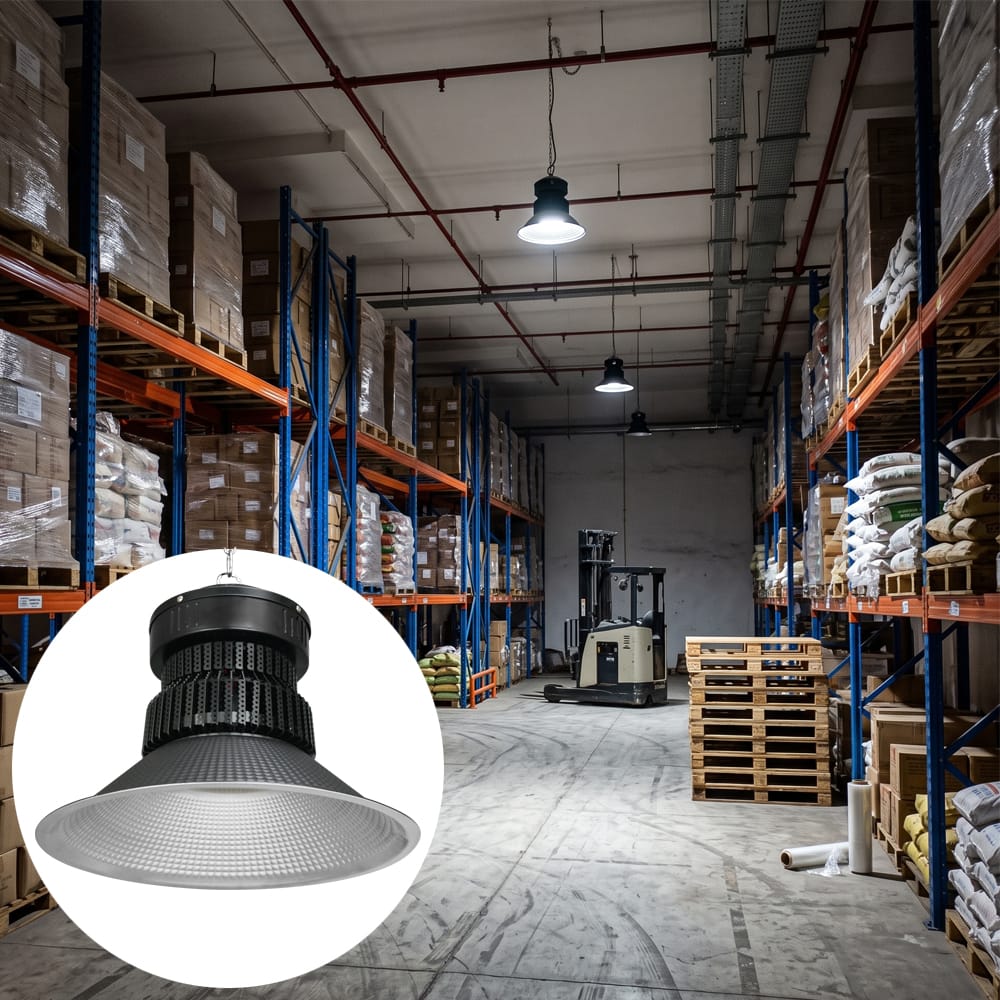
150W Reflector High Bay Light - 15000lm - 120° - IP65
Use 150W for 7-10 m and 180W-200W for 10-14 m mounting heights.
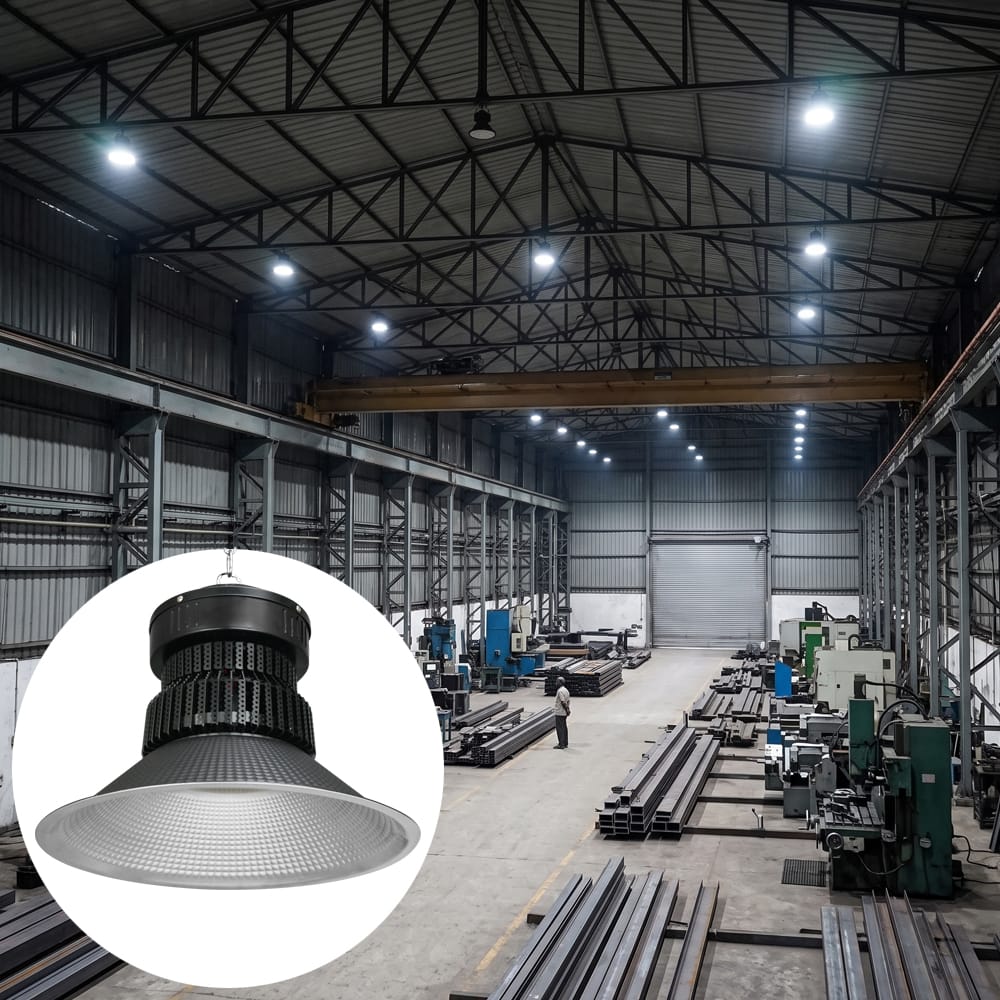
180W Reflector High Bay Light - 18000lm - 120° - IP65
Use 150W for 7-10 m and 180W-200W for 10-14 m mounting heights.
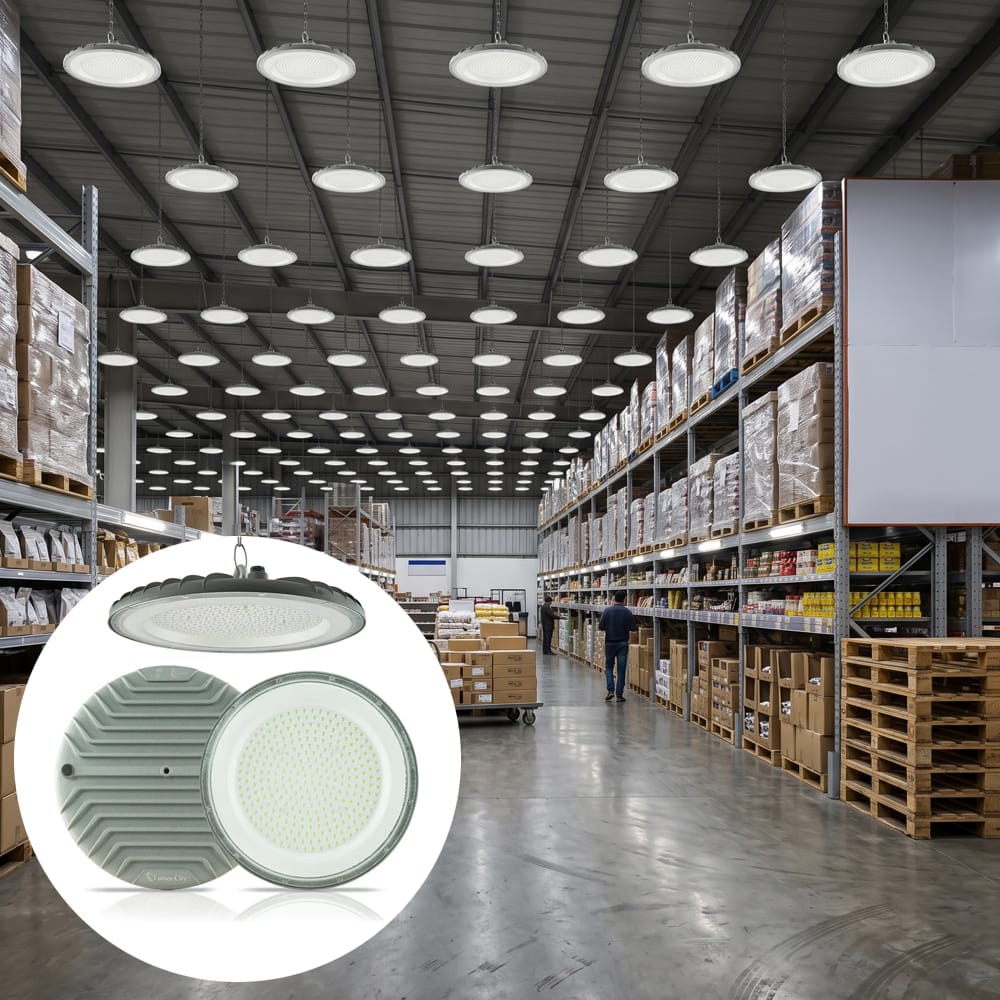
150W Slim UFO High Bay Light - 15000lm - Only 950g - 120° - Cool White
Use 150W for 7-10 m and 180W-200W for 10-14 m mounting heights.
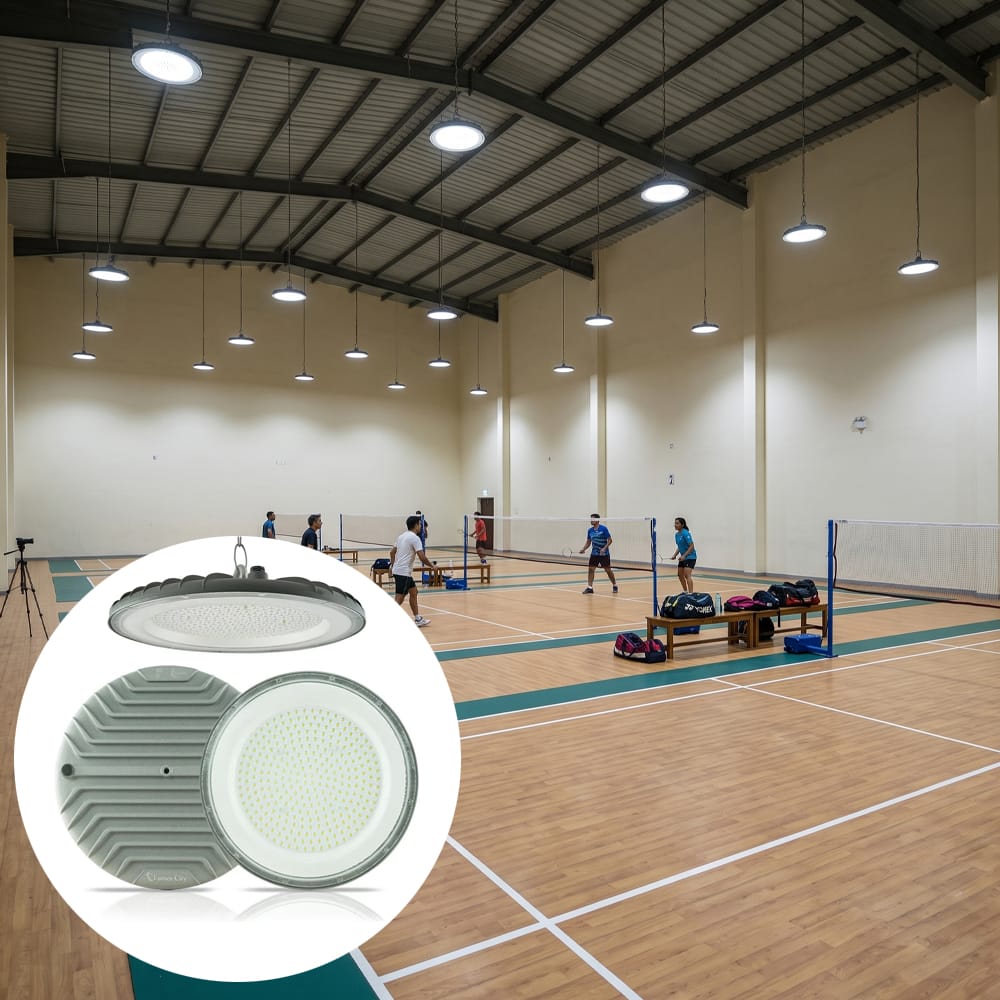
200W Slim UFO High Bay Light - 20000lm - Only 1.24kg - 120° - Cool White
Use 150W for 7-10 m and 180W-200W for 10-14 m mounting heights.
Continuous duty models
UFO Pro and Slim UFO families for uptime, low weight and multi-shift installations.
100W UFO High Bay Light - Pro - 10000lm - 120° - IP65
Choose Pro where failure stops production; choose Slim where roof load, handling and freight matter.
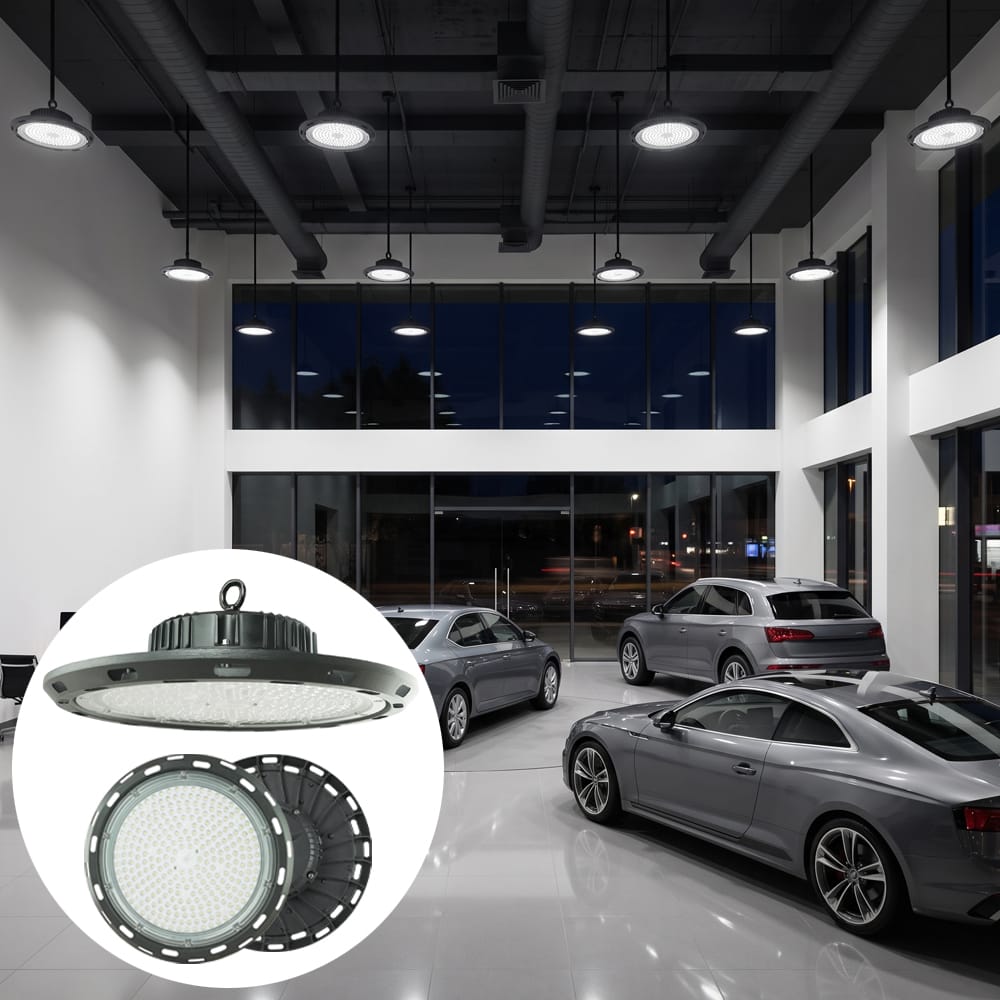
150W UFO High Bay Light - Pro - 15000lm - 120° - IP65
Choose Pro where failure stops production; choose Slim where roof load, handling and freight matter.
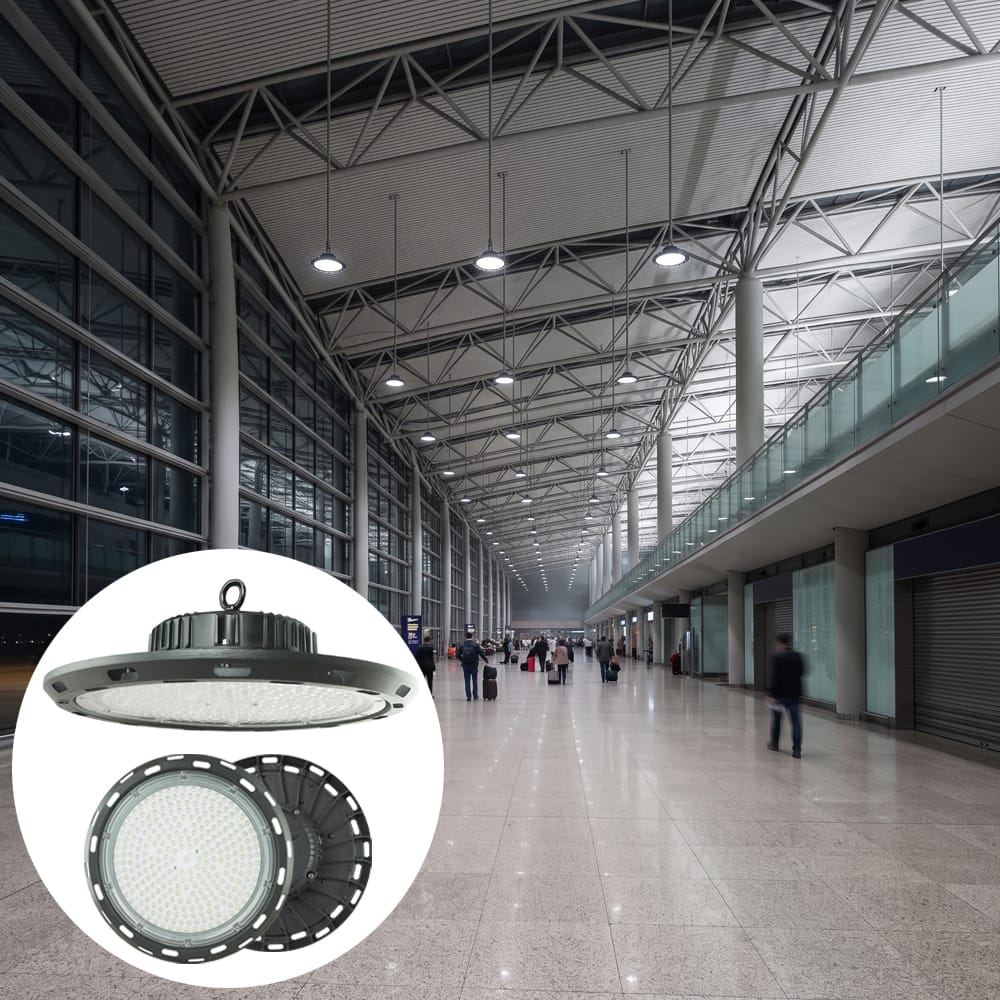
200W UFO High Bay Light - Pro - 20000lm - 120° - IP65
Choose Pro where failure stops production; choose Slim where roof load, handling and freight matter.
100W Slim UFO High Bay Light - 10000lm - Only 660g - 120° - Cool White
Choose Pro where failure stops production; choose Slim where roof load, handling and freight matter.
150W Slim UFO High Bay Light - 15000lm - Only 950g - 120° - Cool White
Choose Pro where failure stops production; choose Slim where roof load, handling and freight matter.
200W Slim UFO High Bay Light - 20000lm - Only 1.24kg - 120° - Cool White
Choose Pro where failure stops production; choose Slim where roof load, handling and freight matter.
Loading bay, yard & roads
Flood lights and street lights for areas around the shed that buyers often forget.
100W - IP65 Rating - 12000 Lumens - Cool White - Slim Flood Light
Use floods for loading bays and yards; use street lights for internal roads and gate approaches.
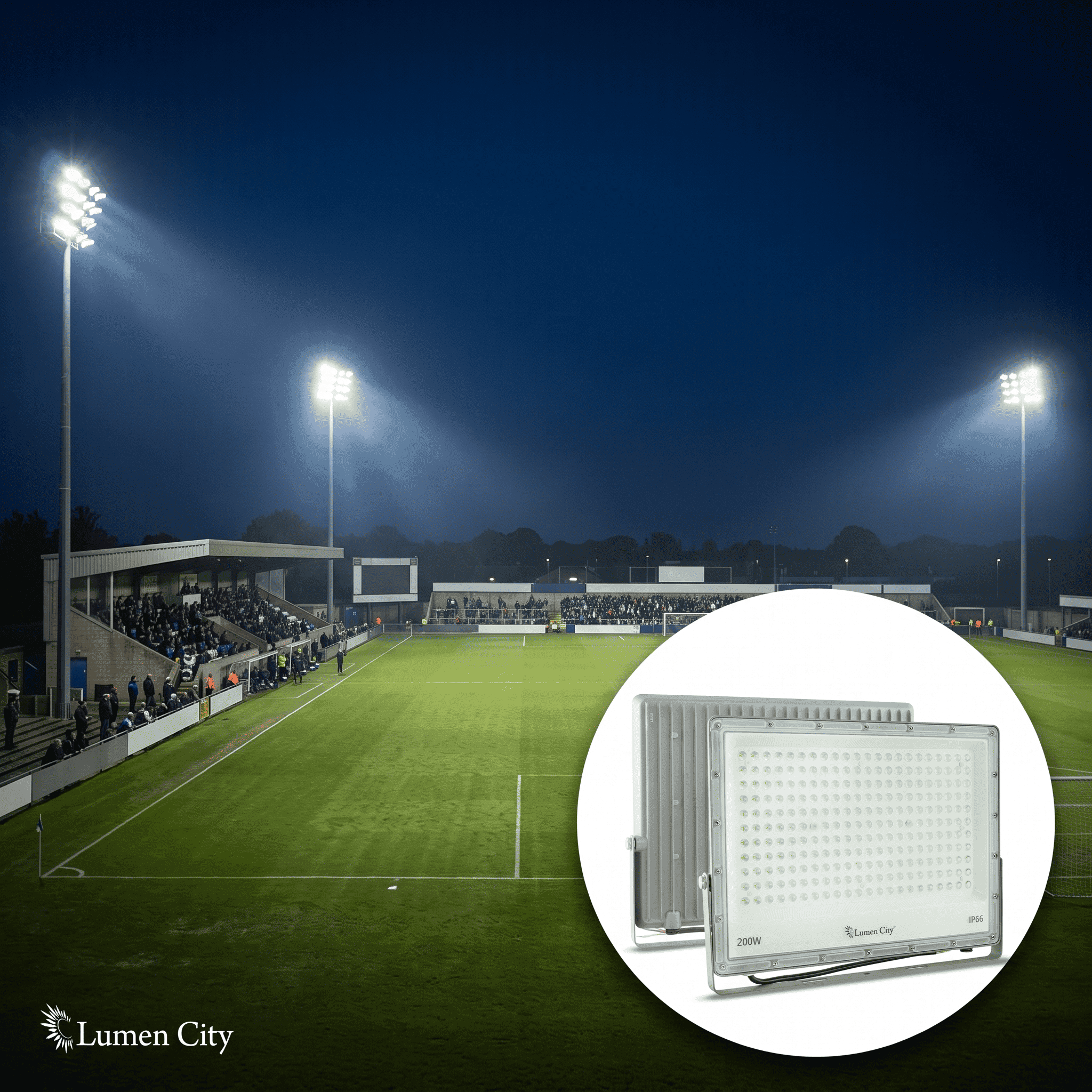
200W - IP65 Rating - 24000 Lumens - Cool White - Slim Stadium Flood Light
Use floods for loading bays and yards; use street lights for internal roads and gate approaches.
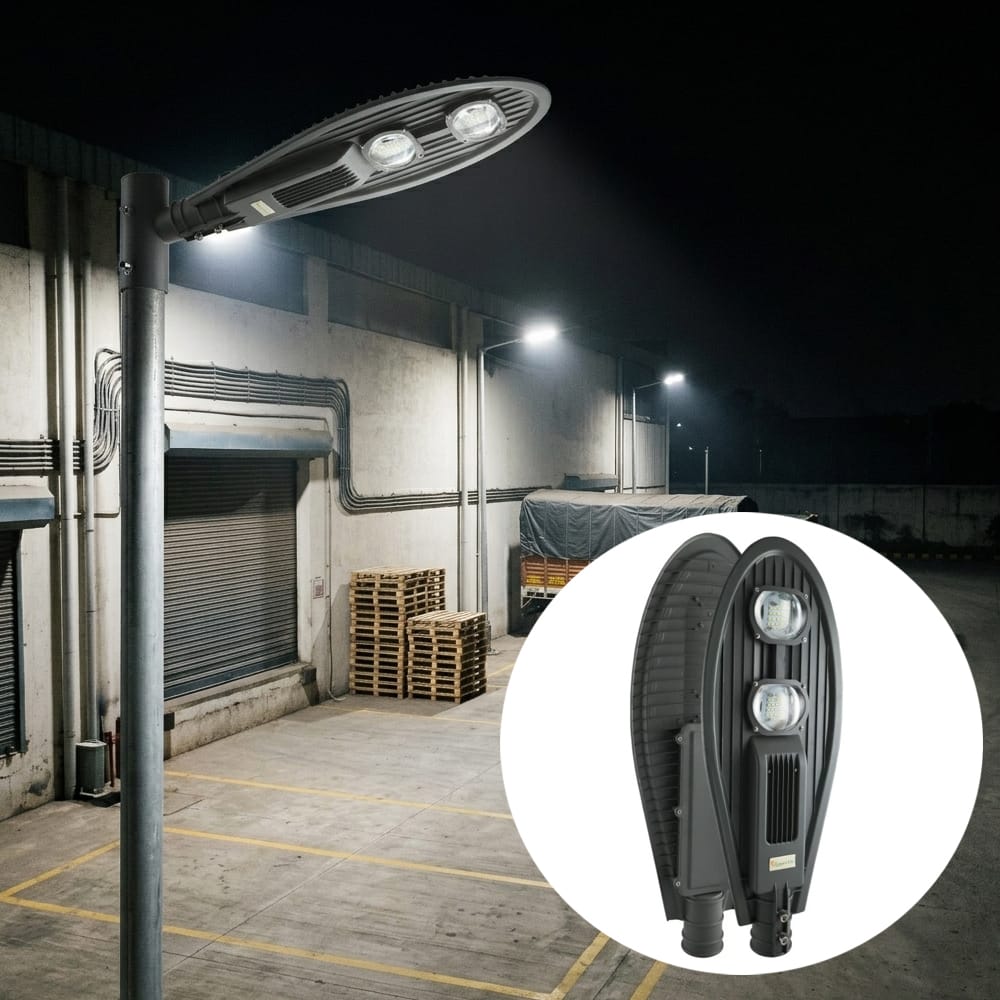
100W LED Street Light - 10000lm - IP65 - 90-265V - Cool White
Use floods for loading bays and yards; use street lights for internal roads and gate approaches.
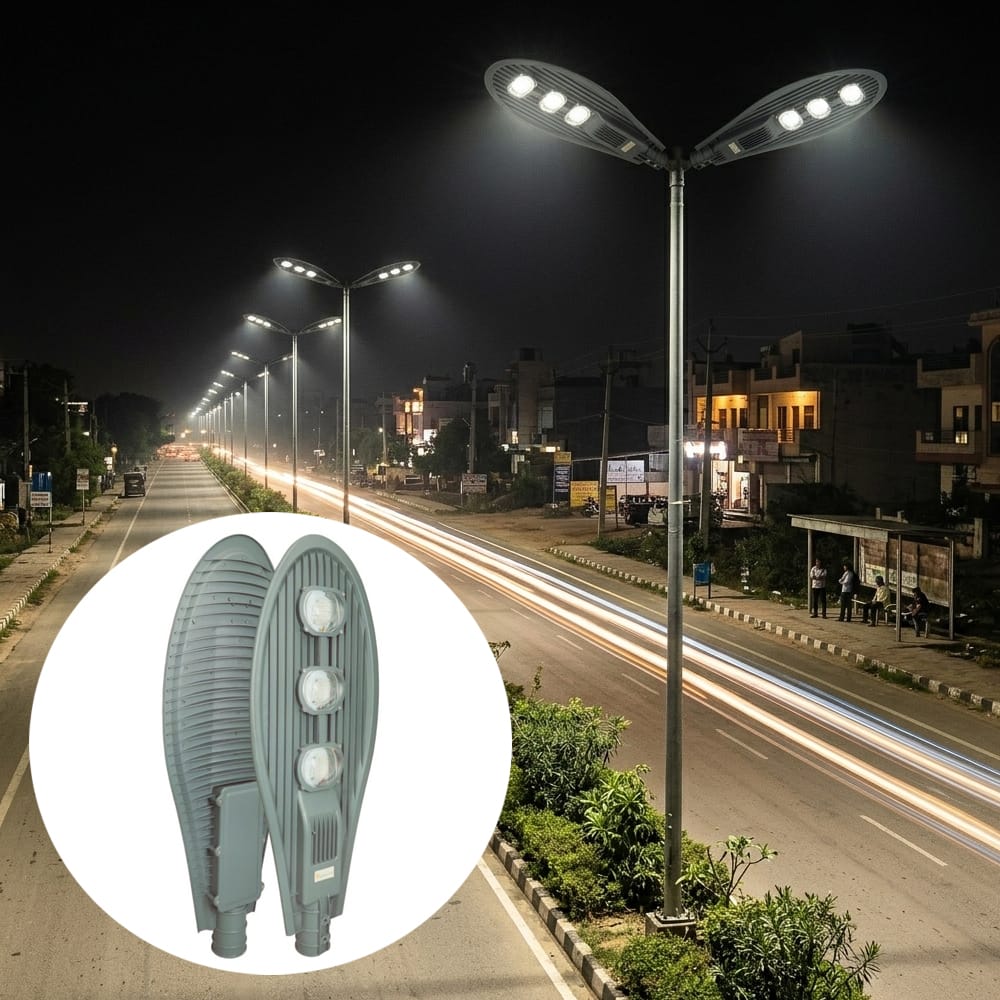
150W LED Street Light - 15000lm - IP65 - 90-265V - Cool White
Use floods for loading bays and yards; use street lights for internal roads and gate approaches.
Lighting upgrades for sheds, godowns and yards
Industrial lighting that accounts for ceiling height, dust, voltage fluctuation and loading movement.
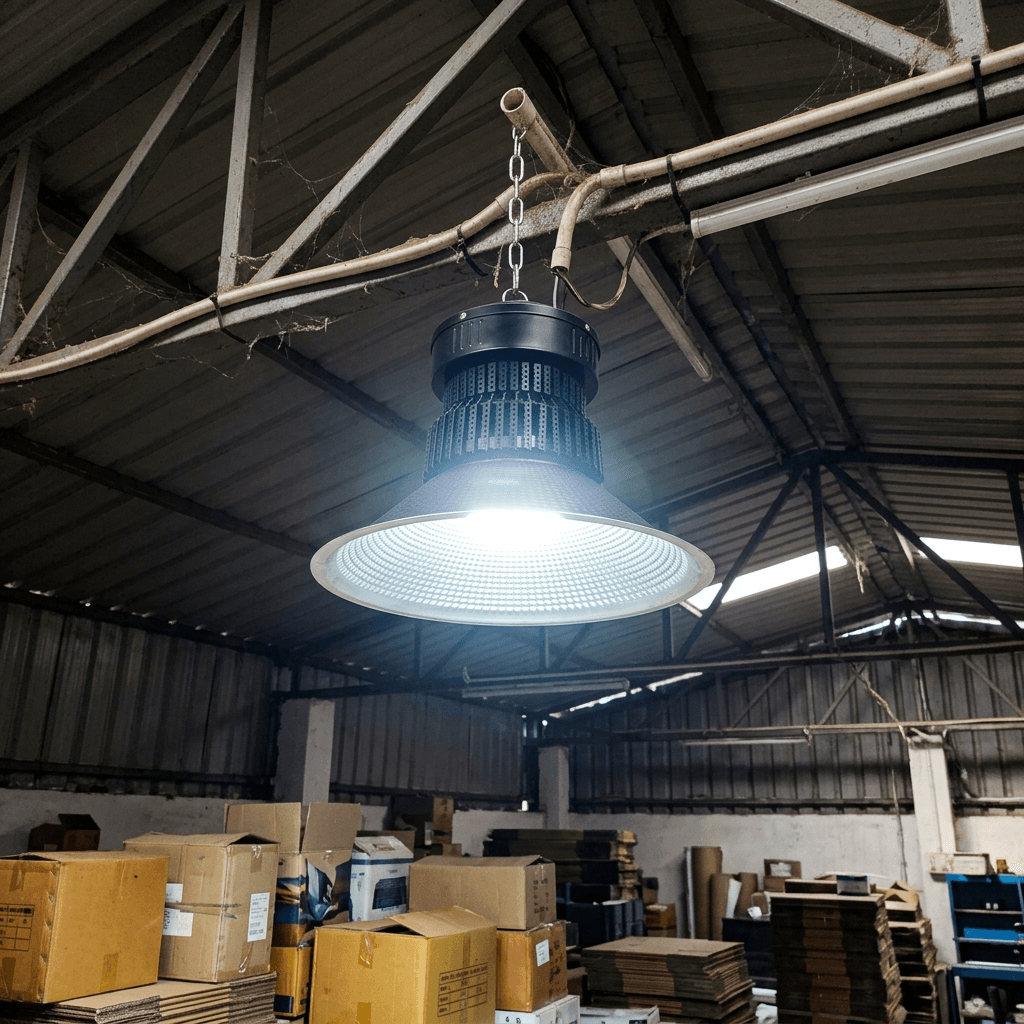
“The reflector high bays made the floor even without over-lighting the truss.”
Factory ownerPacking shed, Faridabad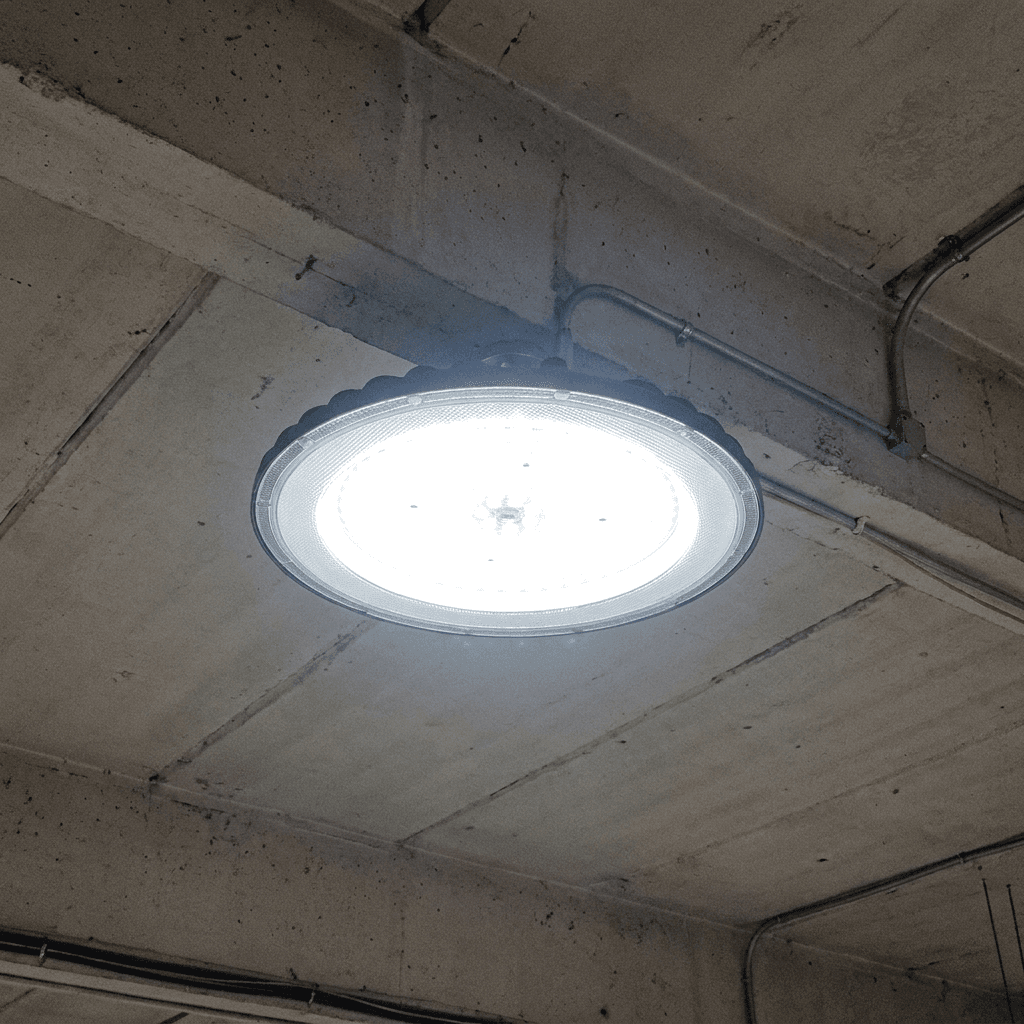
“Slim high bays were light enough for quick installation and easy freight.”
Warehouse operatorLeased godown, Bhiwandi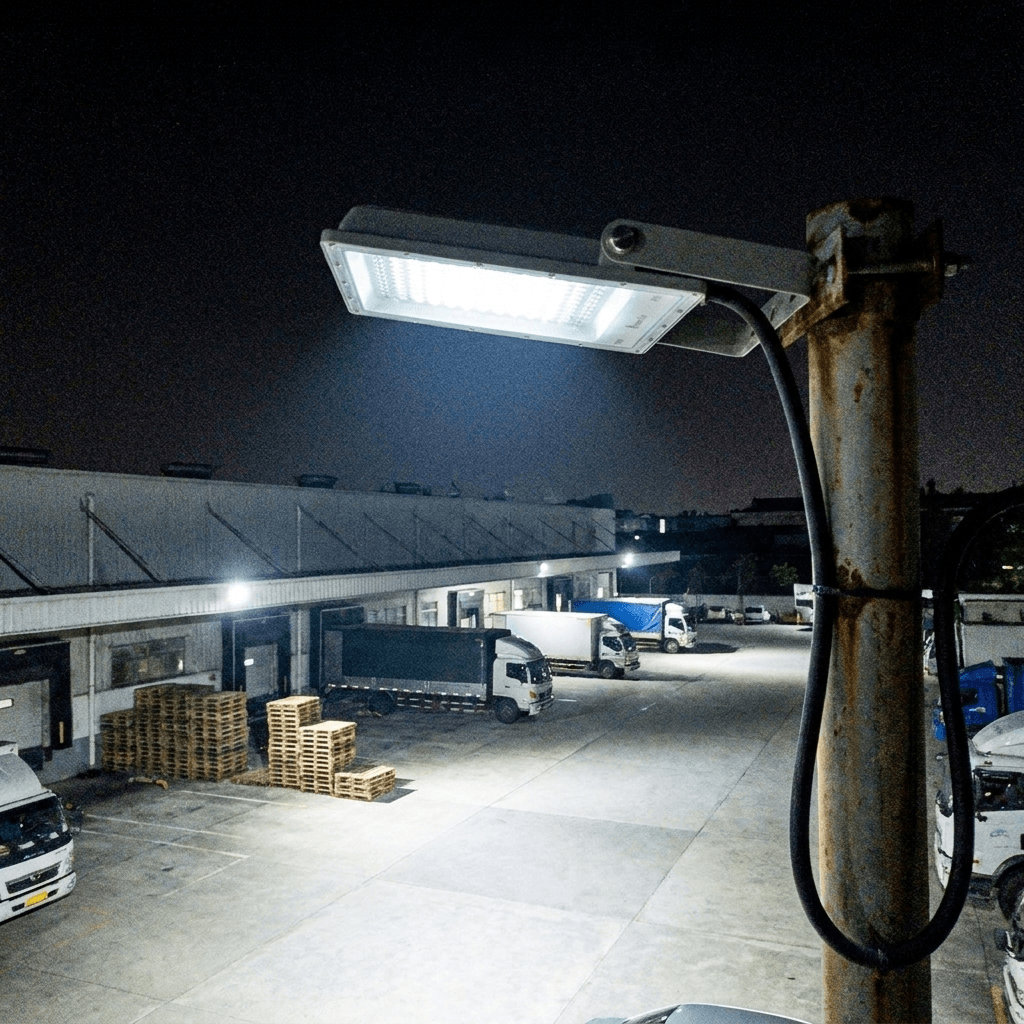
“The yard floods removed dark pockets around the dock and truck area.”
Logistics managerLoading bay, Gurugram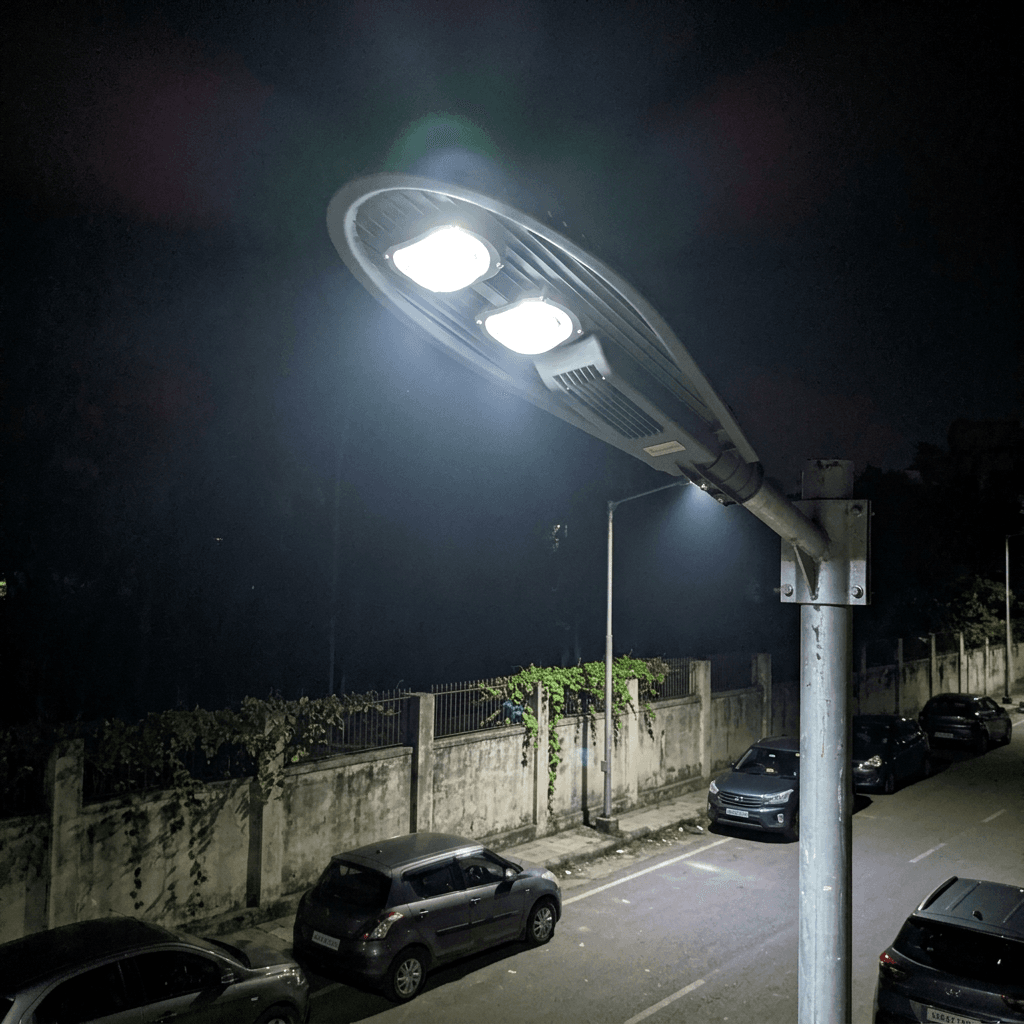
“Street lights worked better than floods for the approach road.”
Facility teamInternal road, AhmedabadLumencity in the press
Coverage across energy, solar and national media for Lumencity's lighting work.
 Mercom India
 The Hindu
 Saur Energy
 EQ Magazine
 DD News
How to Light a Warehouse, Factory Shed or Godown
Use mounting height, aisle layout and task areas before deciding fixture count.
1. Start with ceiling height
Ceiling height determines wattage. Everything else follows from it. Wattage Beam || 50W 90° narrow | 60W 90° narrow | 100W 120° wide | 120W 120° wide | 150W 120° wide | 180W-200W 120° wide | The whole range runs at 100 lumens per watt, so lumens are always wattage x 100. That makes comparison against competing quotes straightforward - and immediately exposes any quote that states watts without lumens.
2. Then decide the spacing
High bays sit 1 to 1.5 times the mounting height apart. Fixtures at 8 m go 8-12 m from the next one; at 12 m, 12-18 m. That's closer than most people assume, and going wider produces scalloping - bright pools under each fixture with visibly darker floor between them. Workers experience a scalloped floor as darker overall than an evenly lit one at a lower average level, because the eye adapts to the bright patches.
3. Now the number nobody asks about: your aisles
This is where warehouse lighting most often goes wrong, and it's why the 50W and 60W in our range are 90° while everything above is 120°. If you have tall racking with narrow aisles, a wide 120° beam lights the top of the racking and the tops of the cartons. Very little reaches the floor where people are picking, because the racking itself blocks it. The aisle feels dark despite a perfectly adequate lux figure measured in the open.
4. Working fixture counts
These assume open floor with a standard grid. Racking layouts need the aisle treatment above. Ceiling height Approx. count || 5 m 6-8 | 5 m 12-15 | 7 m 9-12 | 10 m 6-8 | 7 m 18-22 | 10 m 12-16 | 12 m 10-14 | 10 m 24-32 | Note what happens as the ceiling rises: a taller shed needs fewer, larger fixtures for the same floor area. This is why "how many per square foot" has no answer.
5. Task areas need their own light
A general high bay grid gives you circulation lighting - enough to move safely and find things. It does not give you work lighting. Anywhere detailed work happens - packing benches, QC tables, machine stations, assembly lines, inspection points - needs additional light directly over the task. The standard mistake is to raise the wattage across the whole building to fix one dark bench, which costs a fortune in energy and still doesn't fix it, because the problem is distance not output.
6. The loading bay and the yard
The shed is usually the only part that gets planned, and the loading bay is where accidents and shrinkage actually happen. Loading bay and dock area. High bays under the canopy where there's a roof; 200W flood lights (24,000 lm) mounted on the building wall angled outward where there isn't. Mount at 12 feet minimum, angled downward, so the light lands on the dock and not in the driver's eyes as he reverses.
7. IP65 - why an indoor fixture needs an outdoor rating
Every fixture here is IP65: fully dust-tight, protected against water jets. Indoors, the first digit is what matters. Indian industrial environments generate serious airborne particulate - grinding and cutting dust, textile lint, cement, grain, flour, packaging fibre, wood dust. Anything that gets inside a fixture settles on the LED board and the driver, blocks heat dissipation and cooks the electronics from within.
8. Voltage, surge and why drivers fail
The LEDs are almost never the problem - they run 50,000 hours or more. The driver is what dies. Industrial supply is the harshest environment a driver faces. Motors starting and stopping put spikes on the line, restoration after a cut delivers a surge, and welding sets are brutal on anything sharing a circuit. - Wide 90-265V input on every fixture in this range, so fluctuation is normal operating range rather than an event to survive. - Fit a surge protection device at the panel.
9. Which body style: Reflector, UFO Pro or Slim
Three families, same lumens at the same wattage, different construction. Reflector High Bay (50W-180W) - the classic aluminium reflector cone. 50W and 60W are 90° for lower ceilings; 100W and above are 120°. The traditional choice, and the one most electricians install without being told how.
10. The payback arithmetic
This is the section to put in front of whoever signs the cheque. Per-fixture consumption comparison, at 12 hours a day, 300 days a year: LED replacement 100W high bay (10,000 lm) 150W high bay (15,000 lm) 200W high bay (20,000 lm) 60W high bay (6,000 lm) A 20-fixture shed replacing 400W metal halide with 150W LED saves roughly 18,000 units a year. At ₹8 a unit that's around ₹1.44 lakh annually - typically more than the cost of the fixtures themselves, giving payback inside the first year. Add the maintenance saving.
11. Before you order
- Send shed dimensions, ceiling height and a rough layout. Racking positions and aisle widths matter as much as the outer dimensions. - Say what happens in the space - storage, picking, production, assembly, cold storage. It changes the specification. - Note the shift pattern. Single shift and three shift point to different body styles. - Include the yard and loading bay in the enquiry.
Warehouse & Factory Lighting FAQ
Answers for factory owners, warehouse operators and facility managers planning an LED upgrade.
It depends on ceiling height. At 5 m, roughly 12 to 15 60W fixtures. At 7 m, 9 to 12 100W fixtures. At 10 m, 6 to 8 150W fixtures. A taller shed needs fewer, larger fixtures for the same floor area - which is why square footage alone can't answer the question.
Up to 5 m use 50W or 60W with a 90° narrow beam. From 5 to 7 m use 100W. From 7 to 8 m use 120W. From 7 to 10 m use 150W. From 10 to 14 m use 180W or 200W. Measure to the underside of the truss, not the roof peak - in a pitched shed the two can differ by several metres.
One to one and a half times the mounting height. Fixtures at 8 m sit 8 to 12 m apart, at 12 m they sit 12 to 18 m apart. Wider spacing produces bright pools with visibly darker floor between, which workers experience as darker overall than even light at a lower level.
Because the beam angle is too wide for the racking. A 120° beam over tall racking in narrow aisles lights the tops of the racks, and the racking itself blocks light from reaching the floor. Fix it by running a line of fixtures down each aisle rather than a grid across the building, or by using narrower optics.
Replacing a 400W metal halide with a 150W LED saves around 900 units per fixture per year at 12 hours a day. Across 20 fixtures that's roughly 18,000 units - about ₹1.44 lakh annually at ₹8 per unit, which usually exceeds the cost of the fixtures and gives payback inside the first year.
Roughly a 400W metal halide, at 15,000 lumens. Beyond the energy saving, LED reaches full brightness instantly rather than taking minutes to warm up, restrikes immediately after a power cut, and holds its output and colour over life instead of degrading and yellowing.
Same lumens at the same wattage, different construction. Reflector is the conventional aluminium cone. UFO Pro has a heavier housing with more heat sink area for multi-shift duty in hot sheds. Slim gives the same output at a fraction of the weight - 660 g at 100W - which matters for light roof structures, single-person installation and freight cost on large orders.
90° for lower ceilings and for tall racking with narrow aisles, where light needs to reach the floor rather than the tops of the racks. 120° for open floor - production, assembly, packing and showrooms - where even coverage matters more than penetration.
Because the dust rating matters indoors. Indian industrial environments generate grinding dust, textile lint, cement, grain and packaging fibre, and anything entering a fixture settles on the driver and LED board, blocks heat dissipation and shortens life. A sealed fixture is what keeps a high bay working in year four.
High bays under the canopy where there's a roof, and 200W flood lights on the building wall angled outward where there isn't. For open yard and container areas, 100W or 200W floods one every 10 to 15 m with overlapping beams. For internal roads, 100W or 150W street lights on poles rather than floods.
Use 180W or 200W fixtures for 10 to 14 m, and suspend them rather than surface-mounting where possible - dropping fixtures 1.5 m below a 12 m roof effectively makes it a 10.5 m installation and improves floor-level light without changing the fixture. It also makes future maintenance reachable from a lower lift.
Almost always the driver, not the LEDs. Industrial supply is harsh - motors starting put spikes on the line, restoration after a cut delivers a surge, and welding sets are brutal on shared circuits. A wide 90-265V input, a die-cast heat sink and a surge protection device at the panel are what prevent it.
It's the wrong shape for the job. A flood light throws light outward at an angle, which indoors puts glare directly into workers' eyes and wastes output on the walls. High bays point straight down and are designed for ceiling mounting. Keep flood lights for the yard, loading bay and open areas.
The standard models are not. Where a facility needs dimming or daylight linking, say so at quotation stage - the driver specification changes and it has to be built in rather than added afterwards.
Yes. Warehouse and factory orders are project quantity, quoted at project pricing with GST invoicing - which matters for depreciation and input credit. We're BIS certified and government empanelled, manufacturing in Delhi and shipping PAN India.
Yes, and it's worth doing before ordering. Send shed dimensions, ceiling height, racking positions and aisle widths, what happens in the space and your shift pattern. We'll return a fixture count, wattage, spacing and layout rather than you estimating from square footage.
Read the latest lighting guides
Buying advice, project notes and category explainers from Lumencity.